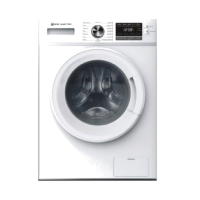
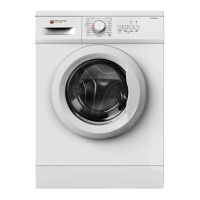
This document provides a comprehensive user manual for an EAS ELECTRIC washing machine, covering its function, technical specifications, usage, and maintenance.
Function Description
The EAS ELECTRIC washing machine is designed for domestic use to clean clothes. It offers various washing programs tailored for different fabric types and levels of soiling, including options for prewash, intensive wash, quick wash, and specific programs for cotton, synthetics, wool, silk, and mixed loads. The machine features adjustable temperature and spin speed settings, allowing users to customize the wash cycle according to their needs. It also includes functions for delayed start and an indicator for the remaining time of the wash cycle.
Important Technical Specifications
The washing machine models covered in this manual are ETW7020DW, ETW8520DW, ETW8520DX, and ETW6120DW. Key technical specifications include:
- Capacity: Available in 6kg, 7kg, and 8.5kg capacities.
- Voltage: 220-240V~/50Hz.
- Rated Power:
- 6kg model (ETW6120DW): 1.950W
- 7kg model (ETW7020DW): 2.000W
- 8.5kg models (ETW8520DW/ETW8520DX): 2.050W
- Water Pressure: 0.05-0.8 MPa.
- Outer Dimension (WDH):
- 6kg model: 595470850 mm
- 7kg model: 595520850 mm
- 8.5kg models: 595560850 mm
- Energy Efficiency Class: A+++ (for all models).
- Water Consumption (annual):
- 6kg model: 9500 litres (based on 220 standard washing cycles for cotton programmes at 60°C and 40°C at full and partial load).
- 7kg model: 10600 litres (based on 220 standard washing cycles for cotton programmes at 60°C and 40°C at full and partial load).
- 8.5kg models: 11000 litres (based on 220 standard washing cycles for cotton programmes at 60°C and 40°C at full and partial load).
- Energy Consumption (annual):
- 6kg model: 152kWh (based on 220 standard washing cycles for cotton programmes at 60°C and 40°C at full and partial load).
- 7kg model: 174kWh (based on 220 standard washing cycles for cotton programmes at 60°C and 40°C at full and partial load).
- 8.5kg models: 200kWh (based on 220 standard washing cycles for cotton programmes at 60°C and 40°C at full and partial load).
- Spin-drying efficiency class: C (for 6kg model), B (for 7kg and 8.5kg models).
- Maximum Spin Speed: 1000rpm (for 6kg model), 1200rpm (for 7kg and 8.5kg models).
- Noise Levels:
- Washing: 62dB
- Spinning: 75dB
Usage Features
The washing machine is designed for user-friendly operation with a control panel that includes a program selector knob, temperature button, spin button, time delay button, and start/pause button.
- Program Selection: Users can select from various programs like Super Quick, Intensive, Spin, Rinse+Spin, Drum Clean, Allergy Care, Bedding, Sport/Fitness, Cotton, +Prewash, Dark Colour, Mix, Wool, Shirt, Synthetics, and Silk/Delicate.
- Temperature Adjustment: The temperature can be adjusted for most programs, with a maximum setting of 90°C for cotton.
- Spin Speed Adjustment: Spin speed can be adjusted from 0 rpm (no spin) up to the maximum speed for the specific model (1000 rpm or 1200 rpm).
- Time Delay: The start of a wash cycle can be delayed from 3 to 24 hours in one-hour increments.
- Detergent Dispenser: The machine has a drawer with compartments for prewash detergent, main wash detergent, and fabric softener.
- Safety Features: Includes child lock functionality, door lock during operation, and warnings against overloading, using flammable substances, and improper electrical connections.
- Installation: Requires proper leveling, removal of transit bolts, and correct connection of water inlet hoses (cold and hot, if applicable) and drain hose. The drain hose should be positioned at a height of 65-100cm above the floor.
- Troubleshooting: The manual provides a detailed troubleshooting guide with error codes (E1 to E10, EP) and corresponding solutions for common issues like water overflow, drainage problems, door lock malfunctions, and motor or sensor failures.
Maintenance Features
Regular maintenance is crucial for the longevity and efficient operation of the washing machine.
- Cleaning the Internal Drum: The drum should be cleaned regularly to remove rust and residue. Chlorine-free detergents are recommended.
- Cleaning the Surface: The external surface should be wiped with a dry cloth; abrasive or neutral detergents should be used when necessary.
- Cleaning the Drain Pump: The drain pump filter needs to be cleaned periodically to remove foreign material. This involves opening the filter cover, draining residual water, removing the filter, cleaning it, and then reinserting it.
- Cleaning the Inlet Valve Filter: The filter in the water inlet valve should be cleaned if there is insufficient water flow. This involves closing the tap, disconnecting the inlet hose, cleaning the filter, and reconnecting.
- Cleaning the Detergent Drawer: The detergent drawer should be cleaned regularly to prevent residue buildup. It can be removed by pressing down on a specific part and then pulling it out.
- Freezing Prevention: If the machine is exposed to temperatures below 0°C, precautions should be taken to drain residual water from the hoses and pump to prevent damage from freezing.
- General Advice: The manual advises disconnecting the power plug and closing the tap before any maintenance. It also recommends contacting a qualified technician for complex issues.
The manual emphasizes that the washing machine is manufactured with recyclable materials and encourages proper disposal of the appliance and its components at the end of its useful life, in accordance with local environmental regulations.

 Need help?
 General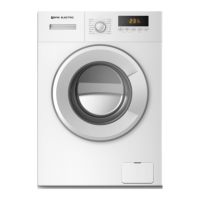

 To Next Page