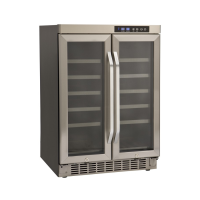
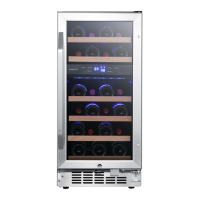
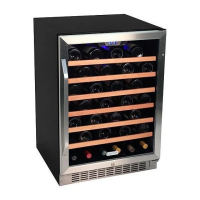
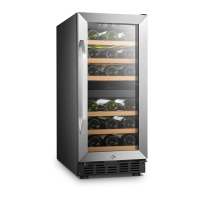
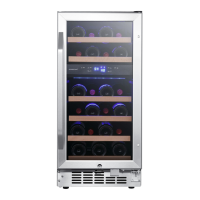
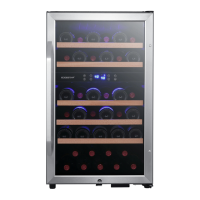
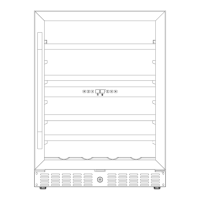
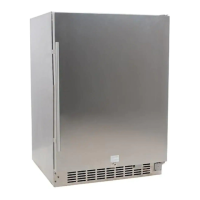
This document is an owner's manual for the EdgeStar CWR1212SZ Built-In Wine Refrigerator, providing comprehensive instructions for its installation, operation, and maintenance. The refrigerator is designed for domestic indoor use, specifically for storing wine, and is not intended for industrial or commercial applications.
Function Description
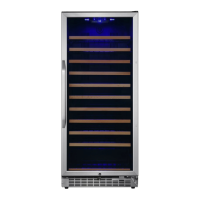
The EdgeStar CWR1212SZ is a built-in wine refrigerator designed to store wine at optimal temperatures. It features a single temperature zone with a range of 40°F to 65°F (4°C to 18°C), allowing users to set the ideal conditions for their wine collection. The unit is equipped with an internal fan to maintain consistent internal temperatures, ensuring even cooling throughout the cabinet. A built-in carbon filter acts as a natural barrier against harmful odors, protecting the quality of the stored beverages. The refrigerator also includes an automatic defrost function, which helps to prevent frost buildup under most temperature and ambient conditions. For safety, the unit is designed to be properly grounded and includes various alarm features such as a temperature alarm and a door ajar alarm.
Usage Features
The manual details several usage features to enhance the user experience and ensure proper operation:
- Installation Flexibility: The wine refrigerator can be installed as a free-standing unit or built-in under a counter or within a kitchen cabinet. Specific clearance requirements are provided for built-in installations to ensure adequate ventilation and service access.
- Leveling: The unit is equipped with adjustable leveling feet, allowing users to ensure the refrigerator is perfectly level on any surface, which is crucial for proper operation.
- Door Handle Installation: Instructions are provided for installing the door handle, which involves carefully removing decorative plugs, inserting screws, aligning the handle, and securing it.
- Shelf Management: The manual explains how to install and remove the shelves, emphasizing the importance of opening the door completely to prevent damage to the door gasket. Users are cautioned against extending multiple full shelves simultaneously to avoid tipping the unit.
- Door Swing Reversal: A detailed procedure is outlined for reversing the door swing from right to left, requiring the removal and reinstallation of hinges and the door handle. This feature offers flexibility in placement and accessibility.
- Temperature Control Panel: The control panel features intuitive buttons for adjusting the temperature (Up and Down buttons), turning the inner light on or off (Light Button), and powering the unit on or off (Power Button). Users can also switch between Celsius and Fahrenheit temperature displays.
- Temperature Memory Function: In the event of a power loss, the refrigerator is designed to remember the previously set temperature and return to that setting once power is restored.
- Alarms:
- Temperature Alarm: If the interior temperature exceeds 73°F (23°C) or drops below 32°F (0°C) for more than one hour, a continuous alarm will sound, and "HI" or "LO" will be displayed on the control panel, alerting the user to potential issues.
- Door Ajar Alarm: An alarm will sound if the door remains open for more than five minutes, reminding users to close it to maintain cooling performance and extend the unit's lifespan.
Maintenance Features
The manual provides clear guidelines for maintaining the wine refrigerator to ensure its efficiency, top performance, and longevity:
- Carbon Filter Replacement: The carbon filter, which protects against harmful odors, should be replaced every 3 to 6 months, with more frequent replacement (every 3 months) recommended if the unit is placed in a kitchen environment.
- Exterior Cleaning: The exterior of the door and cabinet can be cleaned with a mild detergent and lukewarm water solution (e.g., baking soda and water). Users are advised to avoid solvent-based or abrasive cleaners and to use a soft sponge and towel to prevent water spotting. For stainless steel surfaces, a cloth dampened with mild detergent and warm water is recommended, with a warning against abrasive or caustic cleaning agents.
- Interior Cleaning: The interior of the wine refrigerator should be cleaned occasionally. This involves disconnecting power, removing contents and shelves, allowing the unit to defrost, wiping down the interior with a clean cloth, and then reinserting shelves and reconnecting power.
- Defrosting: While the unit features automatic defrost, manual defrosting may be required under colder or more humid conditions if frost buildup prevents the door from closing properly. In such cases, the unit should be powered off until the frost melts, and then dried with a soft absorbent towel. Users are explicitly warned against using sharp objects to remove frost.
- Storage Preparation: If the wine refrigerator will be stored for an extended period or moved, it should be defrosted, disconnected from power, and the door left open to allow for air circulation and prevent mold or unpleasant smells. A crucial safety precaution is to store the unit out of reach of children, and if children are present, to consider removing the door to prevent entrapment.
The manual also includes a troubleshooting section to help users diagnose and resolve common issues before contacting customer service, covering problems like frequent cycling, failure to turn on, inability to reach desired temperatures, strange noises, electrification, frost formation, and door closure issues.


 To Next Page
 General