
 Need help?
Do you have a question about the Edimax BR-6228nS and is the answer not in the manual?
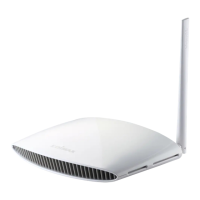
Information on Edimax router models (BR-6228nS, BR-6228nC) and compatible operating systems (Windows XP-8).
Connect the router LAN port to the computer using a cable and power on the router.
Open a web browser and navigate to the router's IP address, typically '192.168.2.1'.
Enter the default username 'admin' and password '1234' to log into the router.
Navigate to 'Tools' > 'Configuration Tools' and click 'Save' to initiate the backup process.
In 'Configuration Tools', click 'Browse' to select a settings file and then 'Upload' to restore.
This document outlines the process for backing up and restoring settings on Edimax routers, specifically models BR-6228nS and BR-6228nC. The instructions are compatible with Windows XP, Windows Vista, Windows 7, and Windows 8 operating systems, providing a broad range of applicability for users. The primary function described is the management of router configurations, allowing users to save their current settings and later reload them, which is crucial for maintaining network stability and personalized setups.
The process begins with ensuring the router is powered on and properly connected to a computer via an Ethernet cable, linking the router's LAN port to the computer. This physical connection is the foundational step for accessing the router's web-based management interface. Once the physical connection is established, the user is instructed to open a web browser and navigate to the router's default IP address, which is "192.168.2.1". This IP address serves as the gateway to the router's internal configuration pages. Upon entering the IP address, the browser prompts for authentication. The default login credentials, "admin" for the username and "1234" for the password, are provided, allowing access to the router's administrative functions. This initial setup highlights the importance of secure access to prevent unauthorized configuration changes.
Once logged into the router's web interface, the user can access various management tools. The document specifically directs the user to the "Tools" section, followed by "Configuration Tools." This section is the central hub for managing router settings, including backup and restore functionalities. The backup feature allows users to save their current router configuration, which includes settings such as Wi-Fi network names (SSIDs), passwords, port forwarding rules, parental controls, and other customized network parameters. To perform a backup, the user clicks the "Save" button under "Backup Settings." This action initiates the download of a configuration file, typically named "config.bin," to the user's computer. The document emphasizes that the settings file is successfully saved, providing confirmation of the backup operation. This backup file is a snapshot of the router's operational state, invaluable for disaster recovery or migrating settings to a new device of the same model.
The restore feature is equally important, enabling users to load a previously saved configuration file back onto the router. This is particularly useful in scenarios where the router's settings have been inadvertently changed, corrupted, or after a factory reset. To restore settings, the user navigates back to the "Configuration Tools" section. Here, they are instructed to click "Browse" to locate the "config.bin" file on their computer that they wish to upload. After selecting the file, clicking the "Upload" button initiates the restoration process. The document states that the restoration typically takes about one minute to complete, after which the router's settings are successfully restored to the state saved in the configuration file. This quick restoration time minimizes network downtime and simplifies the recovery process.
Maintenance features are implicitly covered through the backup and restore functionalities. By regularly backing up router settings, users can safeguard their network configurations against unforeseen issues, such as power outages that might corrupt settings, accidental changes made by other users, or the need to replace a faulty router with a new one. The ability to restore settings ensures that the network can quickly return to its desired operational state without the need for manual reconfiguration, which can be time-consuming and prone to errors, especially for complex network setups. The document also mentions "Restore to Factory Default" as an option, which is a critical maintenance feature for troubleshooting. If a router is experiencing persistent issues, resetting it to factory defaults can often resolve software-related problems by clearing all custom configurations and returning the device to its original state. After a factory reset, the backup and restore process becomes essential for quickly reapplying personalized settings.
The usage features highlighted in the document focus on user-friendliness and accessibility. The web-based interface is standard for modern routers, making it accessible from any computer with a web browser. The step-by-step instructions, including specific IP addresses and default login credentials, guide users through the process clearly. The visual cues, such as the "OK" button for login and the "Save" and "Upload" buttons for configuration management, contribute to an intuitive user experience. The document's emphasis on the successful saving and restoration of settings provides reassurance to the user that their actions have been completed effectively.
In summary, this guide provides a comprehensive overview of how to manage router configurations for specific Edimax models. It details the function of backing up and restoring settings, which are crucial for network stability and personalized operation. The usage features emphasize a straightforward, web-based interface with clear instructions, while the maintenance features are centered around the ability to preserve and recover network configurations, ensuring continuous and reliable network performance. The process is designed to be accessible to users with varying levels of technical expertise, making network management more manageable and less intimidating.
 General
| Ethernet LAN | Yes |
|---|---|
| Cabling technology | 10/100Base-T(X) |
| Networking standards | IEEE 802.11b, IEEE 802.11g, IEEE 802.11n, IEEE 802.3, IEEE 802.3u |
| Ethernet LAN data rates | 10, 100 Mbit/s |
| Ethernet LAN interface type | Fast Ethernet |
| Interface | RJ-45 |
| Input current | 1 A |
| Input voltage | 5 V |
| Rack mounting | No |
| Dimensions (WxDxH) | 134 x 110 x 26 mm |
| WLAN data transfer rates supported | 150 Mbit/s |
| Ethernet LAN (RJ-45) ports | 4 |
| Security algorithms | 128-bit WEP, 64-bit WEP, WPA, WPA-PSK, WPA-TKIP, WPA2, WPA2-PSK |
| Power consumption (typical) | 5 W |
| Certification | CE, FCC |
| Internal memory | 16 MB |
| Operating temperature (T-T) | 0 - 45 °C |
| Operating relative humidity (H-H) | 10 - 90 % |
| Cables included | LAN (RJ-45) |
| Product color | White |
| Top Wi-Fi standard | Wi-Fi 4 (802.11n) |
 Weight and Dimensions
| Weight | 200 g |
|---|





 To Next Page


