395823710a 18
Starting a Fire
1. Fully open the primary air control.
2. Place a small amount of paper in the firebox and cover with a few pieces of
kindling.
3. Light the paper in the stove.
4. Once the kindling is burning quickly, add several pieces of wood. Be
careful not to smother the fire. For best results, use smaller pieces of wood
to get the stove temperature high before loading larger wood for sustained
burns.
5. Load logs evenly across the base being cautious not to place wood in front
of the rear edge of the log guard.
6. Close the loading door.
7. With the primary air control open to its maximum, open the stove door a
fraction and burn for 5 minutes. Then close the stove door. Never leave the
stove unattended when the door is open.
8. Adjust the primary air control depending on the temperature of the stove
required.
Reloading the Stove
To prevent smoke blowing into the room follow these recommendations:
1. Open the primary air control to allow fire to recover for a few minutes.
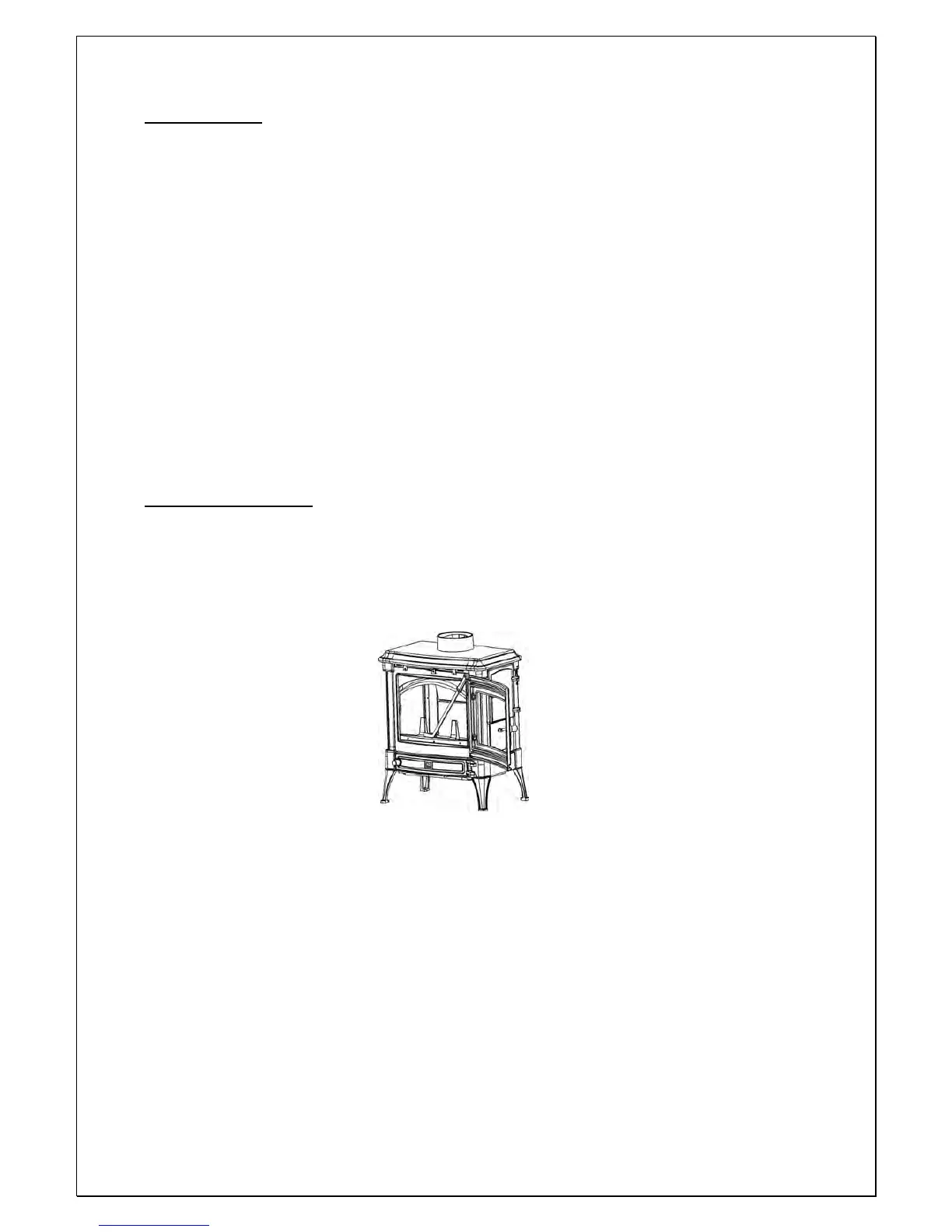
2. Close the primary air control and open the loading door.
3. Rake the embers towards the front of the stove and spread evenly. If there
are logs only partially burned rake these to the front of stove.
4. Feed the logs to the embers. Try to use side loading door as it will allow for
cleaner operation. Load logs evenly across the base being cautious not to
place wood in front of the rear edge of the log guard.
5. Close the loading door.
6. Open the primary air control to its maximum, open the stove door a fraction
and burn for 5 minutes. Then close the stove door. Never leave the stove
unattended when the door is open.
7. Adjust the primary air control depending on the temperature of the stove
required.
- In order to maintain an attractively burning fire, logs should be up to 18"
long (Stanford 80 and Harmony I) or 22” long (Stanford 140 and Harmony
III) and well seasoned.
- High combustion temperatures are the secret to clean glass operation.
When loading wood add one or two logs at a time, depending on size.



 To Next Page