10
(Erre a célra soha ne használjon fémtárgyat, mert
azzal a párologtató tönkremenését kockáztatná!)
E célból nem szükséges a készüléket
áramtalanítani, vagy kiüríteni.
A teljes leolvasztáshoz - évente egyszer vagy
kétszer - a következŒket kell betartania:
1. helyezze a hŒfok szabályozót “” állásra, vagy
áramtalanítsa a készüléket
2. vegye ki a fagyasztott élelmiszereket, csomagolja
újságpapírba, vagy még jobb, ha hıtŒtáskába,
majd tárolja azokat hıvös helyen
3. hagyja a fagyasztó ajtaját nyitva és helyezzen a
fagyasztó lefolyónyílása alá egy edényt a
leolvasztáskor keletkezett víz összegyıjtésére,
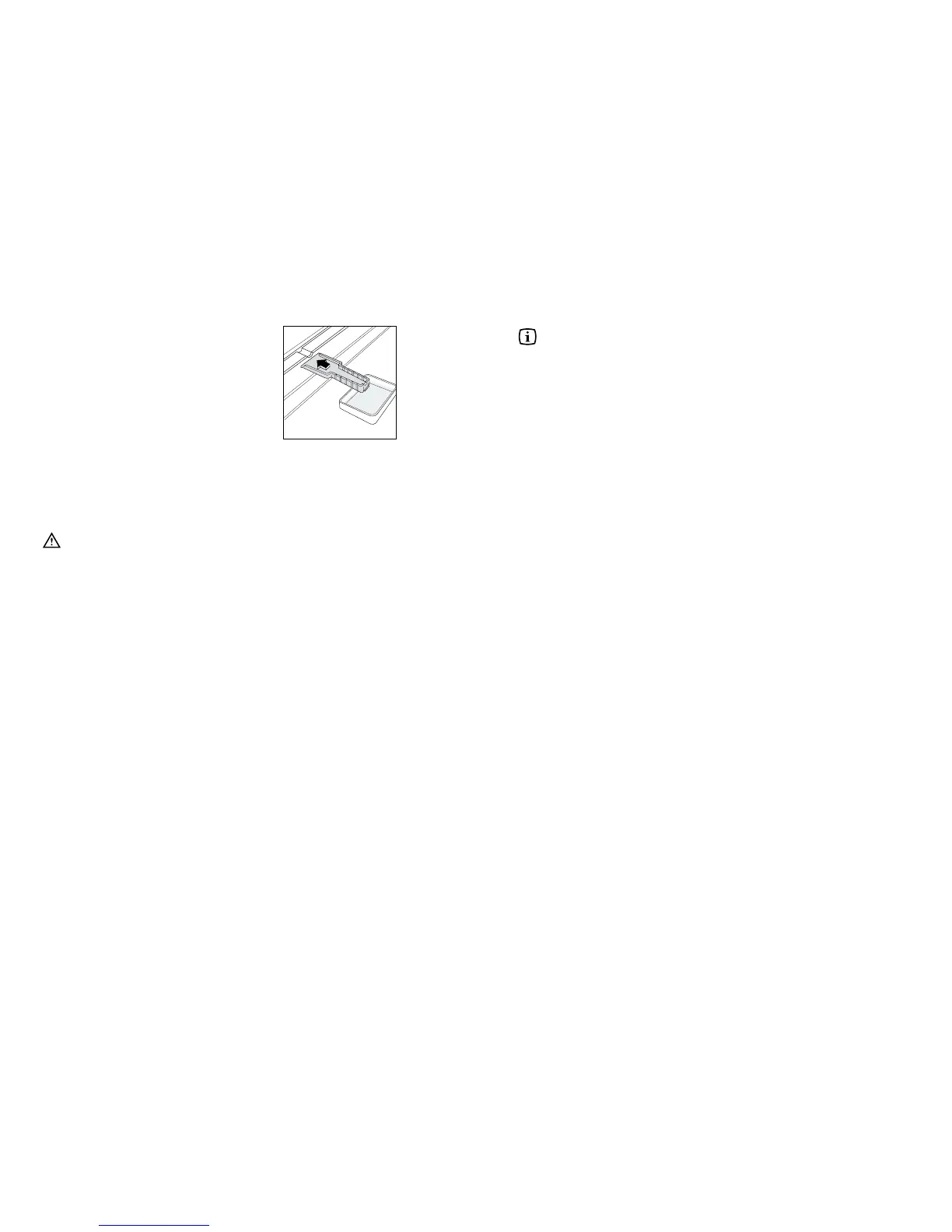
pattintsa fel az ábrán látható nyílászáró dugaszt.
4. a leolvasztás befejeztével törölje gondosan
szárazra a készülék belsejét
5. helyezze a hŒszabályozót a kívánt értékre, illetve
kapcsolja ismét be a készüléket az áramba!
6. két óra elteltével helyezze vissza a készülékbe
az élelmiszereket
Fontos!
Ne használjon éles fém eszközöket a jégnek a
párologtatóról való eltávolításához, mert sérüléseket
okozhat rajta.
Ne használjon a gyártó által ajánlottakon kívül más
fém-, vagy mesterséges eszközt a zúzmara
eltávolításához.
A fagyasztott ételek hŒmérsékletének emelkedése -
a felengedés alatt - jelentŒsen csökkentheti azok
biztonságos eltarthatóságának idŒtartamát.
47
HINTS
Hints for storage of frozen food
To obtain the best performance from this appliance,
you should:
• be sure that frozen foodstuffs are transferred
from the foodstore to the freezer in the shortest
possible time;
• not open the door frequently or leave it open
longer than absolutely necessary.
• Once defrosted, food deteriorates rapidly and
cannot be refrozen.
Hints for freezing
To help you make the most of the freezing process,
here are some important hints:
• the maximum quantity of food which can be
frozen in 24 hrs. is shown on the rating plate;
• the freezing process takes 24 hours. No further
food to be frozen should be added during this
period;
• prepare food in small portions to enable it to be
rapidly and completely frozen and to make it
possible subsequently to thaw only the quantity
required;
• wrap up the food in aluminium foil or polythene
and make sure that the packages are airtight;
• do not allow fresh, unfrozen food to touch food
which is already frozen, thus avoiding a rise in
temperature of the latter;
• water ices, if consumed immediately after
removal from the freezer compartment, can
possibly cause the skin to be freeze burnt;
• it is advisable to show the freezing-in date on
each individual pack to enable you to keep tab of
the storage time;
• The symbols on the drawers show different types
of frozen goods.
The numbers indicate storage times in months
for the appropriate types of frozen goods.
Whether the upper or lower value of the indicated
storage time is valid depends on the quality of
the foods and pre-treating before freezing.
• do not put carbonated liquids (fizzy drinks,
etc.) in the freezer compartment as they may
burst.
Hints for refrigeration
Useful hints:
Meat (all types): wrap in polythene bags and place
on the glass shelf above the vegetable drawer.
For safety, store in this way only one or two days
at the most.
Cooked foods, cold dishes, etc..: these should be
covered and may be placed on any shelf.
Fruit and vegetables: these should be thoroughly
cleaned and placed in the special drawer(s) provided.
Butter and cheese: these should be placed in
special airtight containers or wrapped in aluminium
foil or polythene bags to exclude as much air as
possible.
Milk bottles: these should have a cap and should
be stored in the bottle rack on the door.
Bananas, potatoes, onions and garlic, if not
packed, must not be kept in the refrigerator.



 To Next Page