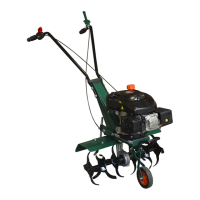
The ELEM garden technic MTBT59-CC139L is a thermal tiller designed for efficient and reliable soil cultivation. This lightweight tiller is equipped with a high-efficiency 4-stroke engine, making it ideal for hoeing close-row crops in semi-hard soils. It operates smoothly and quietly, and its special wear-resistant low-alloy steel blades are designed for powerful and effective hoeing. The swivel guide wheel ensures easy handling, and the starting system, which responds to a button press, enhances work safety.
Important Technical Specifications:
- Engine Design: 4-stroke overhead camshaft
- Engine Reference: FWT1P65FA
- Max Rotation Speed: 2900 min⁻¹
- Engine Displacement: 2.2 kW / 139 cm³
- Working Width: 590 mm Max. – 360 mm Min.
- Tiller Blades: 6 blades, Ø26 cm
- Forward Gears: 1
- Fuel Tank Volume: 1 L (Unleaded fuel)
- Lubricating Oil Tank Volume: 0.6 L (SAE 20W40)
- Starting System: Reverse starter
- Guaranteed Sound Power Level (LWA): 93 dB(A)
- Sound Pressure Level (LPA): 76.5 dB(A)
- Protection Sign: IP 20
- Total Weight: 31 kg
- Vibration Value (Weighted root mean square acceleration): 4.2 m/s² (K = 1.5 m/s²)
Usage Features:
The tiller is delivered without oil or gasoline in the engine, so these must be added before first use.
- Assembly:
- Teeth Installation: Position and align the tine assembly towards the shaft, secure it with a cylinder-type pin, and insert a cotter pin to prevent outward movement.
- Wheel Installation: Secure the wheel support assembly to the base with a bolt and nut, tighten with a spring, and insert a B-shaped pin to prevent the spring from moving outward.
- Handlebar Installation: Place and align the handlebar bar arm on the base, securing it with 4 bolts. Mount the handlebar bar on its arm with 2 bolts on each side. Install the plastic cover on the handlebars with 4 screws on the back side. Connect the clutch cable to the handle (if not already installed).
- Depth Adjustment Post Installation: Secure the depth adjustment post to the base with a cylindrical-type pin, then insert a B-shaped pin to prevent outward movement.
- Before Use:
- Oil Level Check/Addition: Remove the oil filler cap, wipe the dipstick, insert it into the reservoir (without screwing), then remove to check the oil level. If low, fill with SAE20W-40 4-stroke automotive detergent oil to the upper limit mark, avoiding overfilling. Replace the cap/dipstick.
- Fuel Addition: Remove the fuel tank cap. Use unleaded gasoline or E10 fuel. Use a funnel to pour fuel, avoiding spills and overfilling.
- Operation:
- First Inspection: Ensure all guards are in place, nuts and bolts are tight, and the oil level in the engine crankcase is correct. Check the air filter, fuel supply, spark plug cable, and depth control lever. Inspect for oil/fuel leaks and engine damage. Remove debris from the muffler and recoil starter.
- Starting the Engine: Follow manufacturer's instructions carefully. Move the speed control lever to the appropriate position. Grasp the starter handle and pull slowly until resistance is felt, then pull with a quick kick of the whole arm until the engine runs.
- Normal Running: The clutch engages and disengages power to the transmission. Engaging the lever activates the tool; releasing it stops the power.
- Adjusting Cutting Height: Change the depth gauge to achieve the desired tilling height (3 possible positions).
- Adjusting Handlebar: Loosen thumbscrews on both sides, adjust the bar to the correct position, then tighten the screws.
- Transport: Transport the device with the wheel in position 2. The wheel should only be adjusted when the engine is off.
- Safety Precautions:
- Always work in well-ventilated areas due to toxic exhaust gases.
- Keep unauthorized persons, especially children and animals, away from the working area.
- Store the tool in a dry, elevated, or locked place when not in use.
- Use appropriate personal protective equipment: safety shoes with steel toes, anti-skid soles, goggles, ear protectors, and hard gloves.
- Stop the engine before transport. Secure the unit against tilting, damage, and fuel leakage.
- Do not operate when tired or under the influence of alcohol/drugs.
- Always switch off the engine before refueling. Allow the engine to cool down. Avoid overfilling and clean up any spills immediately.
- Inspect for damaged parts before use.
- Never run with the machine. Pull it carefully.
- Do not change engine speed control settings or overspeed the engine.
- Stop the engine before any adjustments or maintenance, especially blade replacement.
- Use only approved and identical spare parts.
- When working on embankments, fill the tank to less than half capacity to avoid spills. Plow perpendicular to the slope. Do not use on slopes greater than 10°.
Maintenance Features:
Regular maintenance is crucial for optimal performance and safety.
- General Maintenance:
- Always cut the engine and remove the spark plug before any work on the appliance.
- Never use aggressive detergents for cleaning.
- Before each use: Check engine oil level and for any loose parts.
- Every 25 operating hours: Exchange engine oil, check engine oil level, clean air filter, remove grass remnants from rotating parts, and wipe the body with a soft cloth.
- Every 100 operating hours: Check, clean, or replace the ignition spark plug.
- Tiller Maintenance:
- The gearbox has factory-installed grease; check the fat level monthly and do not overfill.
- Keep all screws, nuts, and bolts tight.
- For cold weather operation, store the tiller in a cold environment to prevent condensation.
- Never store the machine with gasoline in the tank near open flames or sparks.
- Keep the engine, muffler, battery compartment, and gasoline storage area free from vegetation or excess grease to reduce fire risk.
- Replace worn or damaged parts for safety.
- If the tank needs to be emptied, do so outdoors.
- Allow the engine to cool before storing the machine indoors.
- Replace defective exhaust mufflers.
- Cleaning:
- Keep guards, air vents, and motor housing clean (dust-free). Rub with a clean cloth or blow with low-pressure compressed air.
- Clean the device immediately after each use.
- Regularly clean with a damp cloth and mild soap. Avoid cleaning products or detergents that could damage plastic parts. Ensure no water enters the device interior.
- Air Filter Maintenance:
- Check before each use; replace if necessary.
- Open screws of the air filter cover and remove it.
- Remove the filter cartridge.
- Clean the element by tapping it on a flat surface; do not use corrosive cleaners or gasoline.
- Reassemble in reverse order.
- Spark Plug Maintenance:
- Check for the first time after 10 hours of operation. Clean dirt with a copper wire brush if necessary.
- Perform maintenance every 50 hours of service.
- Remove the spark plug connector with a rotary motion.
- Remove the spark plug with the enclosed wrench.
- Reassemble in reverse order.
- Oil Change / Oil Level Check (before each use):
- Change engine oil when the engine is at operating temperature. Use only 20W40 oil.
- Remove the oil level dipstick.
- Open the oil drain plug and pour hot oil into a collecting container.
- Close the drain plug once old oil has drained.
- Fill with new oil up to the upper mark on the dipstick. Do not screw in the dipstick when checking the level; just insert it to the net (H = max. / L = min.).
- Dispose of used oil properly.
- Long-Term Storage (if not used for over a month):
- Drain all fuel from the tank and carburetor.
- Check oil. Remove spark plug, add some oil to the cylinder, reassemble spark plug, turn crankshaft to distribute oil.
- Slowly pull the starter rope until resistance is felt, tie a knot to secure it, and close the air inlet valve.
- Remove all debris from tines and engine.
- Store in a clean, dry place.
Troubleshooting:
The manual provides a detailed troubleshooting guide for common issues such as the engine not starting, not running, or stopping frequently, as well as problems with the drive and excessive vibrations. It outlines potential causes and corresponding solutions, including checking fuel levels, cleaning filters, inspecting spark plugs, and adjusting cables. For complex issues, it advises contacting an authorized service center.

 Need help?
 General

 To Next Page