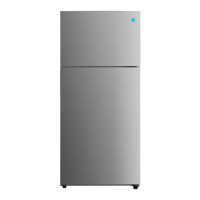
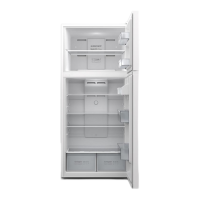
The Element 17.6 cu. ft. Refrigerator is a household appliance designed for storing food at controlled temperatures, offering both refrigeration and freezing capabilities. This user manual provides comprehensive instructions for its setup, operation, and maintenance, ensuring optimal performance and longevity.
Function Description
The primary function of this refrigerator is to preserve food by maintaining specific temperature ranges in its two main compartments: the refrigerator and the freezer. The refrigerator compartment, with a temperature range of 32°F to 50°F (0°C to 10°C), is ideal for short-term storage of fresh produce, dairy, meats, and beverages. The freezer compartment, ranging from -10°F to 10°F (-23.3°C to -12.2°C), is designed for long-term storage of frozen goods, helping to prevent spoilage and extend shelf life. The appliance is equipped with temperature controls for both compartments, allowing users to adjust settings according to their needs and ambient conditions. A frost-free design eliminates the need for manual defrosting, enhancing user convenience.
Usage Features
Setting up the refrigerator involves several key steps to ensure proper functioning. Upon unboxing, all packing materials must be removed from both the interior and exterior. The refrigerator's doors can be reversed to accommodate different room layouts, a process detailed with step-by-step instructions and required tools such as a wrench, hex driver, flathead screwdriver, and Phillips screwdriver. Proper positioning is crucial, requiring at least 2 inches (5 cm) of space around the sides, top, and back for adequate air circulation. The refrigerator should be placed on a hard, level surface, and its adjustable front feet can be turned clockwise or counterclockwise to level the unit. It is important to avoid placing the refrigerator near heat sources, direct sunlight, or in areas where temperatures exceed 110°F (43°C) or drop below 50°F (10°C), as this can impact energy efficiency and temperature maintenance. The appliance is designed for household use and similar applications, including staff kitchen areas, farmhouses, hotels, motels, and bed-and-breakfast-type environments.
Before initial use, the refrigerator should be cleaned, and its interior dried. After moving or reversing the doors, a two-hour waiting period is recommended before turning on the appliance to prevent cooling system malfunctions. Once plugged into a grounded 115/120V AC 60 Hz electrical outlet, the refrigerator automatically turns on. Temperature settings for both the refrigerator and freezer should be set to "RECOMMENDED" initially, and the unit allowed to run for at least four hours to fully chill before food is placed inside.
The refrigerator's internal layout includes shelves, door trays, and crisper drawers, all of which are adjustable to optimize food organization. To adjust a shelf's height, it can be pulled forward, swiveled, and then slid back into the guides.
When storing food, several guidelines are provided to maximize freshness and efficiency. Hot foods should be cooled to room temperature before being placed in the refrigerator to prevent internal temperature increases and frost formation. Overcrowding should be avoided to allow for proper air circulation. To prevent cross-contamination, flavor transfer, and moisture loss, food should be separately packed or covered, except for fruits and vegetables in crisper drawers. Limiting door openings helps prevent cold air from escaping, especially when returning from shopping. Food should not be stored past its recommended expiration or best-by date.
For freezing food, specific containers or bags are recommended, such as special freezer bags, plastic containers, or aluminum foil, avoiding glass, thin cling film, or used food containers. Air should be removed from containers or bags as much as possible, and liquids should have some air space for expansion. Chilling food in the refrigerator before freezing is advised. Unfrozen food should not be placed in direct contact with already frozen items, and too many unfrozen items should not be added at once, as this can reduce freezing ability. Carbonated drinks should not be stored in the freezer. Frozen food should be placed in the freezer as quickly as possible after purchase, following any storage time instructions on the packaging.
In case of power outages, it is recommended to keep doors closed as much as possible, as food can remain cold for several hours. Additional food should not be placed in the refrigerator during an outage. Placing a watertight container of ice in the freezer can help maintain cold temperatures. If a power outage is planned, lowering refrigerator and freezer temperatures an hour beforehand can help, but new food should not be stored during this time.
Maintenance Features
The refrigerator's frost-free design eliminates the need for manual defrosting, simplifying maintenance. Regular cleaning is essential for hygiene and efficiency. Before cleaning the interior, the power should be turned off, and all food, drinks, shelves, and drawers removed. The interior should be cleaned with non-corrosive neutral detergents and a soft cloth or sponge dipped in water, then air-dried with the door open. The freezer should be cleaned with clean water and a dry cloth, also air-drying with the door open. Trays, shelves, and drawers should be cleaned with non-corrosive neutral detergents and a soft cloth, then dried or air-dried. The outside cabinet can be wiped with soapy water or detergent and a soft cloth, then dried.
Door seals should be checked regularly for cleanliness and food particles, and cleaned with soapy water or diluted detergent. Dust and debris behind the refrigerator and on the ground should be cleaned to improve cooling and energy savings. Harsh cleaning agents such as hard brushes, steel wool, wire brushes, abrasives (e.g., toothpaste), organic solvents (e.g., alcohol, acetone, banana oil), boiling water, acid, or alkaline items should be avoided, as they can damage the refrigerator's surface and interior. Direct rinsing with water or other liquids should be avoided to prevent short circuits or electrical insulation damage.
The refrigerator's LED light is designed for a long life and is not user-replaceable; a qualified service provider should be contacted for replacement if needed.
When moving the refrigerator, all objects should be removed, shelves, drawers, and doors secured with tape, and leveling feet tightened. After moving, a two-hour waiting period is required before turning the refrigerator on to prevent cooling system malfunctions.
For long-term storage, if the refrigerator will not be used for several months, it should be turned off, unplugged, emptied, cleaned, and dried. The doors should be left open (or removed) to prevent unpleasant smells or mold.
Servicing the refrigerator should only be performed by a qualified technician using genuine spare parts. Users should not attempt repairs themselves, as this can lead to injury or malfunction.
Energy-saving tips include installing the refrigerator in the coolest part of the room, away from heat sources, and avoiding placing it next to heat-producing appliances. Limiting door openings, organizing food, and cooling hot food to room temperature before storage also contribute to energy efficiency. Ensuring the door is properly closed prevents increased energy consumption and ice/condensation formation. Proper distribution of food and avoiding blocking air vents facilitate cold air circulation. Covering foods and wiping containers dry before placing them in the refrigerator reduces moisture buildup. Shelves should not be lined with aluminum foil, wax paper, or paper towels, as this interferes with cold air circulation.



 To Next Page
 General