
 Need help?
Do you have a question about the Element Multi and is the answer not in the manual?
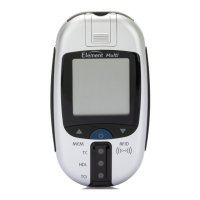
Details the various parts and functions of the Element® Multi testing meter.
Explains the meaning of symbols, codes, and units shown on the meter's LCD screen.
Describes the profile test strip used for multiple cholesterol measurements.
Details the test strip specifically for measuring total cholesterol.
Explains the test strip used for determining HDL-cholesterol levels.
Covers the test strip designed for triglyceride measurement.
Outlines the test strip used for blood glucose measurement.
Lists constraints and potential interferences affecting cholesterol test accuracy.
Presents accuracy data for LDL, Total Cholesterol, HDL, and Triglyceride tests.
Provides precision results for human serum and control solutions for cholesterol tests.
Details constraints and potential interferences affecting glucose test accuracy.
Shows system accuracy results for glucose concentration compared to a laboratory instrument.
Presents precision results for venous blood samples and control solutions for glucose tests.
Explains how to use, replace, and indicates when batteries need changing.
Guides on how to enter and adjust meter settings like year, date, and time.
Details how to select testing units (mg/dL, mmol/L) and configure alarm settings.
Explains the importance and usage of control solution for system verification.
Step-by-step instructions for performing a control solution test using profile strips.
Step-by-step instructions for performing a control solution test using glucose strips.
Provides testing tips and caution for glucose control solution tests.
Outlines steps to take if control solution test results are out of range.
Explains how to test the meter using a Lipid Profile check strip for verification.
Identifies and describes the parts of the lancing device.
Lists important safety precautions for using the lancing device.
Provides step-by-step instructions on how to use the lancing device.
Lists compatible and recommended lancet brands for the device.
Lists the necessary items required to perform a blood test.
Highlights important safety precautions and handling advice for blood testing.
Details the procedure for testing venous whole blood and serum samples.
Warns about potential inaccuracies if the capillary blood sample is not filled correctly.
Step-by-step guide for performing cholesterol tests using profile strips.
Step-by-step guide for performing blood glucose tests.
Step-by-step guide for performing HDL-cholesterol tests.
Step-by-step guide for performing triglyceride tests.
Step-by-step guide for performing total cholesterol tests.
Continues the step-by-step guide for HDL-cholesterol measurement.
Continues the step-by-step guide for triglyceride measurement.
Continues the step-by-step guide for blood glucose tests.
Instructions on how to properly discard used glucose test strips.
Provides crucial details and conditions for using alternate test sites.
Offers cautions and recommendations for accurate alternate site testing.
Explains how to access and review stored cholesterol test results.
Details how to view stored blood glucose test results and average data.
Instructions for removing a single test result from memory.
Guides on how to erase all stored test results from the meter.
Explains how to transmit data to a PC or print results using compatible software and printers.
Provides instructions on how to clean and maintain the meter properly.
Details the process for cleaning the lancing device.
Explains common error messages (Er1-Er4) and their solutions.
Addresses error messages Er5 through Er8 and their probable causes/actions.
Covers troubleshooting for low/high readings and issues with strip contamination or insertion.
Advises on what to do when experiencing inconsistent or unexpected test outcomes.
Lists technical specifications for the cholesterol testing aspect of the system.
Lists technical specifications for the glucose testing aspect of the system.
Provides overall specifications for the Element® Multi meter, including dimensions and power.
Details the warranty terms, coverage, and limitations for the instrument.
Explains how to obtain warranty service and contact local representatives.
Defines the meaning of various symbols used throughout the manual.
 General
| Blood Sample | Capillary whole blood |
|---|---|
| Measuring Range | 20 - 600 mg/dL |
| Battery Life | 1000 tests |
| Operating Temperature | 10°C to 40°C |
| Operating Humidity | 10% to 90% RH |

 To Next Page