
 Need help?
Do you have a question about the Energetica e.CLASSIC M HC and is the answer not in the manual?
Operator's responsibility for compliance with legal regulations and standards.
Installation must be performed by trained specialists with recognized training certificates.
Keep instructions, contact supplier for formal requirements and local approvals.
Instructions valid with product data sheet and packaging/transport information.
Crucial steps and precautions before commencing the installation process.
Guidelines for safe module handling, avoiding damage, and general safety during installation.
Advice on site conditions, weather, and environmental factors for optimal installation.
Verification of connectors, cables, and module condition after the installation is complete.
Avoiding electrical hazards, proper module grouping, and correct polarity during installation.
Guidance on overcurrent protection, junction box handling, and system protection against overvoltage.
Details on connecting modules in series/parallel and ensuring correct polarity.
Ensuring correct interconnection of module strings to reduce high voltages and detect errors.
Explanation of e.ISP for enhanced energy yield and module protection against shading.
Notes on reverse current protection, inverter selection, and necessary external devices.
Guidance on selecting identical modules and adhering to safety factors during installation.
Permitted series connection up to maximum system voltage and inverter limitations.
Addressing risks of reverse currents in parallel connections and recommended solutions.
Ensuring inverters comply with relevant standards and have reverse current protection.
Connecting modules in parallel for amperage, ensuring identical voltage and using string diodes.
Connecting modules in series for voltage, considering current, system voltage, and safety factors.
Applying multipliers to Voc/Isc for increased power output and system design considerations.
Guidelines for double insulation, flexible copper conductors, and minimum wire size.
Requirements for grounding modules according to national/local regulations and safety standards.
Warranty conditions, application class, safety class, and material recommendations for installation.
Requirements for installation locations, operating temperatures, and environmental suitability.
Tips for free shading and optimal orientation to maximize energy yields.
Maximizing sun exposure, storage, handling, module spacing, and orientation.
Methods for attaching modules using clamps on long/short edges and compatibility testing.
Checking snow loads, mechanical stability, and thermal expansion gaps for module frames.
Instructions for secure transport, stacking limits, and handling of modules.
Methods for cleaning modules, avoiding damage, and recommended cleaning agents.
Illustrations of various installation variants using rails, clamps, and insertion profiles.
Table detailing test load pressure/tension for different installation options and load standards.
Important precautions regarding substructure, clamps, wiring, and module bending.
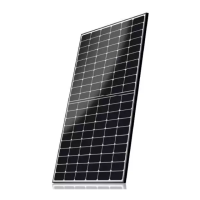
Details on e.Classic M HC and e.Classic M HC black product types and performance classes.
Specifications including dimensions, weight, voltage, temperature range, and protection classes.
Maximum test and permissible loads, along with fire class ratings.
List of certifications and standards met by the photovoltaic modules.
 General
| Output Current | 10 A |
|---|---|
| Power | 240 W |
| Efficiency | > 90% |
| Operating Temperature | -20°C to +60°C |
| Output Voltage | 24 V |
| Storage Temperature | +85°C |
| Humidity | 5% to 95% non-condensing |
| Certifications | CE |
| Protection | Overload, Short Circuit |

 To Next Page