The Entegris A200 SMIF POD is a self-contained mini-environment designed for the protection of semiconductor wafers during storage and transport. It safeguards the product from external contamination when moving between locations or during storage. This user manual outlines the preventive maintenance procedures to ensure optimal product performance and longevity.
Function Description
The A200 SMIF POD creates a controlled mini-environment around the wafers, protecting them from airborne particles, chemical contamination, and physical damage. It is crucial for maintaining the cleanliness and integrity of semiconductor wafers throughout the manufacturing process. The pod's design focuses on minimizing contamination risks and ensuring reliable handling.
Important Technical Specifications
While specific numerical technical specifications like dimensions or material composition are not explicitly detailed in the provided excerpts, the manual highlights several critical functional aspects and components:
- Waferlock Mechanism: This is a key component responsible for securing the wafers within the pod. Its proper function is repeatedly emphasized throughout the inspection guidelines. The waferlock includes components like PEEK screws, a frame, pivots, and a wheel, all of which must be present, properly installed, and free from damage or deformation.
- Door Assembly: The door forms a critical seal for the mini-environment. Its integrity is maintained by a gasket, which must be free from cuts, nicks, and properly seated in its channel. The door also features anti-rotation pins to ensure correct insertion into the pod.
- Shell Assembly: The main body of the pod, which houses the waferlock and door. Its surfaces, particularly those inside the mini-environment, must be free from cracks, scratches, crazing, pitting, chipped or broken edges, as these can be sources of particles or compromise the pod's protective function.
- Cassette Hold Down (CHD): This component secures the wafer cassette within the pod. It must be properly installed, free from warpage, and its spring should be in good condition.
- Door Closing/Opening Torque: Functional inspection includes measuring the torque required to fully lock and unlock the door mechanism. Recommended values are <15 in.lb for closing and ≥2.5 in.lb for opening, indicating proper wear and function of the door mechanisms.
- Door Flatness: The door's flatness is critical for maintaining a proper seal. It is checked using a feeler gauge, with a maximum allowable gap of 0.020".
Usage Features
The A200 SMIF POD is designed for ease of use in semiconductor manufacturing environments, with procedures for handling and cleaning integrated into its operational lifecycle.
- Contamination Protection: Its primary usage feature is to provide a clean, protected environment for wafers, shielding them from external contaminants during transport and storage.
- Manual and Automated Compatibility: While manual separation tools are available for the shell and door, the manual also mentions "more sophisticated and automatic pod openers," suggesting compatibility with automated handling systems.
- Clear Visual Indicators: The inspection checklists for the waferlock assembly (Gen V and Gen IV Dome) include visual aids and clear pass/fail criteria, making it straightforward for users to assess the condition of critical components. For example, the presence or absence of a gap between the waferlock leg and the dome boss hole, or between the waferlock pin and the dome wall, are clearly illustrated.
Maintenance Features
The manual provides comprehensive guidelines for preventive maintenance, categorized into 90-day, Six-Month, and Annual procedures. These procedures aim to identify and address potential issues before they lead to catastrophic failures or contamination.
- Cleaning and Drying:
- Frequency: Every 90 days, before each new lot of wafers, or after a cleanliness event.
- Shell Assembly: Can be cleaned as one piece using various technologies (wet, dry, rotation, immersion, spray). Recommendations include using no or very low concentrations of surfactants followed by a pure DI water rinse. Maximum process/drying temperature is 60°C (140°F). Disassembly may be required for certain cleaning processes or if water traps are an issue.
- Door Assembly: Hand-wiped with isopropyl alcohol or DI water. Immersion and spray washes are not recommended. The gasket should be removed, inspected, and replaced yearly.
- Visual Inspection:
- Frequency: Every 90 days (or after an incident), every six months, and annually.
- Scope: Covers the shell surface (cracks, scratches, chemical attack, chipped/broken edges, alignment tabs/pins), gasket wear, Cassette Hold Down (CHD) condition, waferlock components (presence, proper installation, knife edge condition, frame integrity, pin contact with dome wall), door inner surface, gasket installation, and anti-rotation pins.
- Tools: Wafer inspection light recommended for detailed visual checks.
- Functional Inspection:
- Frequency: Every 90 days (waferlock), every six months (door).
- Waferlock: Manual cycling three times to check for catching, hitching, or binding.
- Door: Measuring door opening and closing torque using a Snap-on Tools Torqometer® or equivalent.
- Periodic Replacement Parts:
- Frequency: Annually.
- Parts: Gasket, waferlock and wheel, Cassette Hold Down (CHD).
- Procedure: Detailed instructions are provided for gasket installation (matching notches, pressing into groove, using a roller tool), CHD installation (removing old, pushing in new, pounding into place), and waferlock and wheel installation (removing old, installing new).
- Checklists: Detailed checklists for A200 Waferlock Assembly (Gen V and Gen IV Dome) are provided, including visual aids and specific criteria for checking the waferlock frame, pivot, wheel, frame edge, O-ring, screw torque, and dowel pin contact. These checklists facilitate systematic inspection and troubleshooting.
- Corrective Actions: For each identified issue during inspection, specific corrective actions are recommended, such as cleaning, discontinuing use and consulting Entegris, replacing parts, tightening screws, or removing the door from service.
The comprehensive maintenance schedule and detailed inspection procedures ensure that the A200 SMIF POD continues to provide a reliable and clean environment for sensitive semiconductor wafers, minimizing the risk of contamination and operational failures.

 Need help?
 General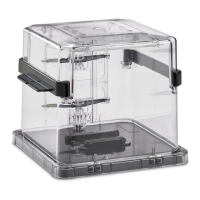

 To Next Page