Open-Circuit Voltage Test
For accurate voltage readings, batteries must remain idle (no charging, no discharging) for at least 6 hrs.,
preferably 24 hrs.
1. Disconnect all loads from the batteries.
2. Measure the voltage using a DC voltmeter.
3. Check the state of charge with Table 1.
4. Charge the battery if it registers 0% to 70% charged.
If battery registers below the Table 1 values, the following conditions may exist:
1. The battery was left in a state of discharge too long.
2. The battery has a bad cell.
Batteries in these conditions should be taken to a specialist for further evaluation or retired from service.
Watering
(Flooded batteries only)
Flooded batteries need water. More importantly, watering must be done at the right time and in the right amount
or else the battery's performance and longevity suffers.
Water should always be added after fully charging the battery. Prior to charging, there should be enough water to
cover the plates. If the battery has been discharged (partially or fully), the water level should also be above the
plates.
Keeping the water at the correct level after a full charge will prevent having to worry about the water level at a
different state of charge.
1. Do not let the plates get exposed to air.
2. Do not fill the water all the way up to the cap.
3. Do not use water with a high mineral content.
4.Use distilled or deionized water only.
CAUTION The electrolyte is a solution of acid and water so skin contact should be avoided.
Procedure:
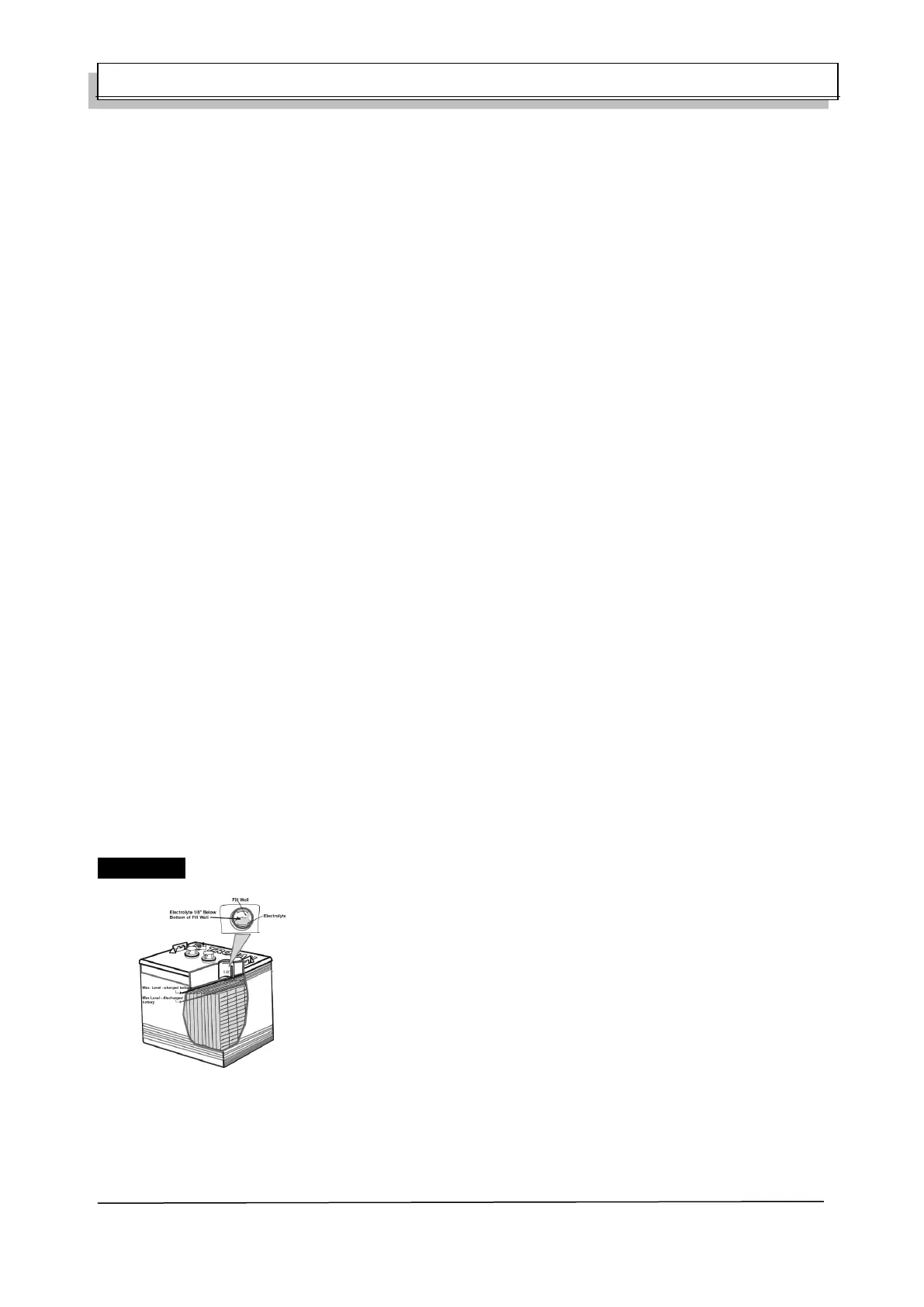
1. Open the vent caps and look inside the fill wells. Check electrolyte level; the minimum level is at the top of
the plates.



 To Next Page