The ESCO S-Series Posilok® system is a tooth system designed for heavy-duty applications, likely in earthmoving or mining equipment, where efficient and secure attachment of wear components is critical. The system is characterized by its robust design, ease of installation and removal, and provisions for maintenance to extend the lifespan of the components.
Function Description:
The S-Series Posilok® system serves as a ground engaging tool (GET) for various types of heavy machinery, such as excavators, loaders, or dozers. Its primary function is to provide a durable and replaceable wear surface at the digging or loading edge of a bucket or similar attachment. This system is designed to withstand abrasive conditions and high impact forces encountered during operation. The "Posilok" designation implies a secure locking mechanism that ensures the adapter and point remain firmly attached to the tooth base, minimizing the risk of detachment during strenuous work. The system allows for quick and efficient replacement of worn components, reducing downtime and maintenance costs. The manual details procedures for installing and removing adapters, rebuilding worn nose sections, and installing/removing wear caps, all contributing to the system's overall maintainability and operational efficiency.
Important Technical Specifications:
The manual provides specific hex bit sizes for different system sizes, indicating the tools required for installation and removal:
- S95 System: 14mm hex bit
- S110 System: 17mm hex bit
- S130 & S145 Systems: 19mm hex bit
Recommended pin torque values are also specified to ensure proper installation and secure fastening:
- S95 System: 120-150 ft-lb (160-200 nm)
- S110 System: 150-190 ft-lb (200-260 nm)
- S130 & S145 Systems: 90-290 ft-lb (260-390 nm)
These torque specifications are crucial for ensuring the adapter is fully installed and the pin is securely tightened, preventing premature wear or failure. The pin retightening interval is recommended every 600 to 1200 hours of operating service, depending on the severity of the application, highlighting the importance of regular checks.
Usage Features:
The S-Series Posilok® system is designed with several user-friendly features to facilitate its operation and maintenance:
- Sidewinder Pin Mechanism: The system utilizes a "Sidewinder" pin, which is designed for operation with a ratchet wrench, simplifying the retraction and extension process. For S95PN pins, retraction is achieved by turning clockwise, while for S110, S130, and S145 pins, retraction is counterclockwise. Extension for all sizes is the opposite direction. This mechanism allows for controlled and precise pin manipulation.
- Ease of Installation/Removal: The manual emphasizes the use of appropriate lifting devices for positioning adapters and recommends specific tools (socket drive with hex bit) for pin manipulation. The design aims to make these procedures as straightforward as possible, though it explicitly warns against using air impact tools for installation to prevent damage to the pins. Air impact tools can be used with caution for removal.
- Grease Application: For applications with soil fines that pack and harden, it is recommended to cover the outer sleeve of the pin in grease. This helps prevent the accumulation of debris and ensures smoother pin operation.
- Pin Cap: A pin cap is provided to prevent soil fines from filling the pin hex socket, maintaining the cleanliness and functionality of the pin mechanism.
- Wear Cap Styles: The system supports both lock-style and non-lock style wear caps. Lock-style wear caps are used on weld-on bases, while non-lock style wear caps are for intermediate adapters. This versatility allows the system to be adapted to different equipment configurations and wear patterns.
- Visual Inspection: The manual stresses the importance of visually inspecting the tooth base for wear and refers to a nose rebuild section for acceptance standards, promoting proactive maintenance.
Maintenance Features:
Maintenance is a key aspect of the S-Series Posilok® system, with detailed procedures provided to maximize component life and operational efficiency:
- Component Preparation: Before installation, all bearing surfaces on the tooth base, adapter, and pin must be thoroughly cleaned. This ensures proper fit and function, and prevents premature wear caused by debris.
- Pin Retightening: Regular retightening of the pin is crucial, with intervals specified (600 to 1200 hours) based on application severity. This helps maintain the secure connection between the adapter and the tooth base.
- Nose Rebuild Procedures: The manual provides comprehensive instructions for rebuilding worn nose sections, including:
- Nose End and Sides Rebuild: Using an ESCO nose side template, welding rebuild material, and grinding flat until gage ends align with the front edge of the pin hole. Weld stringer beads should run parallel to the nose width.
- Nose Flats Rebuild: Using an ESCO nose flats template, welding buildup, and grinding flat until the template contacts the nose end. Weld beads must be oriented parallel to the nose end.
- Rear Corner Rebuild: Using a 3D nose template, welding buildup, and grinding flat until the template makes contact and the bayonets are aligned with the front of the keyslot, ensuring minimal movement.
- Templates (WRT S95ST, WRT S95CT, WRT-S95-3D, etc.) are specified for different system sizes to guide the rebuild process, ensuring accurate dimensions and fit.
- Wear Cap Installation and Removal: Detailed steps are provided for both lock-style and non-lock style wear caps. For lock-style caps, specific tools (drift, hammer, ESCO lock removal tool 37V/57V) are used to rotate the lock to the unlocked or locked position. For non-lock style caps, the process involves sliding the cap on or off and pinning the point. The manual advises against striking corners or edges with a hammer during wear cap removal to prevent damage.
- Debris Removal: Emphasized throughout the manual is the importance of cleaning debris from pin head slots, around wear cap locks, and between wear caps and adapters to facilitate removal and prevent issues.
- Timely Removal of Worn Components: The manual advises removing worn-out adapters directly after taking the bucket out of service, before soil fines harden in place, which can make removal more difficult.
- Safety Precautions: Throughout the manual, "WARNING" and "CAUTION" statements highlight critical safety information, emphasizing the use of proper safety equipment (hard hat, gloves, safety shoes, eye protection, hearing protection, fall protection) and adherence to regional, national, and site requirements (e.g., OSHA, MSHA) during all maintenance work. This underscores ESCO's commitment to user safety during the operation and maintenance of their products.
In summary, the ESCO S-Series Posilok® system is a well-engineered GET solution that prioritizes secure attachment, ease of maintenance, and extended component life through detailed installation, removal, and rebuild procedures, all while emphasizing safety.

 Need help?
 General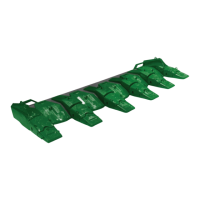

 To Next Page