
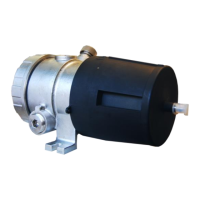
Why is my ESP Safety Gas Detectors showing a constant GAS alarm when there is no gas?
- BbradleyamandaAug 6, 2025
A constant gas alarm when no gas is present could indicate a calibration error. You should perform the calibration procedure.
Why is my ESP Safety Gas Detectors showing a constant GAS alarm when there is no gas?
A constant gas alarm when no gas is present could indicate a calibration error. You should perform the calibration procedure.
What to do if my ESP Safety SGOES Gas Detectors has constant fault alarm?
If your device is showing a constant fault alarm, it might be caused by a blockage or dirt between the receiver and the mirror. Turn off the power and carefully clean the optical components using alcohol and a scratch-resistant cloth or chamois.
How to fix an ESP Safety SGOES with no Status LED?
If the Status LED is not lit, it may be due to a lack of power supply. Detach the base with the cable entry from the SGOES enclosure and verify that the terminals are receiving a voltage of 24±6 VDC.
Describes the SGOES as a combustible gas detector for hydrocarbon monitoring in various environments.
Highlights critical features like fast response time, wide operating temperature, and robust construction.
Explains how the SGOES uses infrared absorption to selectively detect hydrocarbon gases.
Identifies and illustrates the main physical components of the SGOES unit.
Provides detailed technical drawings with measurements for the SGOES unit.
Details detected gases, measurement range, accuracy, response time, and environmental limits.
Lists safety and industry certifications like FM, CSA, ATEX, and relevant EN standards.
Provides critical safety precautions for handling, installing, and operating the SGOES.
Explains the explosion-proof design and safety measures for hazardous locations.
Offers advice on optimal placement of the SGOES based on leak sources and environmental factors.
Details the importance and method of grounding the SGOES for safety and to reduce RFI.
Covers cable sealing, conductor size, shielding, and connection best practices for reliable operation.
Outlines the procedure for powering the SGOES on and its initial operational status.
Step-by-step instructions for calibrating the SGOES using ESP Commander software.
Presents the menu tree for performing calibration via a HART communicator.
Details the equipment and procedure for calibrating the SGOES using a magnetic wand.
A table listing common fault conditions, their descriptions, and recommended solutions.
Covers routine checks like visual examination, cleaning, and performance testing for system upkeep.
Outlines the terms, exclusions, and conditions of the ESP Safety warranty for the SGOES.
Provides instructions for obtaining an RMA and the process for returning the unit for service.
Lists available accessories and contact details for ordering replacement parts and items.
Provides formulas for converting output current (mA) to gas concentration (%LEL).
Explains how to calculate absolute and relative errors to assess measurement accuracy.
Presents the measurement ranges and basic error limits for various detected hydrocarbons.
Illustrates terminal layouts and wiring configurations for 3-wire and 4-wire systems.
Displays the hierarchical menu structure for configuring the SGOES using a HART communicator.
Shows the wiring connections required to integrate the SGOES with a VECTOR Field Control Unit.
Illustrates the wiring diagram for connecting the SGOES to the UPES system.
Depicts the wiring connections for interfacing the SGOES with an analog input module or PLC.
| Detection Range | 0-100% LEL |
|---|---|
| Power Source | Rechargeable Lithium-ion battery |
| Certifications | ATEX, IECEx, UL, CSA |
| Target Gas | Combustible gases |
| Display | LCD |
| Operating Temperature | -20°C to +50°C (-4°F to +122°F) |
| Operating Humidity | 15-95% RH, non-condensing |
| Detection Gases | Methane, Propane, Butane |
| Alarm Indicators | Audible and visual alarms |