EasyManua.ls Logo

ETL MUA Controls - User Manual

ETL MUA Controls
84 pages
Print Icon
To Next Page IconTo Next Page
Loading...
A0033037
October 2020 Rev. 01
MUA Controls
Standard and Modular/Recirculating Direct Fired Heaters
Installation, Operation, and Maintenance Manual
FOR YOUR SAFETY
IF YOU SMELL GAS: OPEN WINDOWS, DO NOT TOUCH ELECTRICAL SWITCHES, EXTINGUISH
ANY OPEN FLAMES, IMMEDIATELY CALL YOUR GAS SUPPLIER.
RECEIVING AND INSPECTION
Upon receiving unit, check for any interior and exterior damage. If damage is found, report it
immediately to the carrier. Check that all accessory items are accounted for and free of damage.
WARNING!
Improper installation, adjustment, alteration, service, or maintenance can cause property
damage, injury, or death. Read the installation, operating, and maintenance instructions
thoroughly before installing or servicing this equipment. ALWAYS disconnect power and gas
before working on heater.
Save these instructions. This document is the property of the owner of this equipment and is required
for future maintenance. Leave this document with the owner when installation or service is complete.
Modular Direct Fired Heater
Direct Fired Heater
Modular Direct Fired Recirculating Heater

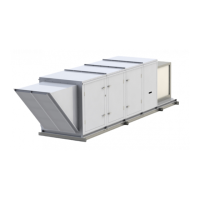
Table of Contents

Questions and Answers

  • D
    Diane RussellAug 15, 2025
    How to fix an ETL Heater when the fan is inoperative?
    • G
      gayjosephAug 15, 2025
      If the fan in your ETL Heater isn't working, start by checking the amperage, fuse, and circuit breaker. Replace the fuse if necessary. Also, ensure the disconnect switch is in the “ON” position. Inspect the motor wiring, comparing it to the wiring diagram on the fan motor. If the fan belt is broken, replace it. Finally, check and reset the motor starter if it's overloaded.
  • R
    Robyn JensenAug 18, 2025
    Why ETL Heater is not producing enough heat?
    • D
      Diana JohnsonAug 18, 2025
      If your ETL Heater isn't producing enough heat, first, make sure the main gas pressure isn't too low, increase it, but do not exceed 14 inches wc inlet pressure (5 PSI on size 4-5 heater). If possible, decrease the airflow. Check the design conditions of the burner, and inspect the wiring of the gas controls. Also, ensure the heat setpoint isn't too low; increase it if needed. Replace the HMI if it’s faulty and check/replace the discharge sensor. Finally, check the wiring if the unit is locked into low fire.
  • M
    Matthew ZimmermanAug 22, 2025
    What to do if ETL Heater motor is overloaded?
    • A
      austindanielAug 22, 2025
      If your ETL Heater is experiencing a motor overload, check that the fan is rotating in the correct direction as indicated on the rotation label. Reduce the fan RPM if the fan speed is too high or if the duct static pressure is lower than designed. Inspect the motor wiring, comparing it to the wiring diagram on the fan motor. Ensure the overload in the starter is set to the motor’s FLA value and determine if the motor HP is sufficient for the job.
  • M
    Michael ChavezAug 25, 2025
    Why is my ETL Heater producing too much heat?
    • T
      Tina Ramirez DDSAug 26, 2025
      If your ETL Heater is producing too much heat, you should check or replace the modulating valve if it’s defective. Ensure that the heat setpoint isn't too high, and decrease it if necessary. Check the wiring if the unit is locked into high fire. Replace the HMI if it’s faulty and check/replace the discharge sensor.
  • A
    Adrian MooreAug 28, 2025
    How to increase airflow in my ETL Heater?
    • K
      Kathleen PerezAug 28, 2025
      To address insufficient airflow in your ETL Heater, verify that the fan is rotating in the direction shown on the rotation label. Check the duct and connections for poor outlet conditions, ensuring a straight duct connection to the outlet. Inspect the damper linkage and replace the damper motor if damaged. Check the ductwork and adjust/resize it to reduce duct losses if the duct static pressure is higher than designed. Increase fan RPM if the blower speed is too low, but avoid overloading the motor. Open or adjust any closed supply grills or registers. Clean or replace dirty/clogged filters and adjust the belt tension if there's belt slippage.
  • K
    kmorrisAug 31, 2025
    How do I stop excessive vibration and noise in my ETL Heater?
    • J
      Jose BrownSep 1, 2025
      To resolve excessive vibration and noise in your ETL Heater: * Replace the wheel if it's damaged or unbalanced. * Align misaligned pulleys. * Refer to the performance curve for the fan if it's operating in an unstable region. * Lubricate bearings or replace them if damaged. * Reduce fan RPM if the fan speed is too high. * Clean dirty or oily belts and adjust or replace loose belts. Replace worn belts.
  • M
    Melissa AllenSep 4, 2025
    Why won't the pilot light stay lit on my ETL Heater?
    • M
      michellerobertsSep 4, 2025
      To troubleshoot why the pilot light won't light or stay lit on your ETL Heater, first, ensure the main gas is on by opening the main gas valve. Purge the gas line to remove any air. Clean the pilot orifice with compressed air if it's dirty. Adjust the gas pressure if it's out of range. Turn on the pilot valve if it's off and tighten the pilot orifice if there's a leak. Redirect any excessive drafts away from the unit. Check the limits and airflow sensor if a safety device has cut power. Clean the flame sensor if it's dirty and replace the flame rod if it's defective. Adjust the heat setpoint if there's no call for heat. Finally, check the wiring, sensor, and ignition controller if there's no spark at the igniter and check the spark gap.
  • M
    michael49Sep 7, 2025
    What to do if main burner does not light on ETL Heater?
    • E
      ethanjacksonSep 7, 2025
      To address a main burner that won't light on your ETL Heater (when the pilot is lit), replace the combination valve if it's defective. Check the wiring to the valve if it's loose. Open the shut-off valve if it's closed. Replace the flame safety controller if it's defective. If the pilot fails as the main gas valve opens and gas flows, plug the first burner port next to the pilot gas tube with burner cement.
  • J
    Jeremy LloydSep 10, 2025
    How to reduce excessive airflow in ETL Heater?
    • X
      xdavisSep 10, 2025
      To fix excessive airflow in your ETL Heater, reduce the fan RPM if the blower speed is too high or if the duct static pressure is lower than designed. Install filters if they are missing.

Summary

Receiving and Inspection

WARRANTY

Listings

Describes ETL listing standards for gas unit heaters and safety control boards.

Patents

Lists relevant patents for the technology, specifically for make-up air systems.

INSTALLATION

Mechanical

Covers mechanical considerations and warnings for unit handling and lifting.

Clearance

Specifies minimum clearances from combustible materials and service areas.

Site Preparation

Details requirements for preparing the installation site and unit placement.

Intake Assembly

Curb and Ductwork

Installation Methods

Roof Mount Installation

Details for mounting the unit on a roof, including curb requirements.

Installation with Exhaust Fan

Specific instructions for units installed with an exhaust fan system.

Duct Mount Installation

Guidance for installing the unit directly into ductwork systems.

Indoor (Inline) Installation

Instructions for installing the unit within an indoor space or duct run.

Recirculation Unit Installation

Installation details for recirculation units, roof and inline.

Heat Module Add-On Installation

Gas Installation

Electrical Installation

Fan to Building Wiring Connection

Details on connecting the unit's wiring to the building's power supply.

Control System Components

Make-up Air (MUA) Board Connectors

Identifies and describes connectors on the Make-up Air (MUA) control board.

HMI and Remote Room Sensor Installation

Guidance on installing Human-Machine Interface (HMI) and remote sensors.

Operation and Configuration

Temperature Control

Explains how the unit controls temperature based on various inputs.

ECM and PWM Speed Control

Details on controlling fan speed using ECM motors and external PWM signals.

Accessing HMI Menus

How to navigate and access the HMI menu for configuration.

HMI Configuration Settings

Details on configuring HMI settings like communication and advanced options.

Scheduling Operation

How to set and manage operational schedules using the HMI.

Unit Options and Presets

Configuration options for unit features like dampers, heaters, and mixing box.

Menu Descriptions

User Settings

Navigating user settings for temperature, intake, discharge, and option setpoints.

Factory Settings

Accessing and configuring job-specific unit parameters with a password.

Service Settings

Accessing diagnostic and testing functions with a certified technician password.

Factory Settings Details

Heating Configuration

Setting various heating configurations, including type, stages, gas, and limits.

Cooling Configuration

Setting cooling types, condenser staging, and minimum times for cooling operation.

Blower Configuration

Detailed configuration options for blower control, modes, presets, and interlocks.

Pressure and Mixing Box Config

Settings for pressure control, purge cycles, dry mode, and mixing box behavior.

Damper and CO2 Configuration

Settings for damper presets, intake/discharge adjustment, and CO2 control parameters.

Advanced Factory Settings

Configuring outdoor reset, dynamic set points, override durations, and sensor offsets.

Service Settings Details

Monitoring Parameters

Monitoring various unit parameters like temperatures, humidity, VFD status, and limits.

Test Menu and Options

Accessing diagnostic tests for components and running specific operational tests.

Maintenance and Calibration

Procedures for clearing faults, setting clock, factory reset, and calibrating sensors.

Menu Tree and DDC Points

User Settings Menu Tree

Navigating user settings for temperature, intake, discharge, and option setpoints.

DDC Control Points

List of DDC control points, their types, functions, and descriptions.

DDC Notes

Important notes regarding DDC control, settings, and scheduling.

Fault Lists

DDC Fault List

Comprehensive list of DDC fault codes and their descriptions.

VFD Fault List

List of fault codes specific to the Variable Frequency Drive (VFD).

Troubleshooting

Airflow Troubleshooting

Identifies causes and corrective actions for airflow-related problems.

Burner Troubleshooting

Troubleshooting common issues with pilot and main burner ignition and operation.

HMI Fault Codes

Lists HMI fault codes, potential causes, and corrective actions.

Unit Reset and Maintenance

Resetting Unit

Procedure for resetting the unit's flame safety control or other faults.

General Maintenance

Routine maintenance procedures for ensuring unit cleanliness and proper operation.

Burner Maintenance

Annual maintenance procedures for the burner assembly, including cleaning.

Unit Filters

Information on filter quantities and replacement for various unit configurations.

Shutdown Procedures

Emergency Shutdown of Unit

Steps for safely shutting down the unit in an emergency situation.

Prolonged Shutdown of Unit

Procedures for safely shutting down the unit for extended periods and restarting it.

Start-Up Documentation

ETL MUA Controls Specifications

General IconGeneral
BrandETL
ModelMUA Controls
CategoryHeater
LanguageEnglish