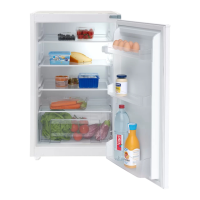
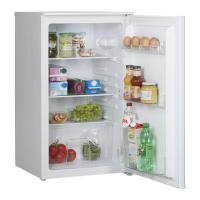
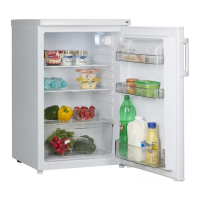
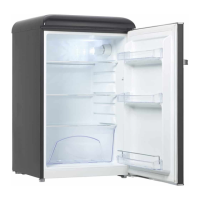
This document provides instructions for use of the ETNA KK0182 refrigerator, an appliance designed for household use to store fresh food at temperatures above 0°C.
Function Description
The ETNA KK0182 is a refrigerator with a cooling system that includes a compressor. It features a control unit for temperature setting and on/off operation. The interior is equipped with various storage components to facilitate organized food storage.
Important Technical Specifications
- Appliance Type: Refrigerator
- Model: KK0182
- Intended Use: Household use, storing fresh food above 0°C.
- Installation: Integrated appliance, designed to be installed into a kitchen cabinet. It has four height-adjustable feet, allowing the appliance height to be set between 82 cm and 90 cm.
- Environmental Temperature Classes:
- SN (subnormal): from +10°C to +32°C
- N (normal): from +16°C to +32°C
- ST (subtropical): from +16°C to +38°C
- T (tropical): from +16°C to +43°C
- Refrigerant: The room where the appliance is installed should have at least 1 m³ of space per 8 grams of refrigerant. The amount of refrigerant is specified on the rating plate.
- Power Connection: Must be connected to grounded power mains in compliance with standards and regulations. Nominal voltage and frequency are indicated on the rating plate. The appliance can withstand short-term voltage deviations of +/- 6%.
- Interior Lighting: Refrigerator interior lighting is present.
- Defrosting: Automatic refrigerator defrosting. Manual defrosting is advised if an excessive layer of ice (3-5 mm) forms on the rear wall.
- Bulb Type: E14, special purpose lamp for household appliances only, not suitable for household room illumination.
Usage Features
Turning the Appliance On/Off and Temperature Setting:
The appliance is controlled by a thermostat knob.
- Turn On: Rotate the knob clockwise towards position 7.
- Turn Off: Rotate the knob back to position STOP (0).
- Temperature Adjustment: Higher settings (towards 7) correspond to cooler temperatures. The temperature in the refrigerator interior may drop below 0°C at higher settings. Medium settings are recommended for normal environment temperatures. The thermostat setting should be adjusted based on changes in environment temperature. When the knob is set to STOP (0), the cooling system is off, but the appliance is still powered (interior light will illuminate when the door is opened).
Interior Equipment:
The interior equipment may vary by model.
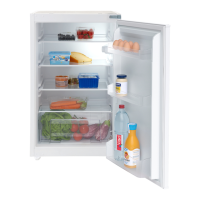
- Glass Shelves: Height-adjustable shelves using guides in the refrigerator interior. They are protected against being completely pulled out. To adjust, lift and pull the shelf to the clearance in the guides, set to desired height, then push back. To remove, lift and pull to clearance, then lift the left-hand side and pull out at an angle.
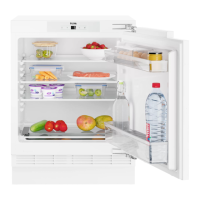
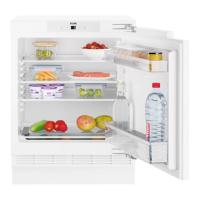
- Fruit and Vegetable Bin: Located at the bottom of the refrigerator compartment, below the serving tray. This bin maintains adequate humidity beneficial for storing fruit and vegetables, slowing down drying.
- Serving Tray: Located above the fruit and vegetables bin. It can be used as an additional shelf or as a serving tray.
- Door Bins: Various bins on the interior side of the refrigerator door for storing cheese, butter, eggs, yogurt, smaller packages, tubes, and cans. A bottle shelf is at the lower end.
- Adjustable Door Bin: The height of door bins can be adjusted by squeezing tabs on both sides and moving the bin up or down. To remove, lift it as far as it will go and pull it out.
- Storage Bin (MultiBox)*: Offers a convenient way to store food with strong or pungent smells (e.g., ripened cheese, sausages, onions, butter). It features a silicone lid that provides an air-tight seal, preventing food from drying out and odors from spreading. The silicone lid can also function as an egg or ice tray. If used as an egg tray, it is placed directly on the bottom of the door bin, allowing the open lower part of the MultiBox to store smaller packages like pâté, jams, or tubes.
Food Storage:
- Hygiene: Correct use, appropriate packaging, maintaining the right temperature, and observing food hygiene standards are crucial for food quality.
- Expiry Dates: Always observe expiry dates on food packaging.
- Packaging: Store food in closed containers or appropriate packaging to prevent odor transfer.
- Forbidden Items: Do not store inflammable, volatile, or explosive substances. Bottles with high alcohol content should be tightly sealed and stored upright.
- Material Protection: Some organic solutions, essential oils (lemon/orange peel), butter acid, etc., can damage plastic surfaces with prolonged contact, leading to damage and premature aging.
- Odors: Unpleasant odors indicate a lack of cleanliness or perished contents.
- Long Absence: Remove perishables from the refrigerator if leaving home for a long period.
Recommended Food Storage Times:
- Eggs, marinades, smoked meat: up to 10 days
- Cheese: up to 10 days
- Root vegetables: up to 8 days
- Butter: up to 7 days
- Desserts, fruit, ready-to-eat food, chunks of raw meat: up to 2 days
- Fish, raw minced meat, seafood: up to 1 day
Maintenance Features
Cleaning the Appliance:
- Safety First: Before cleaning, always unplug the appliance from the power mains (switch off and unplug the power cord).
- Surfaces: Use a soft cloth for all surfaces. Avoid abrasive substances, acids, or solvents as they can damage surfaces.
- Exterior: Clean with water or a mild solution of suds. Lacquer-coated and aluminum surfaces can be cleaned with lukewarm water and a mild detergent. Low-alcohol cleaners (e.g., window cleaners) are permitted, but avoid alcohol-containing cleaners for plastic materials.
- Interior: Clean with lukewarm water, optionally with some vinegar.
- Drainage System: A gutter and opening for thawed ice water are located underneath the cooling panel. These must not be clogged. Inspect and clean them regularly (e.g., with a plastic straw).
- Ice Build-up: Frost or ice build-up of 3-5 mm thick increases power consumption. Remove it regularly. Do not use sharp objects, solvents, or sprays.
- Condenser Unit: Vacuum dust from the condenser unit. To do this, remove the cabinet kickplate, reach into the openings on the switchboard to release the latch, pull out the plate, remove the condensate tray, and then vacuum the dust. Replace components in reverse order.
- Post-Cleaning: After cleaning, switch the appliance back on and reinsert food.
Defrosting the Appliance:
- Automatic Defrosting: The refrigerator automatically thaws ice on the back interior wall. Melted droplets are collected in a groove/gutter, drained through a hole, and discharged into a tray at the bottom of the appliance base.
- Manual Defrosting: If an excessive layer of ice (3-5 mm) forms, switch off the appliance and defrost it manually. It is also advisable to empty the condensate tray during manual defrosting. To access the condensate tray, remove the cabinet kickplate, release the latch in the switchboard openings, pull out the plate, and then remove and empty the tray.
Troubleshooting:
- Appliance not working: Check if there is voltage in the power outlet and if the appliance is switched on.
- Continuous cooling system operation: Could be due to high environment temperature, frequent/long door openings, incorrectly closed door (impurities on seal, misaligned door, damaged seal), too much fresh food inserted, or insufficient compressor/condenser unit cooling. Clean the condenser unit.
- Excessive ice build-up on back wall: Caused by frequent/long door openings, warm food placement, food touching the back interior wall, or poor door sealing. Clean or replace a dirty/damaged seal.
- Water leaking: Due to a clogged water discharge opening or water dripping past the gutter. Clean the opening (e.g., with a plastic straw). If thick ice layer, manually defrost.
- Difficult to open door: If trying to open immediately after closing, negative pressure can form as cool air escapes and warm air enters. This normalizes after a few minutes.
- Replacing the bulb: Disconnect from power mains. Insert a screwdriver into the slot in the cover, lift and remove it. Replace with a new E14 bulb of the same power rating. Dispose of the blown bulb properly. Note that the bulb is a consumable and not covered by warranty.
- Sound alarm (excessive dust on condenser unit): A sound alarm signals excessive dust when the door is opened. Check air circulation through bottom rail openings and clean/vacuum dust from the condenser.
Appliance Noise:
- Normal Operation: Cooling systems generate some noise from the compressor and fan. Noise level depends on installation, use, and age. Initial operation after connection may be louder, but this is normal and will quiet down over time.
- Unusual/Loud Noise: Often due to improper installation. Ensure the appliance is level and stable on a solid base, not in contact with walls or furniture. Check that interior equipment, cans, bottles, or other containers are not causing noise by touching each other.
- Temporary Increased Noise: May occur due to higher workload on the cooling system (frequent/long door openings, large amount of fresh food, intensive freezing/cooling functions).
Environmental Protection:
- Disposal: The product should not be treated as normal household waste. Take it to an authorized collection center for waste electrical and electronic equipment processing. Correct disposal helps prevent negative environmental and health effects.
- Packaging: Made of environmentally friendly, recyclable materials.

 Need help?
 General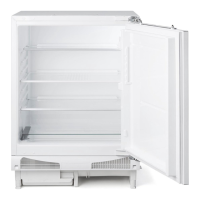

 To Next Page