This document is an instruction manual for a range hood, providing details on its installation, operation, maintenance, and safety.
Function Description
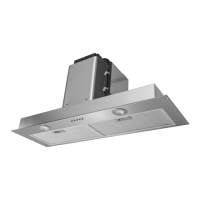
The range hood is designed to remove cooking fumes from the kitchen quietly and effectively. It operates with high suction power and low noise. The appliance is intended for home use and is not suitable for outdoor, barbecue, or other commercial applications. It can be configured for ducted extraction, where exhaust air is discharged into a flue, or for recirculation with an optional charcoal filter to clean the air before returning it to the kitchen.
Important Technical Specifications
The manual provides specifications for two models, 600 and 900, though specific differences between them are not detailed beyond the model numbers themselves.
- Power Supply: 220V~240V, 50Hz.
- Lighting Power: The manual lists two options: 1.5W×2 or 20W×2. This suggests different lamp types or configurations may be available.
- Motor Power: The manual lists two options: 138W or 288W, indicating varying levels of motor strength and performance.
- Airflow: The manual lists two options: 760m³/h or 1200m³/h, corresponding to the different motor powers and indicating the volume of air the hood can move per hour.
- Outlet Diameter: 150mm.
- Installation Distance: The range hood should be mounted at a distance of 650-750mm from the cooking surface for safety and optimum performance. If the gas hob instructions specify a greater distance, that should be followed.
- Maximum Hobs: The range hood should cover a maximum of 5 hobs.
Usage Features
The range hood offers different control interfaces: Mechanical Switch, Electronic Switch, and Touch Switch. All provide 3-speed adjustment and lighting control.
- 3-Speed Adjustment:
- Stop Button: Stops the motor.
- Low Button: Runs the motor at low speed.
- Mid Button: Runs the motor at mid speed.
- High Button: Runs the motor at high speed.
- Lighting Control:
- Light Button: Illuminates the two lighting lamps. Pressing it again turns the lamps off.
- Delay Timer (for Electronic/Touch Switch):
- "T" Button: On any speed, pushing "T" activates the delay timer. The specific duration of the delay is not detailed in the provided text.
Maintenance Features
Regular cleaning and maintenance are crucial for the range hood's best performance and longevity.
- Safety Precaution: Always ensure the power is switched off by detaching the plug from the wall socket before any cleaning or maintenance.
- Surface Cleaning: Clean the surface of the hood weekly with mild soap or detergent. Avoid using solvents, acid, alkali, scouring pads, or powders, as these can irreparably damage the stainless steel surface.
- Grease Filters: The grease filters can be washed using mild soap, detergent, or a degreasing agent. After cleaning, they should be dried before reinstallation.
- Charcoal Filters (Optional): Charcoal filters cannot be cleaned and must be replaced approximately every 6 months of use.
- Lamp Change:
- Turn off the power supply by unplugging from the wall socket.
- Remove the filters from the appliance.
- Unfasten the screws on the stainless steel hood panel.
- Remove the stainless steel panel.
- Replace the lamp and reinstall components in reverse order.
The manual emphasizes several safety points:
- Ventilation: Ensure permanent and adequate room ventilation when operating the range hood with other gas or fuel-burning appliances.
- Filter Check: Do not check the status of filters while the range hood is operating; wait at least 30 minutes after switching off to avoid scalding.
- Light Contact: Do not touch the (Halogen) light within 30 minutes after appliance use.
- Gas Cooker Use: Avoid operating a gas cooker without a pan on the stove, as it poses a fire hazard and can damage the hood filters.
- Electrical Disconnection: Disconnect the electrical plug prior to any maintenance.
- Child Supervision: The appliance is not intended for use by young children or infirm persons without supervision. Young children should be supervised to ensure they do not play with the appliance.
- Ducting: Exhaust air must not be discharged into a flue used for exhausting fumes from other appliances burning gas or other fuels. The duct should not be bent more than ≥120° from the one-way valve outlet to the kitchen vent.
- Electrical Cord: Ensure the electric cord is not in contact with sharp edges of the appliance.
- Plug Accessibility: The plug must be accessible after installation.
- Open Flame: Do not cook with an open flame under the range hood.
- Modifications: Any modifications to the appliance, electric wire, and plug are dangerous and void the warranty.
- Repairs: For any technical issues, ensure that a suitably qualified person performs repairs or inspections.
- Installation: Installation work must be undertaken by a qualified technician. The wall where the hood is installed must be sufficiently sturdy to carry its weight, and it should be mounted level for best performance. Do not connect to a common vent with other appliances like gas heaters, water heaters, or laundry dryers.


 To Next Page
 General