This document provides comprehensive installation and operating instructions for the Evergreen Cast Iron Stove, model ST-0311-12. It is designed to ensure safe and efficient use of the appliance, covering everything from initial assembly to routine maintenance and troubleshooting. Adherence to these guidelines is crucial for optimal performance and longevity of the stove.
Function Description
The Evergreen Cast Iron Stove is a solid fuel burning appliance designed for room heating. It operates by burning seasoned wood logs or brown coal, generating heat that radiates into the surrounding space. The stove is equipped with a primary and secondary air supply system, allowing for controlled combustion and efficient heat output. Its robust cast iron construction ensures durability and effective heat retention, providing sustained warmth. The appliance is designed to be connected to an existing chimney system, facilitating the safe expulsion of flue gases.
Usage Features
The stove offers several features to enhance its usability and performance:
- Fuel Versatility: The appliance is tested and recommended for use with seasoned wood logs (up to 30 cm in length and 10 cm in diameter) and brown coal. Using air-dried wood with a maximum of 20% water content (achieved by drying for at least one year for softwood or two years for hardwood) is strongly advised to prevent tar deposits and ensure satisfactory heat output.
- Controlled Combustion: The stove incorporates primary and secondary air regulators. The primary air supply is used for initial ignition and to accelerate burning, while the secondary air supply takes over once the fire is well-established, promoting cleaner and more efficient combustion.
- Easy Lighting: The lighting process involves laying firelighters or paper on the grate, followed by kindling wood and a small quantity of fuel. Both primary and secondary air supplies should be open during ignition, and the door should be closed once ignited.
- Refueling Guidance: To refuel, users are instructed to riddle the grate, open the primary air supply, open the door, and gradually add fuel, ensuring not to fill above the front fire bar. The primary air (spin wheels) should be adjusted accordingly after closing the door.
- Safety Measures: The manual emphasizes that the external surfaces of the stove, including the fire door, glass, flue pipe, and front wall, become very hot during operation. Users are advised to use protective gloves and ensure children, elderly, or infirm persons are supervised at all times to prevent accidental contact with hot surfaces.
- Closed Burning Chamber: Stoves without a self-closing door must operate with the burning chamber closed, except during ignition, refueling, or ash removal. This prevents the danger of other connected fire sites and slows down flue gases.
- Combustion Air Supply: The stove requires a sufficient supply of combustion air, which is typically drawn from the room where it is installed. A permanently open vent to the outside is a legal and safety requirement to ensure adequate fresh air feed, especially in well-sealed homes, and to prevent carbon monoxide poisoning.
- Initial Firing (Curing): Upon initial firing, an acrid smell will occur as the paint cures. The room should be well-ventilated during this phase. This smell will dissipate after the initial firing.
- Multifunctional Handle: A multifunctional handle is provided, likely for operating various parts of the stove, such as the door or air controls, while maintaining safety from hot surfaces.
- Riddle Knob for Grate: A riddle knob is included, indicating a mechanism to agitate the grate, likely for clearing ash and improving airflow during operation.
Maintenance Features
Regular maintenance is crucial for the safe and efficient operation of the Evergreen Cast Iron Stove:
- Annual Cleaning and Examination: The stove, flue gas ways, and flue pipe should be examined and cleaned annually by a competent chimney sweep. This is particularly important when burning both wood and coal. The expert can also provide information on necessary cleaning intervals.
- Ashpan Management: Before lighting the stove, it is essential to ensure that any build-up in the firebox has been removed and the ashpan has been emptied. Never allow ash to accumulate in the ashpan, as this can cause the grate to burn out prematurely.
- Baffle Plate Assembly and Unloading: The manual provides detailed visual instructions for assembling the baffle plate from inside the stove. It also illustrates the process for unloading the baffle plate to clean the flue pipe, which is a key maintenance task.
- Checking for Obstructions: Users are advised to ensure the air inlet is unobstructed and that chimneys and flueways are clear to maintain proper draught and combustion.
- Door and Seal Integrity: For optimal performance and safety, it is important to check that the doors are tightly closed, the glass retaining clips are not loose, and the door rope seals are in good condition. Worn or damaged seals can lead to uncontrolled air intake and reduced efficiency.
- Flue Pipe Accessibility: Both the chimney and flue pipe must be accessible for cleaning. If any parts of the chimney cannot be reached through the stove (with the baffle plate removed), a cleaning access door must be fitted in a suitable position in the flue pipe or chimney.
- Chimney Fire Protocol: In the event of a chimney fire, which can be caused by incorrect or damp fuel or lack of maintenance, users are instructed to immediately close all air openings at the stove and inform the fire department. An expert review of the damage is required after the chimney has burned out.
- Parts Replacement: Only parts specifically allowed by the manufacturer should be used for replacement. The firebox should not be modified without professional advice.

 Need help?
 General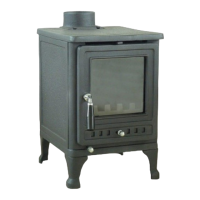

 To Next Page
