The Explorer QRZ-1 is a dual-band, dual-display, and dual-standby transceiver with a dot-matrix LCD. It supports A/B band independent operation and can store and scan up to 200 channels. The radio also includes an FM radio with 24 station memories, selectable wide/narrow band operation, and VOX with 0-7 level settings. Other features include CTCSS and scanning, a shortcut menu operation mode, multiple key lock settings, and multi-display modes.
Technical Specifications:
General:
- Channels: 200
- Operating Voltage: 7.4VDC
- Operating Temperature: -10°C to +50°C
- Weight: 106g (battery and antenna included)
- Dimensions: 116x53x36mm
Transmitter:
- Frequency Range: 144.000-148.000MHz, 420.000-450.000MHz
- Power Output: 5W
- Modulation Type: FM
- Spurious Power: ≤ -15dB
- Modulation Noise: <-40dB
- Modulation Distortion: <5%
- Frequency Stability: 5ppm
- Max Freq. Deviation: ≤ ±5KHz
- Current: ≤ 1600mA
- Audio Response (300-3400Hz): +6.5~-14dB
- Adjacent Channel Power: ≥ 65dB
Receiver:
- Frequency Range: 136.000-174.000MHz, 400.000-480.000MHz, 65.000-108.000MHz (FM Radio)
- Sensitivity: ≤ 0.2 μV
- Occupied Bandwidth: ≤ 16KHz
- Selectivity: ≥ 65dB
- Intermediation: ≥ 55dB
- Audio Power: > 500mW
- Audio Distortion: ≤ 10%
- Frequency Stability: 5ppm
- Current: Standby: 60mA, Working: 250mA
- Audio Response (300-3400Hz): +7~-12.5dB
Usage Features:
Battery and Charging:
The Explorer QRZ-1 uses a high-performance 7.4V 1400mAh Li-ion battery pack, with an expected life span of 500 charge cycles. The charger indicates charging status with red (charging) and green (completed) lights. For optimal battery life, charge before first use, allow 2-3 cycles for new batteries to reach full performance, avoid operating below 7.3 VDC (20%), and do not store above 8.2 VDC (80%) for extended periods.
Antenna and Belt Clip Installation:
To install the antenna, align the threaded end with the hole at the top of the radio and rotate clockwise until secure. To remove, rotate counter-clockwise. The belt clip is attached by aligning its two holes with those on the radio and securing with the provided M2.5x5 screws.
Basic Operation Modes:
- Simplex: Allows two radios to communicate directly on the same frequency. For effective communication, a line-of-sight path is recommended.
- Repeaters: Unattended devices that receive signals on an INPUT frequency and retransmit them on an OUTPUT frequency, extending communication range. Programming a repeater requires its transmit frequency, offset, offset direction, and CTCSS tone.
- Transmit Frequency: Set in VFO mode by entering the frequency using the keypad.
- Offset: The difference between INPUT and OUTPUT frequencies, typically ±600 kHz for VHF and ±5 MHz for UHF. Adjustable via menu #16.
- Offset Direction: Can be negative (-) or positive (+), selected via menu #3.
- CTCSS (Continuous Tone-Coded Squelch System): A sub-audible tone transmitted with your signal to open a repeater's output. Set via menu #1 (Tone Mode) and menu #2 (Tone Sel).
- Squelch: Adjusts the receiver's sensitivity to suppress weak signals or static noise. Carrier Squelch (Noise Squelch) is adjustable from 0-9 via menu #4. CTCSS can also be used for squelch by setting menu #1 to "TX+RX" or "RX" and selecting a tone via menu #2.
Radio Illustration and LCD Display:
The radio features an antenna, power/volume knob, indicator light, speaker, microphone, and a dot-matrix LCD. The menu key and A/B switch key/exit button are located below the display, along with a numeric keypad. The PTT button is on the side for transmitting, and the MONI button disables squelch to hear weak signals. A MIC/SP jack is provided for optional accessories.
The LCD displays various icons:
- Signal & Power Meter: Indicates operating band signal strength and power.
- H: High TX power active.
- DW: Dual watch/standby active.
- S: RX power save active.
- Scanning Active: Indicates scanning is in progress.
- N/W: Narrow/wide band mode active.
- +/-: Repeater shift direction.
- Lock: Keypad lock.
- Battery Icons: Fully charged or depleted.
- Channel/Menu Number: Indicates current channel or menu item number.
Working Modes:
- Frequency Mode (VFO): Allows direct frequency input via keypad or adjustment using arrow keys. Indicated by "VFO" on the display.
- Memory Mode (MR): Stores and recalls preset channels. Indicated by a channel number next to the frequency. Navigate using arrow keys or direct keypad input.
- FM Radio Mode: Long press [#Radio] to enter/exit. Receives FM broadcast from 65-108MHz.
- MENU Mode: Press [MENU] to access settings.
Keypad Lock:
Long press [*Lock] for 2 seconds to lock/unlock the keypad. The lock icon appears on the LCD. Lock behavior can be customized via menu #23 (Lock Mode) with options like ALL, PTT, KEY, or KEY+S.
Channel Storage and Delete:
- Storage: In VFO mode, input the desired frequency, then long-press [MENU]. The digits will blink, allowing selection of a channel number via keypad or arrow keys. Press [#Radio] to save.
- Delete: In VFO mode, long-press [MENU] until digits blink. Select the channel number using arrow keys or keypad, then press [*Lock] to confirm.
FM Radio Function:
- Access: Long press [#Radio] from the home screen. "RADIO" and frequency will display. Long press [#Radio] again to return.
- Mode Selection: Press [#Radio] in FM radio mode to switch between FM memory and FM frequency modes (memory mode requires stored channels).
- Frequency Selecting: In FM frequency mode, input digits directly or use arrow keys. In FM memory mode, use arrow keys to select channels.
- Storage: In FM frequency mode, long-press [MENU] until channel number blinks. Select channel number, then press [#Radio] to confirm.
- Delete: In FM frequency mode, long-press [MENU] until channel number blinks. Select channel number, then press [*Lock] to confirm.
Maintenance Features:
Charging Precautions:
- Do not short-circuit battery terminals or expose to fire.
- Do not disassemble the battery.
- Charge only when ambient temperature is between 32°F and 110°F.
- Turn off the transceiver when charging.
- Do not charge when the battery or radio is wet; allow to dry completely.
- Avoid contact between battery terminals and conductive metals (jewelry, coins, keys).
Safety Precautions:
- Do not use the radio if cables, power cords, or connectors are damaged. Use only the provided DC power cord.
- Be aware that stray RF and wire cables can cause automotive airbags to malfunction; keep radio and wiring away from airbag locations.
- Do not place the radio in wet or moist areas.
- When transmitting, keep the radio at least 5cm (2 inches) from your body.
- Refer to FCC's RF Safety FAQ at www.fcc.gov.
- Do not attempt to open the radio.
- Use only the specified voltage.
- Keep battery terminals clean with a dry cloth.
- If the radio, battery, or charger emits odor or smoke, turn off the radio, remove the battery, and unplug the charger.
- If liquid is spilled, immediately turn off the product and remove the plug.
Cleaning and Storage:
- Clean the exterior with a clean, dry cloth. Do not use solvents like benzene or thinner.
- Turn off the radio and remove the battery when storing or during extended periods of inactivity.
- Do not store the radio near a heater or in direct sunlight.
Warranty:
A one-year limited product warranty is provided by the dealer from the date of purchase. Keep your dated sales receipt for warranty service. The dealer will repair or replace non-conforming products.

 Need help?
 General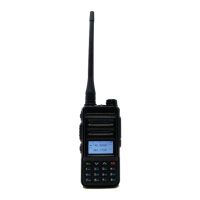

 To Next Page