
 Need help?
Do you have a question about the FAAC AT- 4/868 UHF and is the answer not in the manual?
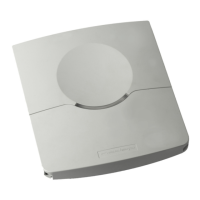
The FAAC AT-4/868 UHF is a sophisticated "free hands" access solution designed for vehicle identification, particularly useful in scenarios where traditional ticket or card access might be inconvenient. This device utilizes passive tag stickers applied to vehicle windshields, allowing for recognition at a maximum distance of 4 meters. The reader is typically installed next to a gate at a maximum height of 2 meters.
The AT-4/868 UHF is designed for straightforward installation and operation. It can be mounted on any surface, with two holes (K) on the upper part and two (L) on the bottom for secure placement. An adjustable mounting bracket allows for precise orientation of the reader to achieve the required detection area. This bracket can be fixed to round posts (max. diameter 125mm / 4.9 inch) or square posts (max. diameter 100mm / 3.9 inch), and can also be wall-mounted. Once the desired orientation is achieved, an Allen screw on the joint secures the position.
Connections are made using EMC type cable glands, and a shielded cable is recommended for the power supply to ensure water-proof protection and correct functionality. The internal wiring utilizes spring terminals for easy and intuitive use.
The device requires a DC 12-24V power supply, with a maximum current consumption of 1A at 12VDC or 0.5A at 24VDC. The electrical connection is protected by a self-resetting fuse.
Communication protocols include RS232, Wiegand, Magstripe, and Barcode. For RS232, the maximum cable length is 15 meters. For Wiegand, Magstripe, and Barcode, the maximum cable length is 150 meters.
Digital I/O features include a relay output that activates automatically when a transponder is identified, indicated by a green light on the front of the unit. The relay contacts are Normally Closed (NC), Common (COM), and Normally Open (NO), with a maximum current of 2A, maximum voltage of 24VDC, and consumption of 50W.
The device also supports a "Disabled Reading" input (RDIS), which can be connected to a sensor (e.g., a magnetic loop) to detect the presence of a vehicle. When the RDIS input is open, the reader is active. This input uses an internal 5V supply.
A tamper switch is integrated for security, signaling any unauthorized cover opening to an external alarm system. The contacts are normally closed when the cover is closed.
The AT-4/868 UHF supports various UHF frequencies depending on the region (Europe, Americas, Brazil, China, Australia, Israel, Japan, Korea). Frequency channel selection can be done via the display and UP/DOWN keys, allowing the user to choose the best performance and avoid interference.
LED indicators provide visual feedback on the device's status, including:
DIP-switches (SW1-1 to SW1-4) are located behind the cover and control various settings, including RS232/RS422 selection and backward compatible processor (P61 or Q70) settings. SW1-3 and SW1-4 are reserved for future applications and should be left ON.
To access the internal connections, check the reading range, set the operating frequency, and view the LED indicators, the service cover can be opened by removing screws at the bottom of the device. It is crucial to ensure the screws are completely loose (or tightened when the cover is closed again) and that they are inserted inside the plastic structure to prevent loss. Before removing or installing parts, always disconnect the power supply. Do not modify or add components to the AT-4/868 UHF, as this could jeopardize compliance with safety regulations.
 General
| Brand | FAAC |
|---|---|
| Model | AT- 4/868 UHF |
| Category | IP Access Controllers |
| Language | English |

 To Next Page