4 of 30 Manual LactoFAN2
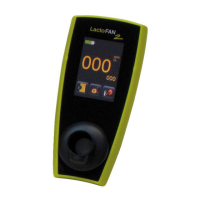
The LactoFAN2 is used in the malabsorption diagnosis of lactose or other sugars.
Additional the investigation of intestinal transit time and bacterial overgrowth of is possible.
Basics
In case of malabsorption, sugar (e.g. Lactose) undigested passes into the large intestine
where action by bacteria causes the release of hydrogen, which is absorbed through the
intestinal wall and dissolves into the blood stream.
The dissolved gas is released into the lungs through the capillary blood vessels
surrounding the alveoli and then expired.
An increased concentration of expired hydrogen following lactose ingestion therefore
reveals lactose malabsorption and can be easily and accurately measured by the
LactoFAN2.
This forms the basis of the lactose tolerance test whereby a subject ingests a measured
quantity of lactose, after an overnight fast, and has the concentration of expired hydrogen
measured. This is done prior to ingestion and at 30-minute intervals thereafter for three
hours in total. A rise of 20 ppm or more in expired hydrogen indicates lactose
malabsorption. If other symptoms such as abdominal pains are reported then lactose
intolerance may be diagnosed.
The LactoFAN is based on an electrochemical fuel cell which works through the reaction of
hydrogen with an electrolyte at one electrode and oxygen (from ambient air) at the other.
This reaction generates an electrical current proportional to H
2
concentration. Output from
the fuel cell is sensed by a microprocessor, which detects peak concentrations of expired
gas and displays the result in parts per million (ppm) on an OLED display.
Limits of method
Established diagnosis out of the readings of the H
2
monitor only is not possible. This will
reserved to the doctor’s valuation.
As described in detail by the literature addressing this topic, several influences as
symptoms appearing during the test, adhering to the time of fastening before the test,
possible interferences by other diseases, H
2
non-production, intolerances and other more
have to be taken into account.
Furthermore the properties of an electrochemical sensor regarding resolution and
reproducibility of the output signal are to be observed during evaluation.
This applies too in case of automatic generation of an external finding by the FANh2
software.
Literature
M. Ledochowski
H
2
–Atemteste
Verlag Ledochowski, Innsbruck 2008
Levitt MD,
Production and excretion of Hydrogen gas in man
New England Journal of Medicine 1969; 281, 122–127.


 To Next Page