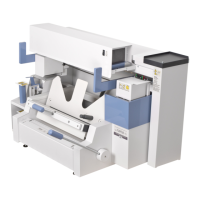
The Fastbind Elite XT is a robust binding machine designed to increase clamping force for professional document binding. This device is engineered for efficiency and precision, allowing users to create strong, durable binds for a variety of document types and thicknesses. Its design emphasizes ease of use, with clear instructions for adjustment, maintenance, and operation, ensuring optimal performance and longevity.
Function Description:
The primary function of the Fastbind Elite XT is to securely bind documents by applying significant clamping force. This force is crucial for creating strong, lasting binds, especially for thicker blocks of paper. The machine operates by holding a block of paper firmly in place while a binding process (not explicitly detailed in the provided pages, but typically involving hot glue or similar methods) is applied. The ability to adjust the clamping force is a key feature, allowing the user to fine-tune the machine for different paper types and thicknesses, ensuring a perfect bind every time. The device includes a support rod and locking units that work in conjunction to secure the paper block during the binding process. The clamping mechanism is designed to move smoothly, indicating proper adjustment and optimal force application.
Important Technical Specifications:
While specific numerical technical specifications like power consumption or dimensions are not provided in the given pages, several operational and design specifications can be inferred:
- Clamping Force Adjustment: The machine features a retaining screw (2.5 mm hex key required) for adjusting the clamping strength. This allows for precise control over the force applied, accommodating various binding needs. Both left and right locking mechanisms require independent adjustment for balanced clamping.
- Paper Thickness Capacity: The clamping strength test specifies a range of 30-50 mm thick blocks of 80g normal copy paper, indicating a substantial capacity for binding thick documents.
- Hexagonal Key Requirement: Both the support rod removal/attachment and clamping strength adjustment require hexagonal keys (sizes 2.5 mm for adjustment, and an unspecified size for the support rod screws).
- Material Compatibility: The machine is designed to work with 80g normal copy paper, suggesting its suitability for standard office and professional printing materials.
Usage Features:
The Fastbind Elite XT is designed with several features to enhance its usability and ensure effective binding:
- Step-by-Step Operation: The manual provides a clear, sequential guide for increasing clamping force, starting from preparation and moving through adjustment and testing.
- Intuitive Adjustment: The clamping strength adjustment is straightforward, involving turning a retaining screw clockwise to tighten and counter-clockwise to loosen. The visual cues in the manual (plus/minus signs) further simplify this process.
- Clamping Strength Test: A dedicated test procedure allows users to verify the effectiveness of the clamping force. This involves placing a paper block, locking and closing the clamp, pressing down on the block from different sides, and checking for any gaps between the table and papers. This ensures that the clamp yields minimally, indicating sufficient strength.
- Smooth Movement Check: The manual instructs users to check for smooth movement of the clamp from the down to the up position. This is a critical indicator of proper adjustment; a clamp that doesn't move smoothly may be too tight, while one that moves with a large handle angle might allow for even more tightening if necessary.
- Support Rod Mechanism: The support rod is an integral part of the clamping system, providing stability. Its attachment and removal are simple, requiring a hexagonal key.
- Locking Units: The machine incorporates locking units that secure the paper block, ensuring it remains in position during the binding process.
Maintenance Features:
Regular maintenance is crucial for the Fastbind Elite XT to ensure optimal performance and extend its lifespan. The manual highlights several key maintenance aspects focused on cleanliness and lubrication:
- Cleaning Guide Rods: The guide rods, which facilitate the movement of the clamp, must be kept clean from oil and lubricants. The manual explicitly states that the clamp works optimally with "VERY little amount of oil" and recommends using a solvent for cleaning if necessary. This suggests that excessive lubrication can hinder performance.
- Cleaning Locking Units: Both the internal and external parts of the locking units (inside the clamp) also need to be cleaned of oil and lubricants. Similar to the guide rods, the clamp performs best with "none or VERY little amount of oil" in these areas, and solvent is recommended for thorough cleaning. The manual points out a "precision hole" within the locking unit as a specific area to be cleaned.
- Preventive Cleaning: The emphasis on removing lubricants suggests that the mechanism relies on friction or precise tolerances rather than heavy lubrication for its clamping action. Regular cleaning prevents buildup that could impede smooth operation or reduce clamping effectiveness.
- Troubleshooting through Maintenance: The instructions for cleaning are presented as part of the process to "increase clamping force," implying that a lack of proper cleaning can lead to reduced clamping efficiency. This integrates maintenance directly into performance optimization.
In summary, the Fastbind Elite XT is a specialized binding machine designed for professional use, offering adjustable clamping force, a robust binding capacity, and user-friendly maintenance procedures to ensure high-quality and durable document binding.

 Need help?
 General

 To Next Page