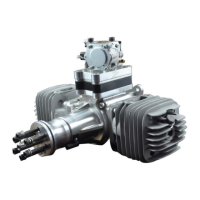
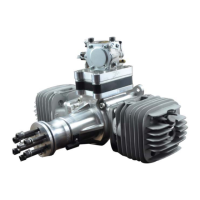
The DLA360 is a high-performance, toplevel gasoline engine specifically designed and manufactured for giant scale model aircraft. It is known for its power, lightweight construction, ease of adjustment, and reliable operation, promising years of outstanding performance.
Function Description:
The DLA360 is a gasoline-powered internal combustion engine that provides the necessary thrust for model aircraft. It operates on a mixture of gasoline and lubricating oil, ignited by a CDI (Capacitor Discharge Ignition) system. The engine's design emphasizes durability and performance, with key components sourced from world-famous brands. The crankcases, machined from aluminum alloy, ensure resistance to wear and damage. Precise bearing alignment is a critical aspect of its design, contributing to optimal engine performance. The auto-advancing CDI ignition system ensures easy starting and provides a powerful spark, while being fully shielded to prevent R/F noise interference.
Important Technical Specifications:
- Performance: 38 HP
- RPM Speed: 1200-5800 rpm/min
- Pulling Force: 90 Kg at 1000 meters altitude
- Propeller Recommendations: 36x10, 38x8, 34x8, 34x12 (recommended for 36x10, 36x12)
- Spark Plug: DLA CM6
- Exhaust Amount: 360 CC
- Diameter Stroke: 53mm x 41mm
- Ratio of Compression: 8.6:1
- Lubrication Ratio:
- Trial Run: 25:1 ~ 30:1
- Normal Flying: 40:1 ~ 50:1
- Weight:
- Main engine: 7280g
- Exhaust pipe: 240g
- Ignition: 180g x 2
- Standoffs: 22g x 4
- Ignition System:
- Red cable: positive (+)
- Black cable: negative (-)
- Working Voltage: 6.6V ~ 8.4V (7.4V, 2S Li-Po battery recommended)
- Four-cylinder engine: Contains 2 ignitions and 2 sensors. One sensor marked "F" connects to the ignition for the front two cylinders. Another sensor marked "R" connects to the ignition for the rear two cylinders.
Usage Features:
- Engine Installation:
- Comes with a firewall mounting plate pre-drilled with four holes for #10 size screws.
- Requires a spacer to keep cooling fins away from the firewall if the firewall is larger than the engine plate.
- Throttle return springs must remain in place to prevent excessive speed without positive control. The return spring also acts as a spacer for the butterfly; removing it will cause the butterfly to work loose.
- The ignition battery should be mounted externally, near the cowl, at least twelve inches from the receiver or throttle servo.
- The carburetor requires at least 1 1/2" (38mm) clearance between the intake and the bottom of the cowl. If less, an opening in the cowl, at least as large as the carburetor intake diameter, is necessary.
- Small holes in the cowl for needle valve adjustments are recommended, as carburetor tuning may differ with the cowl on.
- Equipped with a diaphragm pump carburetor, making tank location not critical relative to the fuel entry position. Placing the tank on the aircraft's center of gravity (CG) prevents trim changes during flight.
- Fuel:
- Clean petrol 93# is strongly recommended.
- Higher-octane fuel will not generate more power and may cause the engine to run slower and overheat.
- Damage from fuel additives (e.g., nitro) is not covered under warranty.
- Propeller Selection and Installation:
- Recommended props: 36x10, 36x12.
- Only use propeller sizes recommended for the engine.
- Propeller blades must be of the same length.
- Propellers must be drilled from the rear using a drill press. A drill guide is recommended, or the propeller washer can be used as a template (fixed with a bolt and nut in the center-bore).
- Propellers must be balanced.
- Screw thread-locking glue is necessary for propeller bolts to prevent movement and shearing.
- Engine Starting Procedure:
- Ensure the tank is filled with fresh, filtered fuel.
- Verify receiver and ignition batteries are charged, and the throttle is set to low.
- Close the choke and turn on the ignition switch.
- A rubber stick is recommended for starting.
- Flip the prop through its compression stroke until the engine fires.
- Wait for the propeller to stop spinning, turn off the ignition, and open the choke(s).
- Switch the ignition back on and flip the propeller until the engine starts.
- Warm up the engine for 15-20 seconds before advancing the throttle.
- Carburetor Tuning:
- A tachometer is highly recommended for tuning.
- Never adjust needles while the engine is running.
- High Needle (H) Tuning: Tune for maximum power with the high needle. Then, richen it until the engine runs 100-200 RPM less than the maximum, then richen slightly more.
- Low Needle (L) Tuning: Keep the engine running at idle for 60 seconds, ensuring constant idle RPM. If idle RPM drops or the engine stops, the low needle is too rich. Lean the low needle until a constant idle RPM is achieved.
- Check transition with a quick throttle advance; it should produce quick, steady power.
Maintenance Features:
- Carburetor Care:
- The carburetor screen needs to be cleaned with clean gasoline and blown off with compressed air after every flight.
- Check the choke and throttle plates for tightness.
- Troubleshooting:
- Engine Flooded: Remove the spark plug, turn the engine to drain fuel, clean it. Check spark plug connections and screws. If it fails to restart, send it for after-sale service.
- Engine Starts, Then Stops: Low needle on the carburetor is likely too lean. Adjust the Low End needle for a smooth idle and reliable transition. If the motor stutters or coughs in mid-range or when advancing throttle, the low end needle (and possibly high end needle) is too rich.
- Engine Runs Rough/Vibrates Strongly: Balance the propeller. Check ignition timing. Check plumbing for air/fuel leaks. Check spark plug for carbon and gap. Ensure engine mount is rigid and on a level surface to free the crankcase from tension. Check engine and propeller bolts.
- Engine Doesn't Reach Normal RPM at Full Throttle:
- Check carburetor settings.
- Check if the propeller is too large.
- Check for engine overheating.
- Check ignition timing.
- Check spark plug for defects.
- Verify correct muffler system.
- Verify correct gasoline, oil, and mixing ratio.
Safety Instructions (Crucial):
- This engine is not a toy; misuse can cause serious injury or death. Read the entire manual to understand applications, limitations, and hazards.
- Keep all spectators at least 30 feet away during operation.
- Never put fingers, body parts, or objects into the rotating propeller.
- Wear proper apparel; avoid loose clothing, gloves, neckties, jewelry, or neck straps that could get caught in the propeller.
- Always wear eye protection when starting.
- Inspect engine mount bolts and firewall integrity before operation.
- Turn off the engine before making any adjustments.
- Always use the proper size and well-conditioned propeller.
- Use correct length propeller bolts and ensure they are tight before every flight (screw thread-locking glue is necessary).
- Keep engine fuel in a safe place, away from sparks, excessive heat, or anything that could ignite it. Gasoline is highly flammable and must be handled with extreme caution.
- Do not smoke while running or operating the engine.
- Do not run the engine near loose material (dirt, gravel, power cords, ropes, sand, etc.) as it can be drawn into the prop, causing injury or damage.
Warranty:
DLA engines come with a limited TWO YEAR WARRANTY on materials and workmanship for the original purchaser. The warranty does not cover damage caused by improper handling, operation, modifications, maintenance, crashes, improper fuel or additives, or damage incurred during transit to the After Service Center.

 Need help?
 General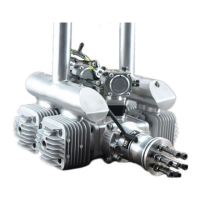

 To Next Page