Need help?
Do you have a question about the Fieryred S-WIN4500-UFA and is the answer not in the manual?
Essential safety rules for operating the winch, including personal protective equipment and safe practices.
Diagrams illustrating the connection setup for both wired and wireless winch controllers.
Steps to diagnose and resolve issues when the winch fails to operate completely.
Guidance on resolving issues where the winch operates only in a single direction.
Troubleshooting steps for when the winch motor fails to activate.
Solutions for when the winch motor attempts to turn but the drum movement is obstructed.
Addressing performance issues where the winch operates at a reduced speed.
Advice for managing and preventing the winch motor from overheating during use.
Troubleshooting for when the winch releases load unexpectedly or loses grip.
Steps to fix issues where the wire rope drum on the winch fails to rotate.
Diagnosing and resolving problems with the winch's remote control functionality.
Guidance on checking and resolving issues related to the winch's relay.
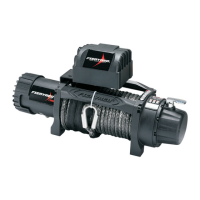
This document describes the Fieryred electric winch, an all-purpose dual-mode mechanical muscle designed to assist in pulling vehicles out of challenging terrains such as sand, mud, or soil. The winch is engineered for reliable performance, featuring a robust motor, a 3-stage planetary gear system, and a sealed engine. It undergoes strict quality control to ensure it meets high standards for durability and functionality.
The Fieryred electric winch serves as a powerful recovery tool for vehicles stuck in difficult conditions. Its primary function is to provide strong pulling force to extricate a vehicle from various terrains. The dual-mode capability allows for versatile operation, adapting to different recovery scenarios. The winch is equipped with a permanent magnet motor, contributing to its consistent and efficient performance. The sealed engine design helps protect internal components from environmental elements, enhancing its longevity and reliability in outdoor conditions.
Before operating the Fieryred electric winch, it is crucial to adhere to several safety precautions to prevent damage to the vehicle, serious injury, or even death. Users should always dress properly, avoiding loose clothing that could get caught in moving parts. Wearing gloves is recommended, and a thorough check of both the winch and its wires should be performed before each use to ensure they are in good condition. During operation, all personnel must maintain a clear distance from the winch to avoid accidents. Stepping over the cable is strictly prohibited.
The winch is designed for intermittent use, and it is important to monitor its temperature. If the winch becomes too hot, operation should be stopped immediately to prevent damage. The winch should only be used for its intended purpose as outlined in the manual; using it for unlisted applications is not recommended. Users must also be mindful not to exceed the pulling limits of the winch, as this can lead to equipment failure or unsafe conditions. A careful inspection of the winch before each use is essential to identify any potential issues.
When re-spooling the cable, it is advisable to maintain a slight load on the cable. This practice helps ensure even winding and prevents tangles or damage to the cable. Each winching operation should not exceed four minutes to prevent overheating and prolong the life of the winch.
The Fieryred electric winch offers both wired and wireless control modes, which can be used simultaneously for enhanced flexibility and convenience. The wired controller provides a direct and reliable connection, while the wireless controller offers the freedom to operate the winch from a safe distance. The control box and relay system facilitate the power distribution and control signals to the winch motor. The installation process involves connecting the winch to the vehicle's battery and the control system, with clear diagrams provided to guide the user through the wiring of the relay, receiver, and controllers.
While the manual emphasizes that disassembling the winch is not recommended and will void the warranty, it provides troubleshooting steps for common issues. These steps focus on external checks and connections, which users can perform to diagnose and potentially resolve problems without internal access.
If the winch is not working at all, users should first check that all motor connections are clean and tight. If necessary, reattaching the cable to the motor carefully can often resolve issues related to motor terminals and cables. Verifying the correct connections of the control box and battery is also crucial. It is recommended to test both the wireless and wired modes to determine if the issue is specific to one control method. Additionally, checking the condition of the earth cable is important, as a faulty earth connection can damage the motor and prevent the winch from operating.
If the winch only works in one direction, the solenoid may need repair or replacement, or its contacts might need to be loosened. Checking if the remote control is damaged is also a relevant step.
If the motor does not turn on, users should replace the remote battery, tighten nuts, and ensure all connections are clean and tight. Fully charging the vehicle battery or tapping the solenoid to loosen contacts can also help. If these steps fail, professional assistance is recommended.
If the winch motor attempts to turn the drum but something prevents movement, it is likely that the winch brake requires adjustment. This issue can often be resolved by consulting the manufacturer's website for guidance.
A winch running slower than normal typically indicates a weak battery. Recharging the battery and operating the winch with the vehicle motor running can improve performance. It is important to use only the supplied power cords to ensure compatibility and safety.
If the winch motor heats up during use, all connections on the winch should be checked for cleanliness and tightness. Allowing the winch to cool down periodically during operation is also essential to prevent overheating.
If the winch lets go while under load, the brake may need adjustment or replacement. Users should also ensure that the rope is feeding onto the drum correctly.
If the wire rope drum does not turn, a careful check of the wiring and confirmation that the remote control is in good condition are necessary.
For remote control failures, changing its battery is the first step. If the issue persists, checking the winch wiring or seeking professional help is advised.
If the relay fails to work, all wiring and connections should be carefully checked. If the problem continues, contacting professional support is recommended.
The Fieryred electric winch comes with a 1-year warranty from the date of purchase, covering defects in materials and workmanship. During this period, Fieryred will, at its discretion, repair, replace, or refund the product. The warranty covers shipping costs for defective components. However, it does not cover damage resulting from abuse, neglect, improper use, crash damage, water or excessive moisture, chemical damage, improper maintenance, accidents, unauthorized alterations, or consumable items.
 General
| Rated Line Pull | 4500 lbs |
|---|---|
| Gear Ratio | 166:1 |
| Voltage | 12V DC |
| Motor Type | Permanent Magnet |
| Cable | Steel |
| Remote Control | Wireless |
| Fairlead | Roller |


 To Next Page