• Small, hot fires are more efficient than large slumbering fires. Most of the energy in
burning wood is released as a bright flame. The turbulence in the flames creates good
mixing between the combustion air and the gases that are released from the wood as it
heats up. The heat of the fire ignites and burns these gases. In contrast, the dense
smoke from a slow, smouldering fire is potential heat energy that escapes up the
chimney and either clings to the chimney flue as creosote or pollutes the outdoor air.
Therefore, to gain the most heat from each load of firewood, the wood should be flaming
throughout the burn cycle until it is reduced to ash.
• If you do a fair bit of slow woodburning, it is good practice to burn a good, hot stove at
regular intervals to keep your chimney dry and prevent the build up of tar.
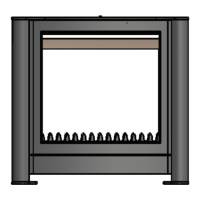
• When refueling, place wood towards the back of the stove where it will burn hotter and
more efficiently. Try to place logs length ways so that any spitting from the end grain
does not go onto the glass window. The fuel should not be stacked higher than the top
of the back fire brick. Once the stove is hot and running steady, it should be possible to
maintain the nominal output by refuelling aproximately once an hour.
Notes on woodburning
Wood burns most efficiently when the air for combustion is supplied from above the fire bed
rather than below. The air supplied above the fire bed provides the oxygen necessary for the
volatile gases (smoke), given off by the wood as it heats, to combust. This ensures that the
gases are burnt and used to heat the appliance instead of being wasted up the chimney or
condensing and forming tarry deposits inside the stove, the flue pipe or on the door glass.
Running the stove with only the bottom air control open will provide oxygen for the wood to
burn on the fire base but will not provide air for the volatile gases above the fire bed to
combust, resulting in a smoky inefficient fire. With the above in mind the stove should be run
with the bottom air control closed and the top air control open.
Slow burning
To slow the burning rate and output from the stove reduce the air entering the stove via the air
controls. The fire must be well established and the stove hot before a minimum combustion
rate is atempted. Note that if the air supply is restricted too much the fire will burn dirty and
inefficiently. Slow overnight burning is not advised.
Ventillation
The stove requires an adequate air supply for successful operation (see Installation section of
these instructions for more details). Ensure that air bricks or grilles supplied for this purpose
are not blocked. Be aware that the operation of exhaust fans or other appliances that compete
for ventilation in the vecinity may affect the performance of the stove.
OR WOOD
BURNING
Running temperature
To get the best results from your stove it is recommended that a wood stove thermometer be
fitted to the flue pipe just above the stove. Most thermometers are magnetic and if attached to
the single wall flue pipe just above your stove will give a good indication of the flue gas
temperatures.
150 °C - 300°C
The flue gases should be in this temperature band for the safest, most efficient and most
economical operation of your stove.
Below 150°C
This is below the condensation point of wood gases and may cause the build up of tar in the
chimney, dirty the stove glass and result in the inefficient burning of fuel.
Above 300 °C
Too hot. Heat will be wasted up the chimney. Excess heat may damage the stove or ignite an
existing accumulation of tar resulting in a chimney fire.
Over heating
If the stove is allowed to get too hot and is over heating, close both of the air controls fully
using the tool, keep the fire door closed and let the fire burn down.
Chimney Fire
In the event of a chimney fire dial 999 and ask for the Fire Service. Fully close the air controls
on the stove and keep the fire door shut. Move any combustibles away from the stove and the
3



 To Next Page
 Loading...