4
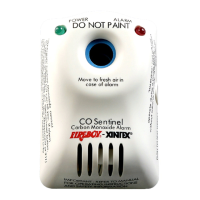
CO Sentinel Carbon Monoxide Alarm
a. Mild exposure: Slight headache, nausea, vomiting and fatigue (often described
as “Flu like symptoms”).
b. Medium exposure: Severe throbbing headache, drowsiness, confusion, and fast
heart rate.
c. Extreme exposure: Unconsciousness, convulsions, cardio-respiratory failure,
and death.
d. Many cases of reported CARBON MONOXIDE POISONING indicate that while
victims are aware they are not well, they become so disoriented they are unable
to save themselves by either exiting the location or calling for assistance. Also,
young children and pets may be the first affected. SEE TABLE 1.
More detailed information on conditions which can result in transient CO situations, such
as:
a. Excessive spillage or reverse venting of fuel burning appliances caused by
outdoor ambient conditions, such as:
i. Wind direction and/or velocity, including high gusts of wind.
Heavy air in the vent pipes (cold/humid air with extended periods
between cycles).
ii. Negative pressure differential resulting from the use of exhaust
fans.
iii.Simultaneous operation of several fuel burning appliances
competing for limited internal air.
iv.Vent pipe connections vibrating loose from clothes dryers,
furnaces or water heaters.
v. Obstructions in or unconventional vent pipe designs which can
amplify the above situations.
b. Extended operation of un-vented fuel burning devices (range, oven, etc.).
c. Temperature inversions that can trap exhaust gases near the ground.
TABLE 1
200 PPM: Slight headache within 2 to 3 hours.
400 PPM: Frontal headache within 1 to 2 hours.
800 PPM: Dizziness, nausea and convulsions within 45 minutes.
Insensible within 2 hours.
1600 PPM: Headache, dizziness and nausea within 20 minutes.
Death within 30 minutes.
3200 PPM: Headache, dizziness and nausea in 5 to 10 minutes.
Death within 30 minutes.
6400 PPM: Headache and dizziness in 1 to 2 minutes.
Death in less than 15 minutes.
12800 PPM: Death in less than 3 minutes.


 To Next Page