Page 2 of 6
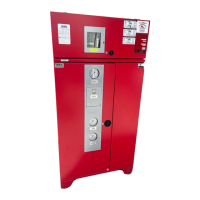
TOTALPAC2 Integrated Fire Protection System
Cycling Deluge Systems
FM-072G-0-142 E
5. Features
Your T
OTALPAC2 unit is superior than many other products
available on the market now and has been manufactured by
the company that has introduced and developed the concept
of integrated fire protection systems in the market.
Main features are:
- Trouble free design for safe and easy application
- Available in 5 sizes from 1½" to 6" diameter
- Uses the Viking Flow Control Valve
- Integrated Control Panel
- Compact, aesthetic and easy to move
- User-friendly standardized owner's manual with every unit
- Unique serial number on every unit
- Uses only UL, ULC Listed and FM Approved components
- Designed in accordance with NFPA Standards
- Trim is fully assembled and tested at the factory
- Water supply and drain connections on both sides,
available both with grooved end or flanged fittings
- Sturdy 14 Gauge steel cabinet or skid painted fire red with
oven baked polyester powder on phosphate base
- Textured rust proof finish
- Neoprene gasket on all doors to eliminate vibrations
- Easily removable doors for ease of access
- Key-alike locks on all cabinet doors
- Manufactured under ISO-9001 quality control procedures.
Configuration Description
A Deluge system is a fixed fire-protection system which
totally floods an area with pressurized water through a
system piping of open nozzles or sprinklers. The system
piping is empty until the Flow Control Valve is activated by an
electric or manual release system.
T
OTALPAC2 Cycling Deluge systems are built around the
Viking Trim using Flow Control Valves Model H-3 for 1½" (40
mm) diameter (Model H-4 is the Halar
®
Coated version for
use in corrosive environments) or Model H-1 for 2" (50 mm)
diameter and up (Model H-2 is the Halar
®
Coated version for
use in corrosive environments).
All the valves are rated up to a maximum of 250 psi WWP
(1724 kPa) and are available in the following diameters:
1½" (40 mm) 2" (50 mm)
3" (80 mm) 4" (100 mm)
6" (150 mm)
Cycling T
OTALPAC2 Deluge systems are supplied with
flange–groove Flow Control Valves. Units with flange–
flange Valves are also available on request.
Release System
The Viking Firecycle® III cycling deluge system utilizes a
Viking Flow Control Valve (A2) in lieu of the Deluge Valve
and a Firecycle® III Model E-2 Control Panel, together with
additional valves, devices and trim to form a unique operating
system.
In fire condition, when the detection condition is satisfied the
system Control Panel energizes both Solenoid valves (F1 &
F2) , causing the Flow Control Valve (A2) to open allowing
water to enter the system piping. Water will flow from any
open sprinklers and/or spray nozzles on the system.
In addition, Firecycle® III has the added ability to sense when
the fire has been controlled, and automatically turn off the
water flow once a preprogrammed "Soak Timer" has been
satisfied. Should the fire rekindle, the Firecycle® III will
initiate the sequence again. This unique cycling feature will
repeat as long as power is available to the panel, helping to
minimize water usage, water damage, and the danger of
pollution to surrounding areas. Firecycle® III systems are
also "Fail-Safe".
Note: T
OTALPAC2 Firecycle III Deluge Systems are
available with electrical type release and the integrated
Firecycle III Model E-2 Control panel. They are not FM
Approved.
The system piping is normally dry and may be installed in
locations subject to freezing.
The Firecycle® III Cycling System has several "Fail-Safe"
features, some of which are not available on other deluge
systems. Refer to SYSTEM OPERATION for more details.
INSTALLATION
TOTALPAC2 Units must be installed in an area not subject to
freezing temperatures or physical damage.
1. Install the TOTALPAC2 unit and connect the system
according to instruction manual and technical data
supplied.
Note: The drain collector shall be connected to an open
drain. Do not restrict or reduce drain piping.
2. Install the open sprinklers/nozzles piping, detection and
signaling circuits in accordance with applicable NFPA
standards.
3. Conform to local municipal or other codes regarding
installations of fire protection systems.
4. Perform preliminary inspection outlined below prior to
putting system in service.
5. Put the system into operation as outlined below.
6. Perform the annual inspection sequence and test each
detector and alarm unit.
7. If the system does not operate as it should, make the
necessary corrections according to manuals issued or
consult your distributor or FireFlex Systems Inc.
8. Make sure that building owner or a delegated
representative has received instructions regarding the
operation of the system.


 To Next Page
 Loading...