37
You may also be able to obtain better performance by setting up
the Wi-Fi access point in some of the following ways:
• Set the Wi-Fi access point to use a non-default wireless channel
(such as 1, 6 or 11), and avoid any channel already being used by
any other Wi-Fi network within the same coverage area.
• If using more than one access point in the Wi-Fi network, ensure
that each access point is assigned a unique channel number.
• If the Wi-Fi access point has an option for “Auto Frequency,”
disable it.
• Set the b/g/n/mixed mode for the 802.11 (2.4 GHz range) to use
either g or n only, and not mixed if possible, depending upon
which terminals you have and what other devices are sharing the
access point. If all your devices support n, then use only n; but if
the devices only support different modes, then mixed is the only
option.
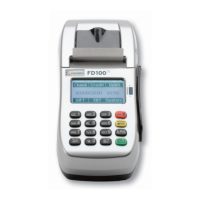
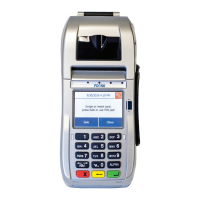
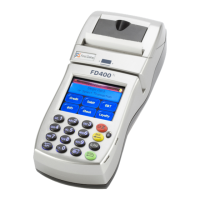
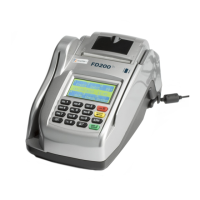
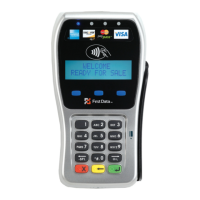
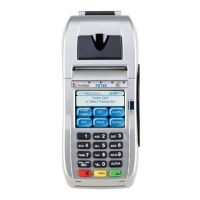
Note: The First Data™ FD100
Ti
, FD200
Ti
and FD300
Ti
terminals support all of 802.11b/g/n,
while older FD100, FD200 and FD300 terminals support 802.11b/g. If all your Wi-Fi
devices support 802.11n, then setting the access point to use n only will provide the best
performance and range. However, if there is a mixture of g-capable and n-capable
devices, then mixed mode must be selected.
• WPA2-AES/personal security mode can also provide better
performance, and therefore it is recommended, if available and
supported by all the devices in the Wi-Fi network.
• MAC filtering can also provide better performance, but such
options are normally set up only by advanced Wi-Fi users.



 To Next Page