----------------CHAPTER 1----------------
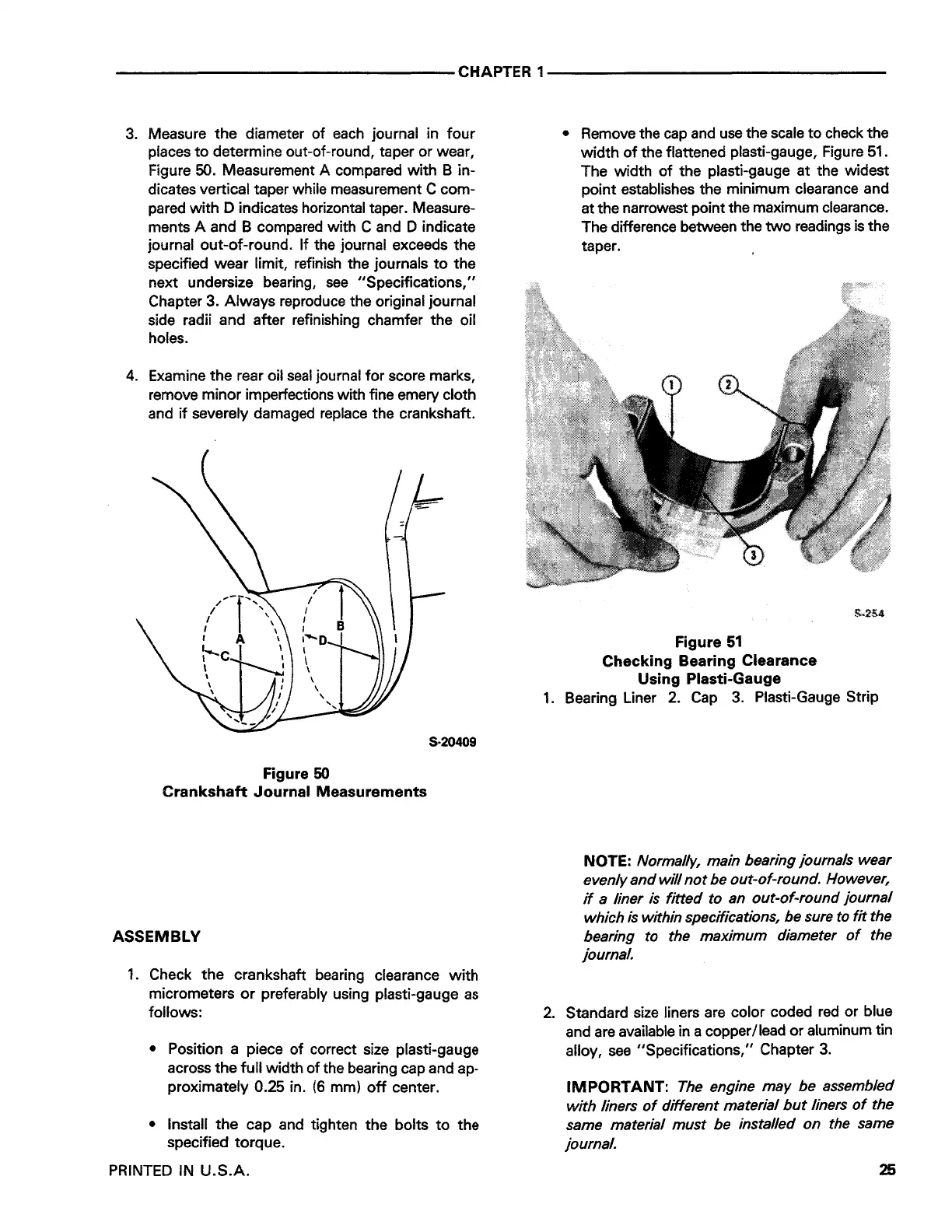
3. Measure the diameter of each journal in four
places to determine out-of-round, taper or wear,
Figure 50. Measurement A compared with B in-
dicates vertical taper while measurement C com-
pared with D indicates horizontal taper. Measure-
ments A and B compared with C and D indicate
journal out-of-round. If the journal exceeds the
specified wear limit, refinish the journals to the
next undersize bearing, see "Specifications,"
Chapter 3. Always reproduce the original journal
side radii and after refinishing chamfer the oil
holes.
4. Examine the rear oil seal journal for score marks,
remove minor imperfections with fine emery cloth
and if severely damaged replace the crankshaft.
S-20409
Figure 50
Crankshaft Journal Measurements
ASSEMBLY
1. Check the crankshaft bearing clearance with
micrometers or preferably using plasti-gauge as
follows:
• Position a piece of correct size plasti-gauge
across the full width of the bearing cap and ap-
proximately 0.25 in. (6 mm} off center.
• Install the cap and tighten the bolts to the
specified torque.
PRINTED IN U.S.A.
• Remove the cap and use the scale to check the
width of the flattened plasti-gauge, Figure 51.
The width of the plasti-gauge at the widest
point establishes the minimum clearance and
at the narrowest point the maximum clearance.
The difference between the two readings is the
taper.
Figure 51
Checking Bearing Clearance
Using Plasti-Gauge
1. Bearing Liner 2. Cap 3. Plasti-Gauge Strip
NOTE: Normally, main bearing journals wear
evenly and will not be out-of-round. However,
if a liner is fitted to an out-of-round journal
which is within specifications, be sure to fit the
bearing to the maximum diameter of the
journal.
2. Standard size liners are color coded red or blue
and are available in a copper/lead or aluminum tin
alloy, see "Specifications," Chapter 3.
IMPORTANT: The engine may be assembled
with liners of different material but liners of the
same material must be installed on the same
journal.
25


 To Next Page
 Loading...