Maintenance procedures 1•7
1
General information
This Chapter is designed to help the home
mechanic maintain his/her vehicle for safety,
economy, long life and peak performance.
The Chapter contains a master
maintenance schedule, followed by Sections
dealing specifically with each task on the
schedule. Visual checks, adjustments,
component renewal and other helpful items
are included. Refer to the accompanying
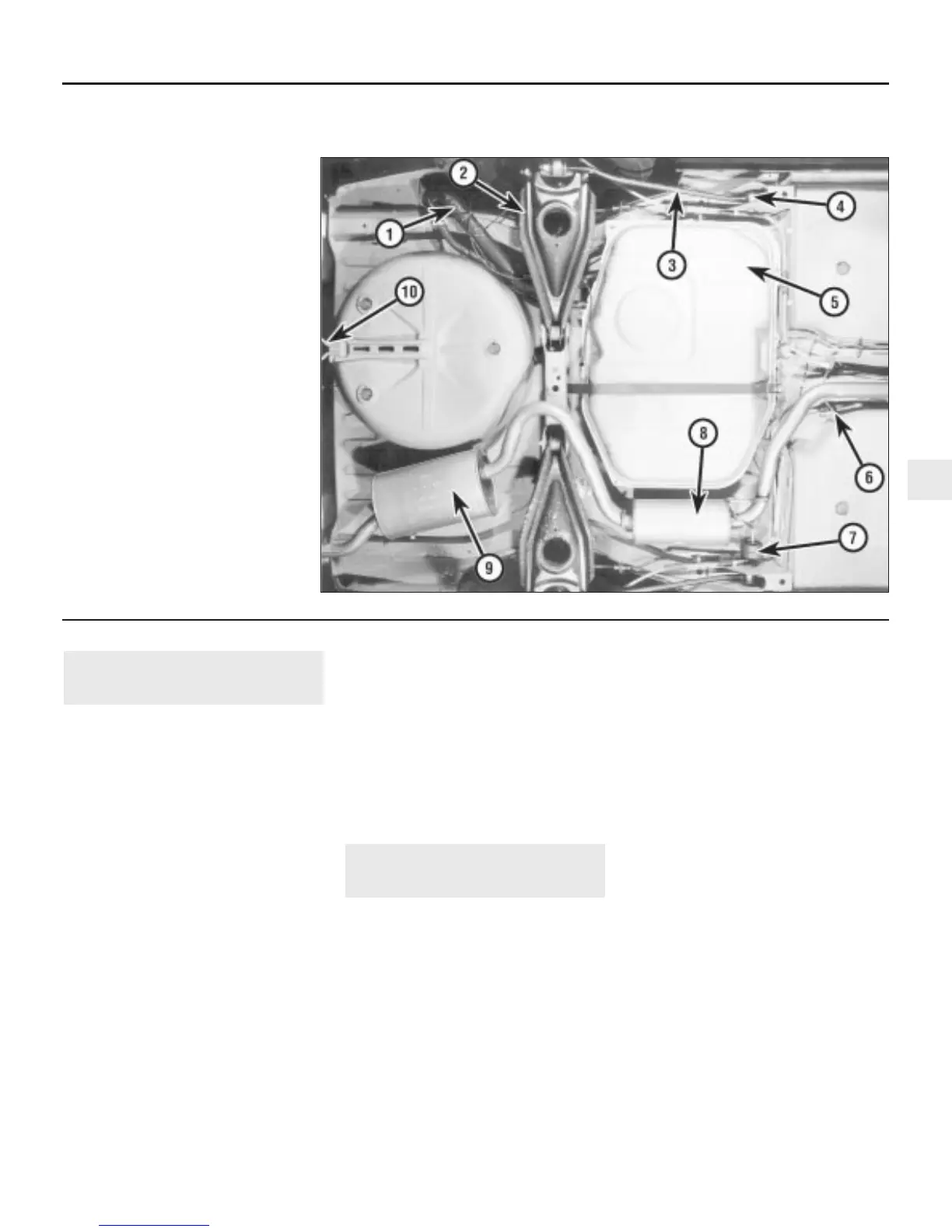
illustrations of the engine compartment and
the underside of the vehicle for the locations
of the various components.
Servicing of your vehicle in accordance with
the mileage/time maintenance schedule and
the following Sections will provide a planned
maintenance program, which should result in
a long and reliable service life. This is a
comprehensive plan, so maintaining some
items but not others at the specified service
intervals will not produce the same results.
As you service your vehicle, you will
discover that many of the procedures can -
and should - be grouped together because of
the particular procedure being performed, or
because of the close proximity of two
otherwise unrelated components to one
another. For example, if the vehicle is raised
for any reason, the exhaust can be inspected
at the same time as the suspension and
steering components.
The first step in this maintenance program
is to prepare yourself before the actual work
begins. Read through all the Sections relevant
to the work to be carried out, then make a list
and gather together all the parts and tools
required. If a problem is encountered, seek
advice from a parts specialist, or a dealer
service department.
If, from the time the vehicle is new, the
routine maintenance schedule is followed
closely and frequent checks are made of fluid
levels and high wear items, as suggested
throughout this manual, the engine will be
kept in relatively good running condition and
the need for additional work will be minimised.
It is possible that there will be times when
the engine is running poorly due to the lack of
regular maintenance. This is even more likely
if a used vehicle, which has not received
regular and frequent maintenance checks, is
purchased. In such cases, additional work
may need to be carried out, outside of the
regular maintenance intervals.
If engine wear is suspected, a compression
test will provide valuable information
regarding the overall performance of the main
internal components. Such a test can be used
as a basis to decide on the extent of the work
to be carried out. If for example a
compression test indicates serious internal
engine wear, conventional maintenance as
described in this Chapter will not greatly
improve the performance of the engine, and
may prove a waste of time and money, unless
extensive overhaul work is carried out first.
The following series of operations are those
most often required to improve the
performance of a generally poor-running
engine.
a) Clean, inspect and test the battery
(Section 5).
b) Check the levels of all the engine related
fluids (Section 3).
c) Check the condition and tension of the
alternator drivebelt (Section 20).
d) Check the condition of the spark plugs
and renew if necessary (Section 15).
e) Check the condition of the air cleaner
element, and renew if necessary (Sec-
tion 34).
f) Check the condition of all hoses and
check for fluid leaks.
g) Check and if necessary adjust the idle
speed (where possible) (Section 10).
2 Intensive maintenance
1 Introduction
1 Fuel filler pipe
2 Suspension lower arm
3 Tie-bar
4 Tie-bar front mounting
5 Fuel tank
6 Handbrake cable adjuster
7 Exhaust mounting
8 Exhaust intermediate silencer
9 Exhaust rear silencer
10 Rear towing eye
Rear underbody view of a 1986 1.4 litre Saloon model


 To Next Page
 Loading...