Safety Devices
W ARNING
Never ignore alarms on safety devices. If the alarm
sounds and you are not absolutely certain of the
source, get everyone out of the recreational
vehicle immediately.
• Always have a plan of escape. Update and practice
your escape plan every six months.
• Have a meeting and discuss the plan, showing
everyone what to do including guests.
• Do not waste time by picking up valuables or getting
dressed. Sometimes seconds count!
• Vacuum any dust off the alarm weekly using the soft
brush attachment.
• DO NOT spray cleaning agents or waxes directly
onto the detector as it may cause damage to the
sensor.
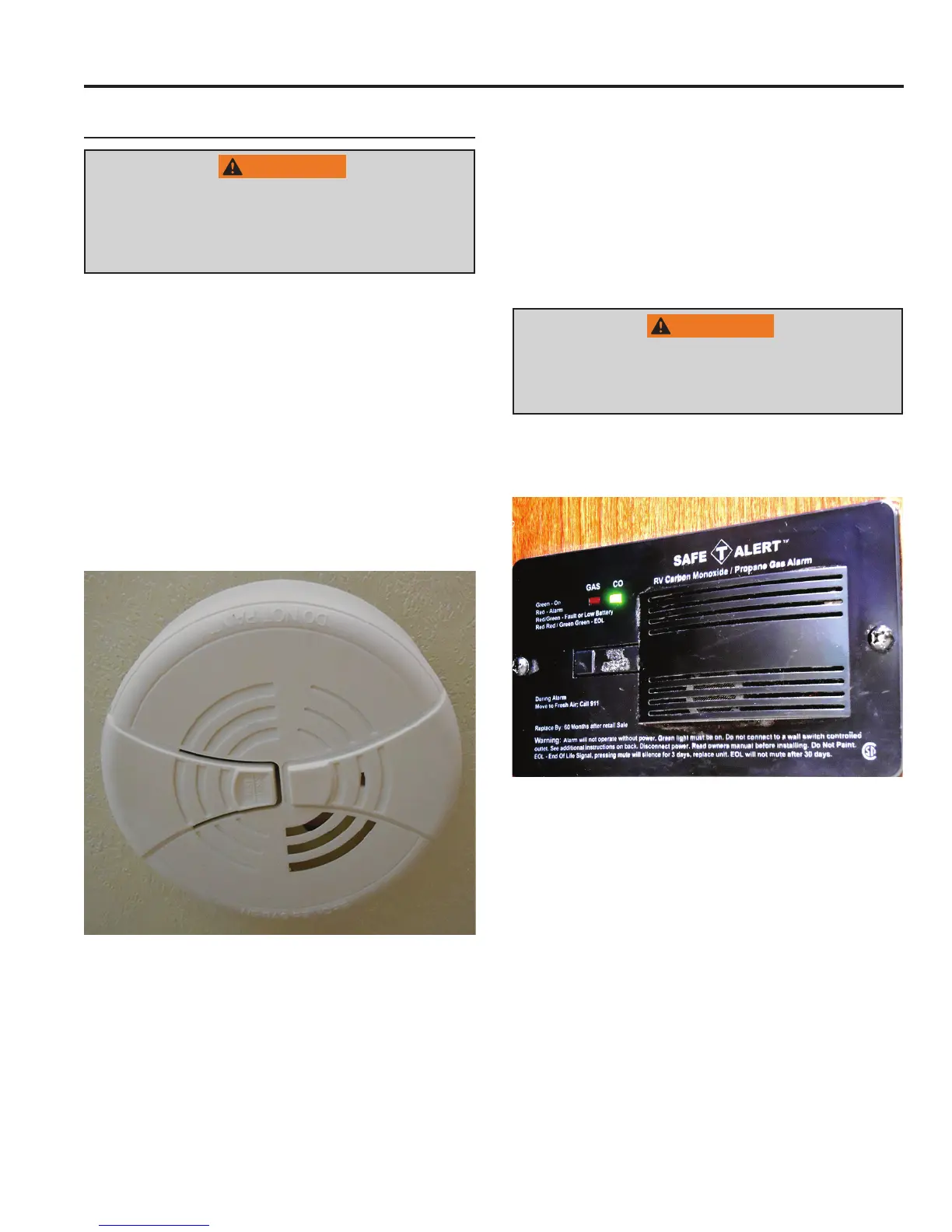
Smoke Detector
• Smoke alarms may not have time to alarm before
the fire causes damage, injury or even death.
• A smoke detector works for only detecting smoke,
not fire.
• The alarm will sound only if smoke reaches the
sensor.
• Check the battery/s at least once a week while the
RV is in use.
• This unit will not alert hearing-impaired residents.
(Special alarms with flashing strobe lights are
needed for the hearing impaired.)
• Smoke alarms have a limited life and are not
foolproof.
• Never attempt to repair this unit; replace if faulty.
• Never disconnect the battery to silence the alarm.
W ARNING
Smoke, propane and CO alarms may have an expi-
ration date. Please consult the individual Owner’s
Manual or on-line at www.forestriverinc.com.
CO Detector
• The carbon monoxide detector is designed to detect
carbon monoxide from any source of combustion. It
is NOT designed to detect smoke, fire or any other
gases.
• This detector doesn’t work without batteries. DO
NOT remove batteries except for replacement.
• Test alarm each week while RV is in use and before
beginning a trip. Press the ‘TEST’ button. If the
alarm fails to sound, replace the unit immediately.
DO NOT attempt to repair.
• For more information, please consult the individual
Owner’s Manual or on-line at
www.forestriverinc.com.
IDENTIFICATION AND SAFETY
13



 To Next Page