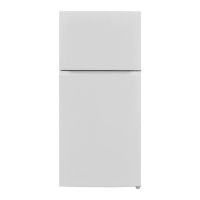
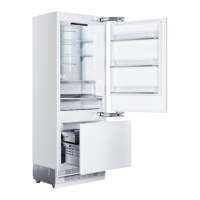
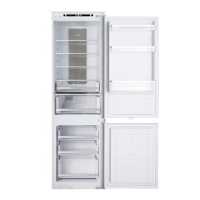
This document is a user manual for the FORTÉ 450 Series 30 & 36 Inch Built-In Bottom Freezer Refrigerator, covering models F16BFRESC450PR, F16BFRESC450SS, F20BFRESC450PR, and F20BFRESC450SS. It provides important instructions regarding safety, environment, product components, display panel setup, operation, and maintenance.
The refrigerator is designed for domestic use and is intended solely for storing food. It features a dual cooling system, which means it has separate cooling systems for the fresh food and freezer compartments. This design prevents air and odors from mixing between the two compartments, enhances cooling speed, and contributes to additional power savings by allowing separate defrosting cycles.
Safety and Environmental Instructions:
The manual emphasizes general safety, intended use, and children's safety. It warns against using the product if damaged, malfunctioning, or if the power cord is compromised. It highlights the risk of electric shock and advises against washing the product with water, touching the plug with wet hands, or unplugging it by pulling the cable. The product should always be plugged into a grounded socket protected by a fuse. Installation and electrical connections must be performed by an authorized service provider.
Specific warnings are given for the freezer compartment, such as not eating cone ice cream or ice cubes immediately to avoid frostbite, not touching frozen food with wet hands, and not placing bottled or canned liquid beverages in the freezer as they may burst. Users are also advised not to use steam cleaners for defrosting or cleaning, as this can cause short circuits or electric shocks. Mechanical devices or other means not recommended by the manufacturer should not be used to accelerate defrosting. The door and drawers should not be used as support or steps to prevent tipping or damage.
The manual also addresses refrigerant safety, noting that the product uses flammable refrigerant (R-600a) in its cooling system. Users are cautioned not to damage the cooling system or piping during use and transportation. If damaged, the product should be kept away from potential fire sources, and the room should be ventilated. In case of gas leaks, users should stay away from the gas to avoid frostbite. The type of gas used is stated on the type plate inside the refrigerator. The product should never be thrown into fire for disposal.
For products with a water dispenser or ice machine, specific operating pressure ranges for the cold water inlet are provided (1-5.5 bars). If the pressure exceeds 80 psi (5.5 bars), a pressure limiting valve must be installed. If the pressure is below 1 bar, an auxiliary pump can be used. Users are advised to consult a professional plumber for water pressure checks and to ensure water impact protection equipment is used if there's a risk of water impact. Installation on the hot water inlet is prohibited, and measures must be taken against the freezing risk of hoses. The water temperature operating range must be between 0.6°C (33°F) and 38°C (100°F).
The product complies with the EU WEEE Directive (2012/19 EU) and RoHS Directive (2011/65/AB), indicating it's manufactured from high-quality, recyclable materials and does not contain harmful substances. Packaging materials are also recyclable. Users are instructed to dispose of the product and its packaging at designated collection centers for recycling.
Refrigerator Components and Display Panel:
The manual includes a list of refrigerator components, such as the water filter, door bins, adjustable body shelves, water dispenser, gallon door bins, odor filter, crisper, control display, special temperature compartment, ice machine, icebox, upper drawer, lower drawer, and condenser. It clarifies that some components may not be available in all models and that figures are schematic.
The display panel features an On/Off button, refrigerator compartment temperature adjustment, function election/child lock button, special fridge compartment temperature adjustment, freezer compartment temperature adjustment, and a confirm button.
Operating Features:
- On/Off Button: Switches the appliance on or off. A 5-second press turns it on, and a 1.5-second press turns it off.
- Function Election / Child Lock Button: The child lock prevents accidental changes to settings. Pressing the MENU button for 3 seconds locks/unlocks the control panel, indicated by a lock symbol on the display.
- Temperature Adjustment:
- Refrigerator Compartment: Adjustable from 36°F (2°C) to 46°F (8°C). The recommended temperature for fresh food is 39°F (4°C).
- Special Fridge Compartment: Adjustable from 30°F (-1°C) to 41°F (5°C).
- Freezer Compartment: Adjustable from 5°F (-15°C) to -11°F (-24°C). A "Super Freezing" function can be enabled by continuous pressing, indicated by a snow symbol.
- Default temperature settings are 41°F (5°C) for the fridge, 36°F (2°C) for the special fridge compartment, and 0°F (-18°C) for the freezer.
- Holiday Mode: Sets the fridge temperature to 63°F (17°C) and freezer to 0°F (-18°C) automatically. Food should not be placed in the fresh food compartment when this mode is active.
- Sabbath Mode: Disables all lights, buzzers, and display panels when enabled.
- Eco Mode: Sets the fridge temperature to 46°F (8°C) and freezer to 5°F (-15°C) for energy saving.
- Water Dispenser (if applicable): Enables the dispensing of fresh water from an internal dispenser.
- Ice Making (if applicable): Activates the ice maker. Users are advised to prepare the water filter and discard the first two full containers of ice after connecting to a water source or replacing the filter.
- Water Filter Replacement (if applicable): The water filter symbol flashes and beeps when replacement is needed. Pressing the SELECT button for 5 seconds resets the replacement timer to 130 days.
- Celsius and Fahrenheit Selection: Allows switching between Celsius and Fahrenheit temperature displays.
Food Placement and Operating Temperature Recommendations:
The manual provides guidance on where to place different types of food within the refrigerator and freezer compartments for optimal storage. It also offers recommended operating temperatures for various ambient conditions, including "Quick Freeze" and "Quick Fridge" functions for rapid cooling. The overall recommended operating temperatures are 4°C / 39°F for the fridge and -18°C / 0°F for the freezer.
Component Removal and Installation:
Instructions are provided for removing and reinserting door bins, glass shelves, and the crisper compartment. Users are cautioned to handle glass shelves carefully to prevent breakage or scratching and to allow them to reach room temperature before cleaning. Proper placement of door shelves is crucial to ensure the door closes correctly. The manual also details how to remove and install the freezer crisper and mentions hinge adjustment for the doors. For changing the door direction, users are referred to separate installation instructions.
Maintenance and Cleaning:
Regular cleaning is recommended to extend the product's service life and prevent problems.
- General Cleaning: Avoid using gasoline, benzene, sharp abrasive instruments, soap, household cleaners, detergents, or wax polish. A solution of one teaspoon of carbonate in half a liter of water is recommended for cleaning the interior. Ensure no water enters the lamp housing or electrical parts.
- Long-Term Storage: If the refrigerator will not be used for a long time, unplug it, remove all food, clean it, and leave the door ajar.
- Door Gaskets: Regularly check and clean door gaskets.
- Shelves: Remove door and body shelves for cleaning.
- Outer Surfaces: Avoid chloric cleaning agents on outer surfaces or chrome-coated parts. For stainless steel surfaces, use a non-abrasive stainless steel cleaning agent with a lint-free, soft cloth, and wipe along the grain. Do not use vinegar, rubbing alcohol, or other alcohol-based cleaning agents on inner surfaces.
- Avoiding Bad Odors: Odors can be caused by improper food storage or insufficient cleaning. The refrigerator should be kept clean, and food should be stored in closed containers. Expired or spoiled foods should be removed.
- Protecting Plastic Surfaces: Avoid placing liquid oils or oil-cooked meals in unsealed containers as they can damage plastic surfaces. Clean any spilled oil immediately with warm water.
- Condenser Cleaning: It is recommended to clean the condenser every six months using gloves, but vacuum cleaners should not be used.
Troubleshooting:
The manual includes a troubleshooting section to help users resolve common issues before calling for service.
- Refrigerator Not Operating: Check if the product is plugged in properly and if the fuse has blown.
- Condensation on Fridge Compartment: Caused by frequent door opening, high humidity, or unsealed liquid containers.
- Compressor Not Operating: May occur after power failures or plug-out/plug-ins due to refrigerant pressure imbalance. The compressor should restart after approximately 6 minutes. If not, contact an authorized service provider. It's normal for the freezer to be in a defrosting cycle. Check plug fit and temperature settings.
- Increased Operation Noise: Normal due to ambient temperature changes.
- Vibration or Noise: Check if the floor is stable and level. Remove objects placed on the refrigerator.
- Liquid Spilling or Spraying Noises: Normal operating sounds of refrigerant flow.
- Whistle Sound: Normal, caused by cooling fans.
- Damp Accumulation on Inner Walls: Caused by hot/humid weather or frequently opened doors.
- Humidity on Outer Surface/Between Doors: Normal in humid weather; condensation will disappear as humidity decreases or with frequent use.
- Bad Odor Inside Refrigerator: Due to lack of cleaning or improper food storage.
- Door Cannot Be Closed: Check for obstructing food packages or an unstable/unlevel floor.
- Crispers Stuck: May be due to food touching the upper wall; reorganize food.
The manual advises users to consult their dealer or an Authorized Service Provider if problems persist after following the instructions, and never to attempt to repair a malfunctioned product themselves.



 To Next Page

 General