EasyManua.ls Logo

frameo DPF-8007W - User Manual

frameo DPF-8007W
16 pages
Print Icon
To Next Page IconTo Next Page
Loading...
User Manual
CLOUD DIGITAL PHOTO FRAME
Question and Answer IconNeed help?

Do you have a question about the frameo DPF-8007W and is the answer not in the manual?

Summary

Getting Started with Frameo

Frameo App

Download and use the Frameo app on iOS or Android to send photos to your frame.

Frameo Quick Setup Guide

Initial setup involves selecting language, connecting to Wi-Fi, and configuring frame name and location.

Starting Frameo and Connecting Friends

Connecting a New Friend

Share a unique code from your frame to allow friends and family to send photos via their Frameo app.

Navigating the Frameo Interface

Add Friend Feature

Generate and share a connection code to enable friends and family to send photos to your frame.

Frameo Settings Menu

Access and adjust various personalization options for your photo frame.

Power Menu Options

Options to power off, restart, or put the frame into sleep mode.

Photo and Video Interaction

Adjusting Photo Fit

Modify photo position and rotation to achieve the best fit or display.

Video Playback Controls

Manage video playback and adjust audio volume directly on the frame.

Frame Settings and Management

My Frame Settings

Customize frame name and location for identification by friends and family.

Language and Time Zone

Set the display language and adjust the time zone for accurate time display.

Manage Photos

View photo count, storage usage, and manage photos by hiding, deleting, or importing.

Advanced Features and Connectivity

My Friends List

View and manage connected friends who can send photos to your frame.

Display and Sleep Mode

Adjust screen brightness and configure the automatic sleep mode schedule.

Wi-Fi Connection

Connect the frame to a Wi-Fi network, view details, and reset connection settings.

Slideshow and Notifications

Slideshow Customization

Configure photo display duration, captions, fill mode, and display order.

Video Playback Settings

Control how videos play in the slideshow (loop, play once) and adjust volume.

Notification Management

Enable/disable notifications for various events like new photos, storage, or software updates.

Backup and Restore Functions

Backup Frame to External Storage

Create a backup of photos, friends, and settings on external storage (e.g., SD card).

Automatic and Manual Backup

Configure automatic backups or perform manual backups to external storage.

Restore Frame from Backup

Guide on restoring frame data from a backup, including prerequisites and steps.

Frame Reset and Help Information

Reset Frame

Removes all personal data, photos, friends, and settings from the frame.

Help and About Sections

Access open source libraries, guides, app version, and device unique IDs.

Overview

This document serves as a user manual for the Cloud Digital Photo Frame, a device designed to display digital photos and videos, allowing users to share memories with friends and family through a cloud-based system. The frame operates with a dedicated Frameo app, available on both iOS and Android platforms, which facilitates the sending of photos and videos to the device.

Function Description

The Cloud Digital Photo Frame's primary function is to display digital photos and videos received from connected friends and family. It acts as a central hub for shared visual memories, offering a dynamic slideshow experience. The device connects to the internet via Wi-Fi, enabling seamless content reception from the Frameo app. Users can personalize the display settings, manage content, and interact with the media shown on the frame.

Usage Features

Getting Started:

Upon initial power-on, the frame guides the user through a quick setup process. This involves selecting a language, connecting to a Wi-Fi network, and potentially updating the frame's software to the latest version. Users are prompted to enter a name for their frame and its location (e.g., "Living room," "Office"), and to set the correct timezone.

Connecting with Friends and Family:

The core functionality revolves around sharing. To send photos to the frame, users need to download the Frameo app on their iOS or Android device. The frame generates a unique connection code, valid for 12 hours, which can be shared with friends and family. Once this code is entered into their Frameo app, they become connected and can send photos and videos directly to the frame. The manual emphasizes that the connection code can be shared via various methods like SMS, email, instant messaging, or phone call.

The frame's interface is designed for ease of use. Users can swipe left or right on the screen to navigate through photos. Tapping once on the screen brings up a menu with frequently used features.

  • Add Friend: Generates a new connection code for sharing with others.
  • Settings: Provides access to various customization options for the frame.
  • Power Menu: Allows users to power off, restart, or put the frame into sleep mode.
  • Hide Photo: Temporarily removes the current photo from the slideshow. Hidden photos can be re-enabled through the settings menu.
  • Gallery: Opens a gallery view for quick browsing of all stored photos.
  • Fit to Frame/Fill Frame: Toggles how photos are displayed on the screen. "Fill frame" scales the photo to fill the entire screen, centering on the most important part. "Fit to frame" ensures the entire photo is visible on the screen, potentially with blurred bars on the sides or top/bottom.
  • Adjust Photo: Allows users to adjust the position and rotation of a photo within the frame for optimal display.

Interacting with Videos:

When a video is displayed, additional controls appear for playback and volume. Users can press a play/pause icon to start or stop the video and a volume icon to open a slider for adjusting the volume level. The video can also be muted or unmuted.

Settings Customization:

The settings menu offers extensive personalization options:

  • My Frame:

    • Frame Name: Changes the name of the frame, which is visible to connected friends and family in their app.
    • Frame Location: Updates the frame's location, helping friends distinguish between multiple frames.
    • Set Language: Changes the language of the frame's interface.
    • Set Time Zone: Adjusts the time zone setting.
    • Enable/Disable 24-hour format: Toggles between 12-hour and 24-hour time formats.
  • Manage Photos:

    • Provides an overview of the number of photos on the frame and the storage space they consume, as well as available storage.
    • Show/Hide Photos: Allows users to select and hide specific photos from the slideshow without deleting them. Hidden photos can be shown again at any time.
    • Delete Photos: Permanently removes selected photos from the frame.
    • Import Photos: Enables importing photos from an external storage device (e.g., SD card). Users can select multiple photos and initiate the import process. The manual notes that captions and important parts cannot be defined during import; for this, users should send photos via the app.
    • Export Photos: Allows exporting all photos and profile pictures from the frame to an external storage device (e.g., SD card).
  • My Friends:

    • Lists all connected friends who are authorized to send photos.
    • Change Options for a Friend: Provides options to allow or disallow a friend from sharing the frame's connection code. It also allows deleting a friend, which removes their permission to send photos and offers the option to delete all photos previously received from that friend.
    • Add Person: A shortcut to generate a connection code for new friends.
  • Display:

    • Brightness Level: Adjusts the screen's brightness.
    • Sleep Mode: Configures a schedule for the screen to turn off and on automatically to save power. During sleep mode, the frame remains powered and can still receive photos.
  • Slideshow:

    • Timer: Sets the duration each photo is displayed before moving to the next.
    • Show Caption: Toggles the display of captions sent with photos by friends.
    • Fill Frame: Sets the default display mode for photos (fill screen or fit to screen).
    • Photo Display Order: Chooses between displaying photos by date (newest to latest) or in a shuffled, random order.
    • Autoplay: Enables or disables automatic playback of videos in the slideshow. Videos can always be started manually.
    • Video Playback: Determines how autoplayed videos behave: loop until the slideshow timer is up, play once and show a thumbnail, or play once and continue to the next photo/video.
    • Video Volume: Adjusts the volume level for video sounds.
  • Wi-Fi:

    • Wi-Fi Details: Shows information about the currently connected Wi-Fi network.
    • Reset Wi-Fi: Deletes all Wi-Fi information and restarts the frame.
  • Notifications:

    • Show Notifications: Enables/disables notifications in the slideshow (e.g., for new photos).
    • Notification Volume: Adjusts the volume for notification sounds.
    • Storage Space: Controls notifications for low storage.
    • Backup: Controls notifications if automatic backup fails.
    • Network Connection: Controls notifications for network connection status.
    • New Photos: Controls notifications when new photos are received.
    • New Friends: Controls notifications when new friends are added.
    • Software Update: Controls notifications when a software update has been installed.
    • Feature News: Controls notifications for new features.

Maintenance Features

Backup and Restore:

The frame offers robust backup and restore functionalities to protect user data.

  • Backup Frame to External Storage (e.g., SD card): Allows users to create a backup of their photos, friends list, and settings to an external SD card. The manual warns that any existing backup on the external storage will be overwritten.
  • Automatic Backup: If enabled, the frame automatically performs a backup within 30 hours of receiving new photos or changes to its settings.
  • Restore from Backup: Users can restore their frame from a previously created backup. Before restoring, it's crucial to confirm that the backup is up-to-date. If the backup is old or non-existent, a new one should be created. The manual also advises updating both the old and new frames to the latest software version before restoring to ensure compatibility. If restoring to a frame that has already been set up, it must first be reset to its factory settings using the "Reset frame" button. After resetting, the "Restore from backup" option will appear on the setup screen.

Reset Frame:

This option permanently removes all data from the frame, including photos, friends/connections, and settings, effectively returning it to its factory default state. This is a critical step before restoring from a backup to an already configured frame.

Help and About:

  • Open Source Libraries: Provides a list of open-source libraries used in the app and their licenses.
  • Share Anonymous Analytics Data: Users can choose to share anonymous analytics data to help improve the Frameo software.
  • Guide: Accesses the quick start guide shown during the initial setup.
  • About: Displays information such as the Android version, Peer ID (a unique identifier for support inquiries), MAC address, Frameo version, uptime, and options to check for updates or join a beta program.

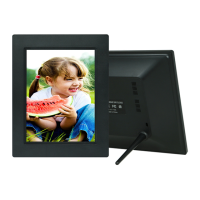
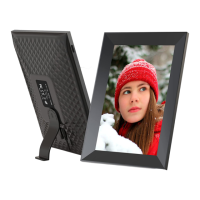
The manual also includes a diagram of the back of the frame, highlighting the wall-mounted hole, power button, and stand hole, indicating physical aspects relevant to setup and placement.

frameo DPF-8007W Specifications

General IconGeneral
Wi-FiYes
Power SourceAC adapter
Screen Size8 inches
Supported FormatsJPEG, PNG
StorageSD card (up to 32GB)
ConnectivityMicro SD card slot

Related product manuals