This document is a Use & Care Guide for a Frigidaire refrigerator, providing instructions for its operation, maintenance, and troubleshooting. It emphasizes the importance of proper installation and care to ensure the longevity and optimal performance of the appliance.
Function Description
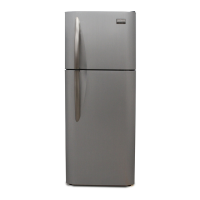
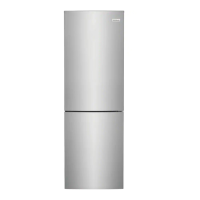
The Frigidaire refrigerator is designed to store food items at controlled temperatures, offering both a refrigerator compartment for fresh foods and a freezer compartment for frozen items. It features a control panel display that allows users to adjust temperatures, select various operating modes, and monitor the appliance's status. The refrigerator includes specialized storage areas such as freezer drawers, a chiller, crispers with covers, and door bins, all designed to optimize food preservation. A key feature is the CHILLDRAWER, which allows for temperature adjustments based on the type of food stored, functioning as a crisper zone for fruits and vegetables or a colder zone for short-term storage of fish and other fresh foods. The appliance is equipped with LED lighting for interior illumination.
Usage Features
The refrigerator's control panel is intuitive, featuring buttons for "Mode," "Temp," and "Zone."
- Mode Selection: Users can select between "Vacation Mode" and "Freeze Boost Mode."
- Vacation Mode: Automatically sets the refrigerator to 41°F (5°C) and the freezer to 0°F (-18°C), optimizing for lower energy consumption when the appliance is not in active use for extended periods. Temperatures are not adjustable in this mode.
- Freeze Boost Mode: Quickly reduces the freezer temperature to -13°F (-25°C) for rapid freezing of large quantities of food. The refrigerator compartment temperature remains adjustable in this mode, and the appliance automatically reverts to its previous mode after 50 hours.
- Temperature Adjustment: In "Normal Mode," users can press "Zone" to select either the refrigerator or freezer compartment, then use "Temp" to adjust the desired temperature. Holding "Temp" for 3 seconds allows switching between Fahrenheit and Celsius displays. The temperature cycles for the refrigerator range from 35°F to 47°F, and for the freezer from 7°F to -8°F.
- Door Open Alarm: An audible alarm sounds if a door is left open for more than 60 seconds, prompting users to close it to conserve energy.
- CHILLDRAWER Control: A knob within the CHILLDRAWER allows users to adjust its temperature. Pushing the knob upward decreases the temperature. The "Cold" position functions as a crisper for fruits and vegetables, maintaining appropriate temperature and humidity. The "Coldest" position is ideal for short-term storage of fresh fish or other foods, keeping them fresh without freezing. For optimal freshness in "Coldest" position, it is recommended to set the main refrigerator temperature below 4°C.
- Door Reversal: The appliance offers the flexibility to reverse the door swing from left to right or right to left, which can be beneficial for adapting to different kitchen layouts. This process involves removing and reattaching hinges, pins, and door components, and is recommended to be performed by a qualified person.
Maintenance Features
Regular cleaning and proper handling are crucial for maintaining the refrigerator's appearance and preventing odors.
- General Cleaning: The interior and exterior should be cleaned regularly. Spills should be wiped up immediately, and compartments cleaned at least twice a year.
- Cleaning Agents:
- Interior & Door Liners: Use a solution of 2 tablespoons of baking soda in 1 quart of warm water. Ensure excess water is wrung out of the sponge or cloth, especially around controls and electrical parts.
- Door Gaskets: Wipe with a clean, soft cloth using soap and water.
- Drawers & Bins: Clean with soap and water using a soft cloth for runners and tracks.
- Glass Shelves: Allow glass to warm to room temperature before immersing in warm water; use soap and water or glass cleaner.
- Exterior: Use soap and water or a non-abrasive glass cleaner. Avoid commercial household cleaners containing ammonia, bleach, or alcohol on handles. Do not use a dry cloth on smooth doors.
- Prohibited Cleaning Materials: Never use CHLORIDE or cleaners with bleach on stainless steel. Avoid sharp instruments, rubbing alcohol, flammable fluids, or abrasive cleaners that can damage surfaces. Do not use paper towels, metallic scouring pads, or strong alkaline solutions on plastic parts, interior doors, gaskets, or cabinet liners.
- Electrical Safety during Cleaning: Always unplug the electrical power cord from the wall outlet before cleaning to prevent electrical shock.
- Moving the Refrigerator: When moving the appliance for cleaning or service, cover the floor with cardboard or hardboard to prevent damage. Pull the refrigerator straight out; avoid wiggling or "walking" it to prevent floor damage. Be cautious not to move it beyond plumbing connections.
- LED Light Replacement: The internal LED light should be replaced by a qualified technician if it stops working.
- Error Codes: The display shows error codes (E0, E1, E2, E3, E5) if a fault occurs, indicating issues such as signal transmission problems, temperature sensor malfunctions, or defrost heater issues. Users are advised to call service to report these codes.
- Disposal: When disposing of an old unit, remove doors and leave shelves in place to prevent child entrapment. Have refrigerant removed by a qualified service technician, as CFCs and HCFCs can harm the environment.


 To Next Page
 General