
 Need help?
Do you have a question about the Gemalto EHS6T-LAN and is the answer not in the manual?
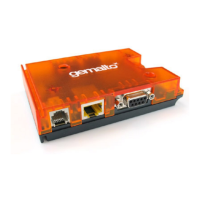
The Gemalto EHS6T-LAN is a robust device designed for remote machine-to-machine connectivity, offering both Ethernet and Serial interfaces. It is engineered to function effectively "out-of-the-box" without requiring immediate configuration changes, making it user-friendly for initial deployment. In its default state, the device automatically establishes a connection to the Cellular network (APN) using pre-defined credentials associated with the SIM card. Simultaneously, its Ethernet LAN interface operates as a DHCP server, simplifying network integration for connected devices. This default setup ensures that users can quickly deploy the EHS6T-LAN and begin operations with minimal setup effort, leveraging its inherent capabilities for cellular and local network management.
For scenarios requiring customized network configurations, such as an alternative APN or specific Ethernet LAN settings, the EHS6T-LAN provides a convenient HTTP-web interface. This web interface serves as the primary tool for users to quickly make and save necessary changes to the device's parameters. The interface is designed for ease of use, allowing for straightforward navigation and modification of settings. This flexibility ensures that the device can be adapted to a wide range of application requirements and network environments, from simple plug-and-play setups to more complex, tailored deployments.
Accessing the device's web interface is a simple process. After powering up the EHS6T-LAN, a standard Ethernet cable is used to connect the device to a PC. The PC's Ethernet LAN port should be configured as a DHCP client to automatically obtain an IP address from the EHS6T-LAN, which acts as a DHCP server. Once connected, users can open any web browser and navigate to the default IP address, http://192.168.1.1. Upon prompting, the default password "admin" should be entered, with the username automatically set to "root." This initial access leads to the "Initial Status Page," which provides an overview of the device's current operational status and network information.
One of the essential maintenance features is the ability to change the device's password. The web interface guides users to the "Administration Page" under the "System" heading, where the device password can be updated. After entering a new password, users must click the "Save & Apply" button at the base of the page to implement the changes. It is crucial to remember the new password for future access. The interface also provides a direct link to this password configuration page from the "No Password Set!" warning box, ensuring that users are prompted to secure their device from the outset. This security measure is vital for protecting the device from unauthorized access and maintaining the integrity of its configuration.
The EHS6T-LAN also offers comprehensive features for managing wireless network settings, particularly the Network APN Credentials. From the top-level menu, users can hover over the "Network" heading and select "Interfaces" to access the "Network Interfaces Overview" page. This page displays a summary of all network interfaces, including the 3G Wireless Wide Area Network (3GWAN). To modify the APN credentials or other 3GWAN settings, users click the "Edit" button located in the 3GWAN section. This action opens a dedicated page where details such as the APN Name, Username, and Password can be configured. The device supports PAP/CHAP authentication methods, which it automatically selects and uses to register onto the APN, simplifying the setup process for cellular connectivity. After making changes, users must click "Save & Apply" to ensure the new settings are implemented. For convenience, the 3G-WAN word and icon on the "Initial Status Page" also act as a clickable link directly to these settings, streamlining access for frequent adjustments.
Furthermore, the device allows for detailed configuration of its Ethernet LAN settings. On the "Network->Interfaces Overview" page, adjacent to the LAN information, an "Edit" button provides access to the "LAN Interface Configuration" settings page. Here, users can manage various aspects of the local area network. A key feature is the ability to disable the DHCP server by checking a tick-box in the "DHCP Server" section. This is particularly useful in environments where another DHCP server is already present or when a static IP configuration is preferred. The IP address for the LAN interface can be defined in the "IPv4 Address" box within the "Common Configuration" section. The protocol can typically be left as "static" unless specific network requirements dictate the use of other protocols. As with other configurations, all changes must be saved to take effect. This level of control over the LAN settings ensures that the EHS6T-LAN can seamlessly integrate into diverse network architectures, whether as a primary DHCP server or as a client within an existing network infrastructure.
In summary, the Gemalto EHS6T-LAN is a versatile device that combines out-of-the-box functionality with extensive configuration options accessible via an intuitive web interface. Its core function is to provide reliable remote machine-to-machine connectivity through both cellular and Ethernet networks. Key usage features include automatic cellular network connection, DHCP server functionality for local networks, and a user-friendly web interface for configuration. Maintenance features encompass secure password management, flexible APN credential configuration for wireless networks, and detailed control over Ethernet LAN settings, including the ability to enable or disable the DHCP server. These features collectively ensure that the EHS6T-LAN is a adaptable and manageable solution for various M2M applications, offering both simplicity for initial deployment and depth for customized network integration.
 General
| Category | Gateway |
|---|---|
| Model | EHS6T-LAN |
| Manufacturer | Gemalto |
| SIM Card Slots | 1 |
| Connectivity | Cellular |
| Cellular Bands | 850/900/1800/1900/2100 MHz |
| Ethernet Ports | 1 |

 To Next Page