Need help?
Do you have a question about the Gemilai CRM3605 and is the answer not in the manual?
Steps for preparing espresso coffee after initial setup and connection.
Instructions for dispensing hot water from the steam nozzle.
Configuration of coffee/hot water times and restoring factory defaults.
This document provides a comprehensive guide for the operation, maintenance, and troubleshooting of an espresso machine, designed for household use. It details various functions, usage features, and maintenance procedures to ensure optimal performance and longevity of the appliance.
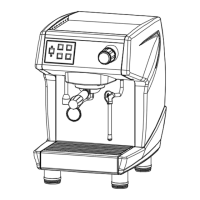
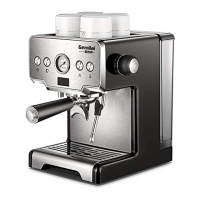
The espresso machine is primarily designed for preparing espresso coffee, frothing milk for cappuccinos, and dispensing hot water. It features a central structure that facilitates the process of obtaining espresso and steam/hot water. The machine incorporates several buttons and indicators to guide the user through different operations. A power button initiates the device, while a coffee button controls the brewing process. A steam button activates the steam function for frothing milk or dispensing hot water. The machine also includes a pressure gauge to monitor the brewing pressure and a screen flash indicator for various alerts.
The core function of the machine involves using ground coffee powder to brew espresso. It is crucial to use appropriate grinding coffee powder for the best results. The machine's design ensures that water is pumped through the coffee grounds at a specific pressure to extract the rich flavors of espresso. For milk frothing, the machine generates steam through a steam nozzle, allowing users to create creamy foam for cappuccinos and lattes. The hot water function provides a convenient way to dispense hot water for other beverages or purposes.
The machine is equipped with indicators that signal its status. For instance, flashing lights often indicate a pre-heating phase, while solid lights signify readiness for operation. Specific indicators for coffee and steam functions help users understand when the machine is ready for brewing or steaming. The device also has a built-in mechanism to automatically pump water for a short period upon startup, ensuring the system is primed.
The espresso machine is designed for ease of use, with clear steps outlined for various operations. For first-time use, users are instructed to unpack the machine, check accessories, clean detachable components, and run the appliance with water (without coffee powder) multiple times to prime the system.
Making Espresso Coffee: To make espresso, users need to open the lid, remove the water tank, and fill it with water, ensuring not to exceed the MAX capacity. After replacing the water tank and closing the lid, the power plug is connected, and the power button is pressed. The machine will then automatically pump water for about 2 seconds, and the coffee and steam indicators will light up. The coffee indicator will then flash, signaling that the machine is preheating. Once preheating is complete, the coffee indicator will light up steadily.
The process involves taking out the filter holder, adding appropriate coffee powder with a coffee spoon, and pressing it tightly. The filter holder is then locked into the group head, and a cup is placed under the coffee outlet. Pressing the coffee button starts the brewing process. After brewing, the filter holder should be removed, knocked out, and cleaned with hot water immediately before being locked back in for the next use. Users are advised to frequently check the water level in the tank and refill if necessary. It is also important to avoid touching hot surfaces, especially the brewing outlet and steam nozzle, during operation.
Frothing Milk / Making Cappuccino: For frothing milk, espresso should be prepared first in a large enough cup. Whole, fresh cold milk (8°C-10°C) should be poured into a stainless steel cup, filling it about one-third. The cup diameter should be at least 70 ± 5mm, as the milk volume will increase after frothing. The steam button is pressed to start preheating, and once the steam indicator lights up steadily, the stainless steel cup is placed under the steam nozzle. Opening the knob releases steam, and the steam nozzle is floated on the milk surface, with the height of the steel cup adjusted to froth the milk. After frothing, the knob is turned off, and the frothed milk is poured into the prepared espresso to create a cappuccino. It is recommended to purge steam to clean the steam nozzle after use, being cautious of the hot surface.
Making Hot Water: To dispense hot water, a stainless steel container is placed under the steam nozzle. The knob is opened after the coffee indicator lights up, and hot water will be ejected from the steam nozzle. The knob should be closed once the desired amount of hot water is reached. Similar to other operations, users should check the water level frequently and avoid touching hot surfaces.
Heating Liquid: For heating other liquids, a stainless steel cup is filled halfway with the liquid (cup diameter not less than 70 ± 5mm). The steam button is pressed to start preheating, and once the steam indicator lights up, the cup is placed under the steam nozzle. Turning on the knob releases steam, with the nozzle inserted into the liquid. The knob is turned off when the desired temperature is reached.
Coffee Time Settings and Recovery of Default Time: The machine allows users to set custom coffee and hot water dispensing times. To set coffee time, with the power supply on, hold the coffee button for 3 seconds. The machine will start pumping water, and the display screen will show a chronograph. Release the button when the desired amount of coffee is dispensed, and the time will be set (range 10s-60s). Similarly, for hot water time, hold the hot water button for 3 seconds, and release it when the desired amount is dispensed (range 5s-30s). To restore factory settings, press both the coffee button and the steam key simultaneously for about 5 seconds until the display screen flashes "888."
Regular cleaning and maintenance are essential for the espresso machine's performance and hygiene. The manual provides detailed instructions for both routine cleaning and descaling.
Cleaning and Maintenance: Before cleaning, the machine must be switched off and allowed to cool down. The housing should be cleaned with a damp cloth. It is crucial not to use abrasive sponges, detergents, or solvents, and never to immerse the machine in water. The steam outlet should be cleaned to ensure there is no blockage. The outlet and the seal under the group head should be brushed. Rinsing with hot water helps dissolve any coffee bean oil residue. All detachable attachments should be cleaned in water and dried thoroughly.
Cleaning Mineral Deposits (Descaling): Over time, the machine will accumulate lime scale deposits, requiring descaling every 2-3 months. The descaling process involves pouring water and a descaling solution into the water tank up to the MAX capacity. The recommended water-to-descale ratio is 4:1, following the descaler's instructions. Alternatively, a citric acid solution (water-to-citric acid ratio 100:3) can be used.
The descaling procedure involves locking the filter holder (without coffee powder) into the group head. Then, following the "MAKE ESPRESSO COFFEE" steps, the coffee button is pressed to make about 150ml of "coffee" (descaling solution). After the coffee indicator lights up, the coffee button is turned off, and the steam button is turned on. Once the steam indicator lights up, the knob is opened to release steam for about 2 minutes, then turned off. The descaling solution should be left in the machine for at least 15 minutes to work. This step (step 4) should be repeated 3 times. Afterward, the coffee button is pressed to brew "coffee" until no descaling solution is left. Finally, the machine is run with clean water (without coffee powder) by repeating step 4 three times (without the 15-minute wait) until no water is left in the boiler. This final rinsing step (step 7) should be repeated at least 3 times to ensure the piping is completely clean.
Troubleshooting: The manual includes a troubleshooting section to address common issues. For instance, if coffee comes out too slow or not at all, potential causes include finely ground coffee, a clogged filter, blocked filter holes, or an uninserted water tank. Solutions range from using thicker coffee powder and cleaning the filter to inserting the water tank correctly. Water leakage at the bottom of the machine might be due to a full drip tray, requiring it to be cleaned. If the machine is not working, it could be due to an unplugged power cord, a short-circuited NTC, or general machine malfunctions. Solutions involve plugging in the power cord correctly or contacting authorized service. If the steam cannot froth, it might be because the container is too big or not suitable, or skimmed milk is used. The recommended solutions are to use a high and narrow cup or garland cup and whole milk. For persistent problems, users are advised to contact customer support.
Disposal: The document emphasizes environmentally responsible disposal of old machines. Users are instructed to dispose of old machines in an environmentally neutral way, utilizing regional collection systems for recycling, as old machines contain valuable materials.
This comprehensive guide ensures that users can effectively operate, maintain, and troubleshoot their espresso machine, maximizing its performance and lifespan while adhering to safety and environmental guidelines.
 General
| Brand | Gemilai |
|---|---|
| Model | CRM3605 |
| Type | Espresso Machine |
| Pump Pressure | 15 bar |
| Power | 1450W |
| Voltage | 220-240V |
| Material | Stainless Steel |
| Color | Silver |
| Water Tank Capacity | 1.7L |
| Frequency | 50-60 Hz |

 To Next Page