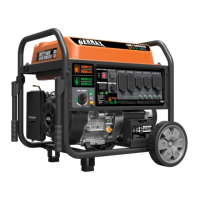
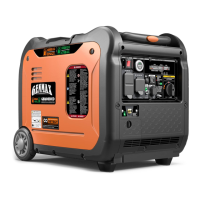
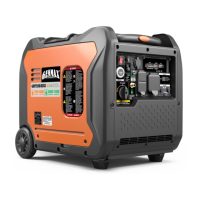
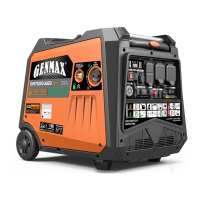
Need help?
Do you have a question about the GENMAX GM2000i and is the answer not in the manual?
Explains generator neutral isolation and its effect on devices.
Details warranty period, products covered, and specific exclusions.
Outlines buyer's duties and provides contact information for warranty inquiries.
Explains safety terms (DANGER, WARNING, CAUTION, NOTICE) and defines safety symbols.
Provides essential guidelines for safe operation, including electrical and fuel hazards.
Identifies and explains the meaning of safety labels and decals on the GM2000i model.
Step-by-step guide for safely unpacking the generator and identifying included items.
Highlights key external features and components of the GM2000i inverter.
Details the functions and indicators of the inverter's control panel.
Covers pre-operation checks including location, weather, surface, and load connection.
Provides guidance on extension cords and connecting multiple inverters for increased power.
Step-by-step instructions for adding engine oil to the inverter before the first use.
Instructions on checking and adding engine oil and gasoline, including safety precautions.
Detailed procedure for safely starting the inverter, including pre-start checks and operation.
Procedures for normal and emergency shutdown, plus how to reset the circuit breaker.
Explains how to use the efficiency mode for fuel saving and optimal engine RPM.
Outlines periodic maintenance tasks and essential safety precautions before performing work.
Specifies recommended engine oil types and provides instructions for checking and adding oil.
Step-by-step guide for draining and refilling the engine oil.
Initial steps for cleaning the air filter element.
Procedure for draining the fuel from the carburetor float bowl.
Continues the process of washing, rinsing, and drying the air filter element.
Guide for inspecting, cleaning, gapping, and replacing the spark plug.
Instructions for cleaning the spark arrestor screen to maintain exhaust system efficiency.
Procedures for cleaning the inverter and preparing it for long-term storage.
Solutions for when the engine runs but there is no electrical output.
Diagnoses and remedies for problems with starting or keeping the engine running.
Addresses issues like the inverter stopping suddenly or running with unstable RPM.
Diagrams showing the electrical connections of the generator's blocks and components.
This document is a user manual for the GENMAX GM2000i Digital Inverter Generator.
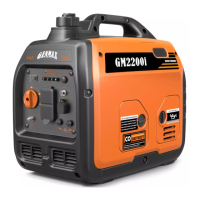
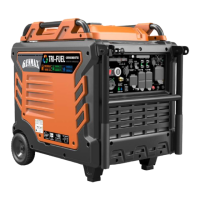
The GENMAX GM2000i is a portable digital inverter generator designed to provide electrical power. It offers 1600 running watts and 2000 peak watts, making it suitable for consumer applications. The generator's stator winding is isolated from the frame and the AC receptacle ground pin, which means electrical devices requiring a connection between one conductor pin and the grounded receptacle pin may not function properly. It features an efficiency mode to minimize fuel consumption by sensing the load and adjusting engine RPM accordingly. The generator is equipped with safety features such as a low oil shutdown switch and an overload alarm.
The GM2000i inverter generator is designed for ease of use with several key features:
Starting the Inverter: Before starting, ensure the inverter is on a level, dry surface, outdoors, and at least 6 feet (1.8 m) away from buildings or combustible materials. Verify engine oil is filled, and no loads are connected. The inverter should be properly grounded. To start, flip the oil switch to "ON" choke, pull out the choke, and then firmly pull the recoil handle with a rapid motion.
Stopping the Inverter: For normal shutdown, remove all connected loads, allow the inverter to run at "no load" for a few minutes to stabilize temperatures, then turn OFF the oil switch and the main switch. After cooling, turn the ventilation knob on the fuel tank cap to OFF. In an emergency, move the engine control switch to the OFF position immediately.
Inverter Paralleling Operation: Only use GENMAX paralleling cords. Ensure both inverters are off and cord switches are OFF before connecting. Start one inverter, wait for the output ready light, then turn both cord switches to ON. Start the second inverter and wait for its output ready light before connecting loads. To stop, unplug loads, turn both cord switches to OFF, and unplug the cord from each inverter.
Regular maintenance is crucial for the inverter's longevity and proper operation. The manual provides a schedule for owner-performed maintenance:
Maintenance Schedule (Owner Performed):
Engine Oil Maintenance: Only use 4-stroke/cycle engine oil, specifically SAE 5W-30, SAE 10W-30, or SAE 15W-40 depending on ambient temperature (refer to Figure 11 in the manual). Synthetic oil is an acceptable substitute. Engine oil must be checked and added on a flat, level surface to ensure accurate readings. Overfilling can cause serious engine damage. The engine is equipped with a low oil shutdown switch to prevent damage.
Adding Engine Oil: To add oil, remove the engine oil fill/drain plug service panel, clean the area, remove the plug, and slowly pour the specified oil using a funnel until it reaches the correct level (not higher than the fill plug).
Changing Engine Oil: Stop the engine and allow it to cool. Remove the engine service panel and place an oil pan under the oil fill/drain plug. Tilt the inverter to drain the oil completely. Refill with new oil as per the "Adding Engine Oil" instructions. Dispose of used oil responsibly according to EPA guidelines.
Air Filter Maintenance: Clean the air filter every 50 hours of use or 3 months (more often in dusty conditions). Turn off the inverter and let it cool. Remove the engine service panel, unscrew the air cleaner cover, and remove the foam element. Wash the foam element in a solution of household detergent soap and warm water, squeezing gently (do not twist or tear). Rinse in clean water, dry thoroughly, and reinstall. Never use gasoline or other flammable solvents to clean the air filter.
Draining the Float Bowl: Remove the engine service panel to access the carburetor. Locate the clear plastic hose from the float and place a container underneath. Loosen the float bowl drain screw until fuel drains. Allow complete drainage, then tighten the screw. Dispose of fuel responsibly.
Spark Plug Maintenance: Check and clean the spark plug every 100 hours or 6 months, and replace it every 300 hours or year. Stop the inverter and let it cool. Slide off the spark plug access cover and firmly pull the boot directly away from the engine (avoid side load). Clean around the spark plug, then remove it using the provided socket wrench. Inspect for cracks, chips, or excessive wear. The spark plug gap should be 0.032 inches (0.80 mm). Replace if faulty. When reinstalling, hand-thread the plug until it bottoms out, then tighten with the wrench. Ensure the boot fully engages the tip.
Cleaning the Spark Arrestor: Check and clean the spark arrestor every 100 hours or 6 months. Stop the inverter and let it cool. Remove the muffler cover screws. Loosen the clamp holding the spark arrestor, slide off the band clamp, and pull the screen off the exhaust pipe. Use a wire brush to remove dirt and debris. Replace the screen if it shows signs of wear. Reinstall in reverse order.
Cleaning the Inverter: Inspect and clean the inverter before every use. Ensure all engine air inlet and outlet ports are free of dirt and debris to prevent overheating.
Storage: Before storing, clean the inverter. Siphon all gasoline from the fuel tank. Run the engine until all remaining fuel in the lines and carburetor is consumed and the engine shuts off. Drain any remaining fuel from the float bowl. Change the oil. Remove the spark plug, add about 1 tablespoon of oil into the opening, and slowly pull the recoil handle to distribute the oil and protect the cylinder wall. Replace the spark plug. Store the inverter in a clean, dry place. Never store with fuel indoors or in a poorly ventilated area near ignition sources.
 General
| Brand | GENMAX |
|---|---|
| Model | GM2000i |
| Category | Portable Generator |
| Language | English |


 To Next Page