Additional Activities using the GeoSafari® Talking Planetary Mat
The GeoSafari® Talking Planetary Mat is essentially a bathroom scale when you stand
on the Earth spot in Explore mode. There are many activities you can do with a scale.
Here are some ideas.
Guess How Much
Pick something in your classroom, like a stack of books, that a student can easily hold.
(Itemshouldbegreaterthan6lb.)Askthestudents,“Whatdoyouthinkitweighs?”
1. Ask students to weigh themselves. They will press the Explore button, step on the platform,
and when the countdown is finished, step on the Earth picture to view their weight.
2. Repeat Step 1 while holding an item from your classroom.
3. Subtract the student’s weight from the combined weight (Step 2) to find the weight of
the item.
4. Weigh 5 items this way.
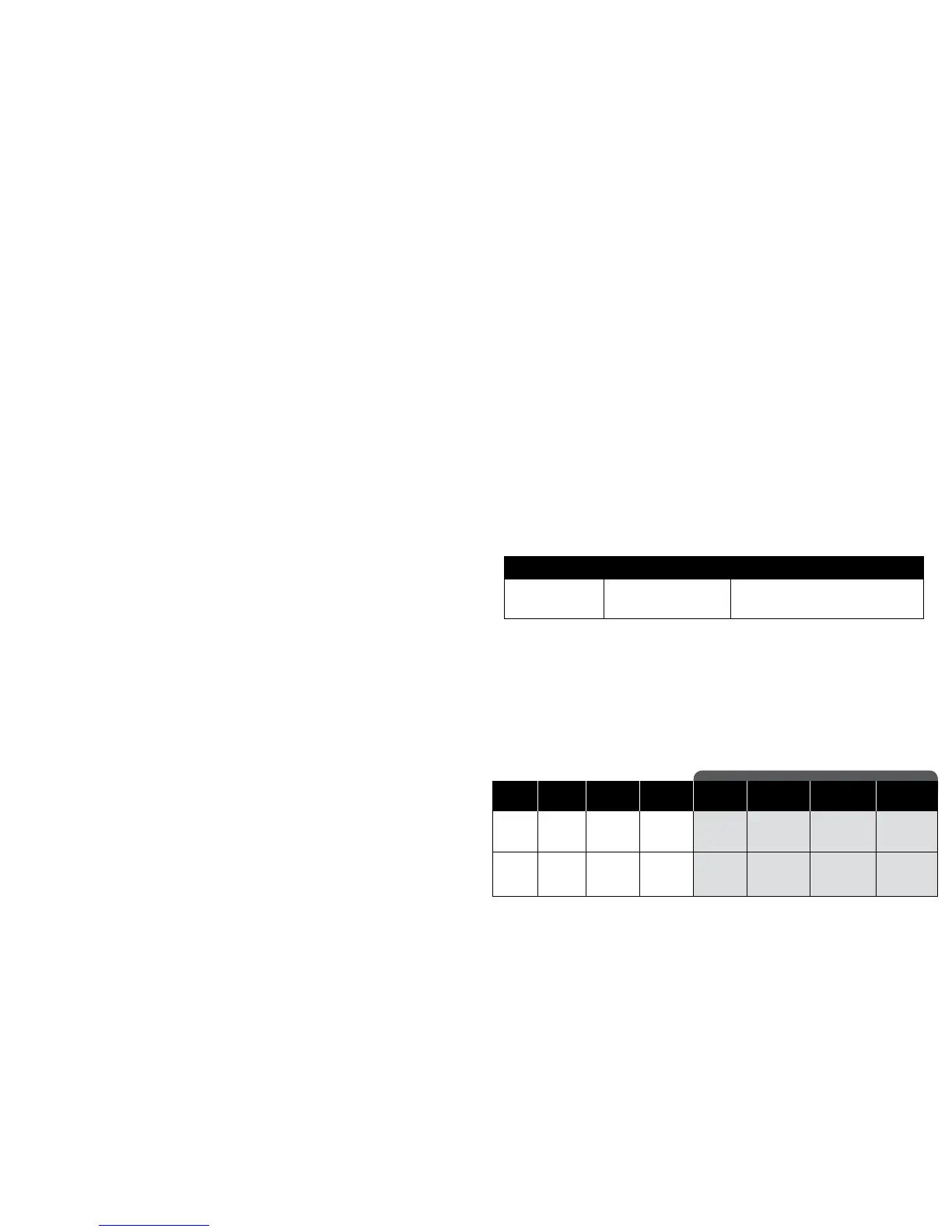
5. Write the following table on the board and have students copy it for their own
investigation.
6.Createagraphshowingitemsfromlightesttoheaviest.
Challenge! Be Ready for the International Space Station
The International Space Station was built in over a dozen countries—250 miles above Earth.
All the pieces of the station fit together on the very first try. The engineers used
the metric system as the standard form of measurement.
Have the students convert the weight of their items from pounds into kilograms.
1. Calculate how much that item would weigh in kilograms (1 kg = 2.2 lb).
Round to the nearest kilogram.
2. Check work by flipping the lb/kg switch to kg. Ask students to weigh themselves and the
items again to check their math.
____ 1. solar eclipse
____ 2. lunar eclipse
____ 3. axis
____ 4. crater
____ 5. planet
____ 6. lunar phase
____ 7. solar system
____ 8. galaxy
____ 9. rotate
____ 10. orbit
____ 11. mass
____ 12. gravity
Name:___________________________________________________ Date_______________
Space Vocabulary
Match the vocabulary word on the left to its definition on the right.
A. a hole that is shaped like a bowl
B. a huge group of stars
C. a large, ball-shaped object that
revolves, or travels, around any star
E. an imaginary line going through the North
and South Poles, around which Earth spins
D. Earth’s shadow blocks the sun
from shining on the moon
F. the amount of matter in an object
G. the Moon comes between Earth and
the Sun and casts a shadow on Earth
H. a pulling force between any two objects
I. the shape of the lighted part of the moon
J. the Sun, the planets and their moons,
and other objects that orbit the Sun
K. spins on its axis
L. the path an object takes as it revolves
around another object
© Educational Insights, Inc. © Educational Insights, Inc.
I
Objects’s Weight
(My Weight + Object) - My Weight
My Weight
My Weight + Object
Pounds
Object’s
Weight
Object’s weight
rounded to the
nearest kg
Kilograms
Object’s
Weight
Kilograms
My Weight
Kilograms
My Weight + Object
Kilograms
(My Weight + Object)
- My weight
2.2 lb = 1 kg
My Calculations
textbook 8 lb
8 lb ÷ 2.2
= 3.6 kg
4 kg
Check your calculation
(example)
Object
Note:TheGeoSafariTalkingPlanetaryMatisaccurateto±3lb,sopleaseallowforupto6lbdierencebetweenyourcalculationsandtheactualweightoftheobject.



 To Next Page
 Loading...