P
P
a
a
g
g
e
e
7
7
o
o
f
f
2
2
4
4. OPERATION
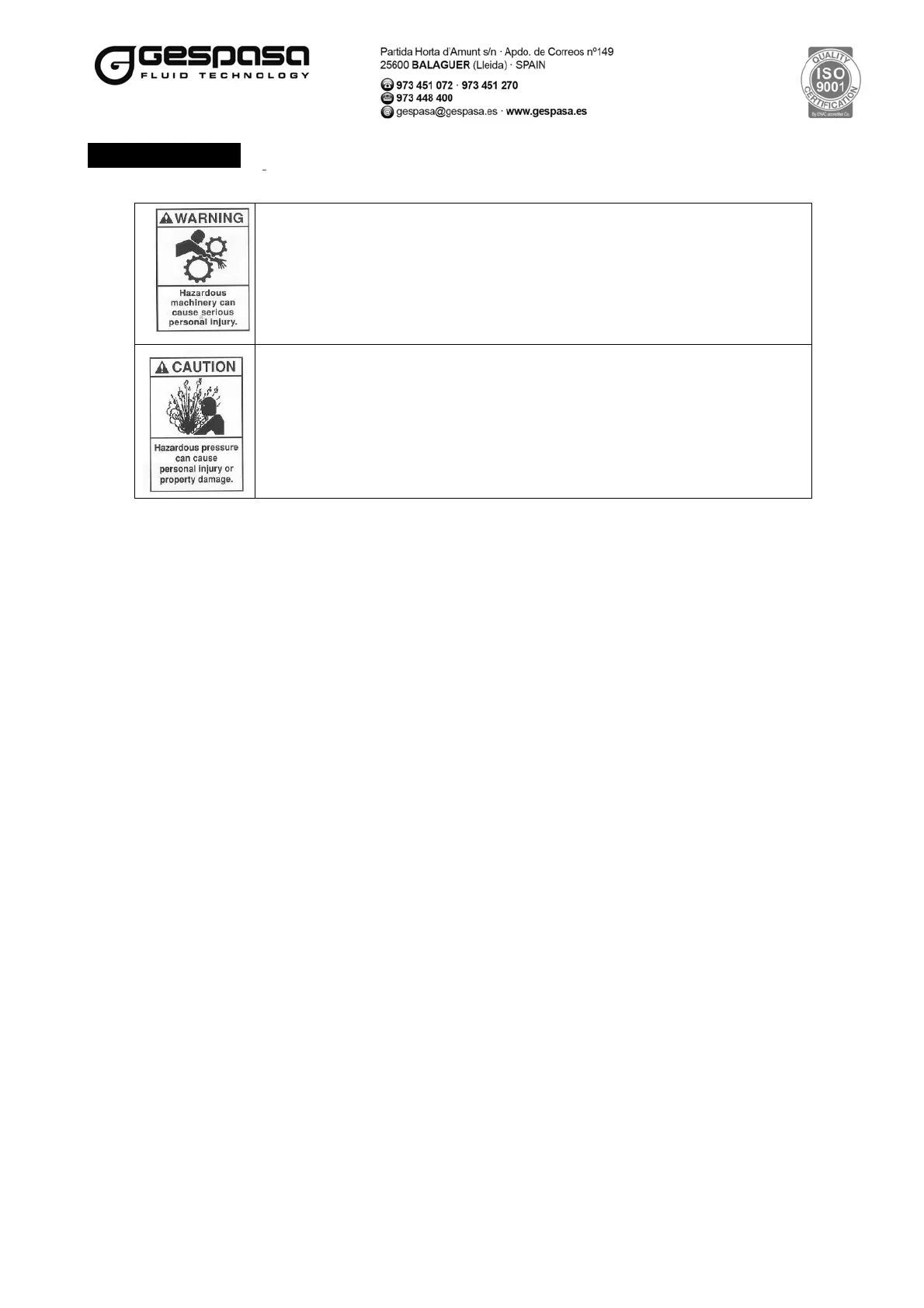
Serious injuries to people, damage to property or even the death may be caused by
operating the pump without the protections properly installed.
Injury to people or damage to property may be caused by operating the pump with a
closed valve, causing the breaking of the system components.
4.1. CHECKINGS BEFORE THE START-UP
-
Inspection of the pipe system and the supports in order to ensure the pipe loads are not transmitted to the pump.
-
Check all the valves and other elements installed in the pipeline are switched on or working.
-
Briefly start the motor in order to see if the pump turns the correct sense.
4.2. START-UP PROCEDURE
1.
Start the motor up, the priming is made in one minute.
2.
Check the manometer and the gauge to ensure the system is working in the planned parameters.
3.
Check the pipes, the joints and the equipment associated with the system for leaks, noise, vibrations or
overheating.
4.
If possible, also check the flow to ensure the pump is working within the planned parameters.
5.
Check the safety valve set, by closing the valve in the discharge pipe and reading the pressure. The pressure
should be 10-20 psi (69 –138 kPa), above the maximum working pressure or the setting value of the external
bypass valve (if there is any installed).
Do not let the pump work with a closed valve in the discharge pipe more than 15 seconds. If necessary to set,
please refer to next 4.4.1. "Safety valve Setting" section of this instruction manual.
4.3. REVERSE TURN
The pump can turn in the reverse sense that is currently turning, but taking into account the safety valve of the pump
stops working.
It is advisable to install an individual safety valve in order to protect the pump against an excessive pressure.
The pump will work at a less output level.


 To Next Page