This document outlines the installation, usage, and maintenance for Gessi bath mixing programs, specifically models Art. 54038, Art. 54039, and Art. 54136. These are wall-mounted bath mixers designed for a private wellness experience.
Function Description
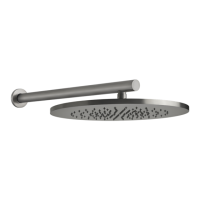
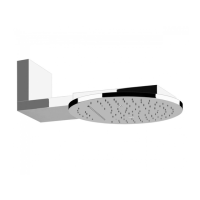
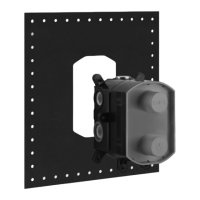
The Gessi bath mixing programs are designed to provide a controlled flow and temperature of water for bathing. They feature a main mixing unit with controls for hot and cold water, and a diverter to switch between different water outlets such as a shower head or a spout. The specific models offer variations in design and functionality, including different types of shower supports and spouts.
Important Technical Specifications
Working Pressure:
- Minimum working pressure: 0.5 bar (7.25 psi)
- Maximum working pressure: 5 bar (72 psi)
- Maximum test installation pressure: 8 bar (116 psi)
Water Temperature:
- Maximum working temperature for Gessi products is 70°C (158°F).
Pressure Differences:
- Avoid major pressure differences between hot and cold water supply. Differences in pressure, water with high mineral content, and soapy substances can corrode the internal and external parts of the mixer, leading to leakage.
Dimensions (refer to diagrams for detailed measurements):
-
Art. 54038 & 54039:
- Center-to-center distance for main controls: 10-7/16" (approx. 265 mm)
- Distance between mounting points: 3-15/16" (approx. 100 mm)
- Overall height of the wall plate: 4-7/16" (approx. 113 mm)
- Spout projection (Art. 54038): L=59-1/16" (approx. 1500 mm)
- Spout projection (Art. 54039): L=59-1/16" (approx. 1500 mm)
- Inlet/outlet connections: 1-5/8" D. (approx. 41 mm)
- Diverter connection: 1" D. (approx. 25.4 mm)
-
Art. 54136:
- Center-to-center distance for main controls: 10-7/16" (approx. 265 mm)
- Distance between mounting points: 3-15/16" (approx. 100 mm)
- Overall height of the wall plate: 4-7/16" (approx. 113 mm)
- Spout projection: 5-15/16" - 7-1/8" (approx. 150-180 mm)
- Inlet/outlet connections: 1-5/8" D. (approx. 41 mm)
- Diverter connection: 1" D. (approx. 25.4 mm)
- Spout angle: 20°
Package Content (Art. 54038-54039):
- A - Finish dowels
- B - Finish plate
- C - Finish ring nut
- D - Extension set
- E - Control handles
- F - Short lever
- G - Bushing for diverter
- H - Diverter
- I - Tightening ring nut
- L - Tightening screw
- M - Brace for hand shower support
- N - Hand shower support
- O - Flexible hose
- P - Handshower
- Q - Supply spout
- R - Wrench for aerator
Package Content (Art. 54136):
- A - Finish dowels
- B - Finish plate
- C - Finish ring nut
- D - Extension set
- E - Control handles
- F - Short lever
- G - Bushing for diverter
- H - Diverter
- I - Tightening ring nut
- L - Tightening screw
- Q - Supply spout
- R - Wrench for aerator
Usage Features
The Gessi bath mixers are designed for intuitive operation.
- Temperature Control: The main handle allows for mixing hot and cold water to achieve the desired temperature. Turning the handle to one side provides hot water, and to the other, cold water. The central position typically provides mixed water.
- Flow Control: The flow of water is controlled by the main handle.
- Diverter Function: A separate diverter control allows users to switch the water flow between different outlets, such as a bath spout and a hand shower. This is typically achieved by pulling or turning a knob.
- Installation: The mixers are designed for wall-mounted installation. Proper sealing with silicone is crucial to prevent water infiltration.
- Cartridge Type: The manual highlights that cartridge replacement procedures are specific to the cartridge type.
Maintenance Features
Regular maintenance is essential to ensure the longevity and optimal performance of the Gessi bath mixing program.
General Maintenance:
- Cleaning: Use only mild, non-abrasive cleaning products. Avoid using harsh chemicals, abrasive sponges, or products containing chlorine, bleach, or hydrochloric acid, as these can damage the finish and internal components.
- Water Quality: High mineral content in water can lead to deposits and corrosion. Regular cleaning can help mitigate these effects.
- Professional Assistance: Should it be necessary to replace one or more components, contact an authorized retailer or visit WWW.GESSI.COM. Product maintenance should be made only by qualified staff.
Specific Maintenance Procedures:
Cleaning and Maintenance of Stainless Steel Surfaces:
- General Cleaning: Mortar and cement splashes should be removed with a solution containing a small amount of phosphoric acid. Rinse with water (preferably deionized water) and dry. Deionized water reduces the risk of water staining marks. Proprietary products are available from specialists finishing companies. Never allow mortar removers or diluted hydrochloric acid to be used on stainless steel. If they have accidentally been applied to or spilled over the stainless steel, rinse generously with fresh water.
- Brushed Finishes: For brushed finishes, which are a popular choice for interiors, show finger marks in the period immediately after installation, but the visibility of the marking should become less evident after the first few cleaning operations. To remove fingermarks and other marks, soapy water or a mild detergent are usually safe and successful.
- Mirror-Polished Stainless Steel: Can be cleaned with glass cleaners. These products should be selected chloride-free.
- Scouring Powders: Should not be used as these products can leave permanent scratches on stainless steel surfaces.
- Alternative Cleaning: Alternatively, use a proprietary stainless steel cleaner containing phosphoric acid to remove contamination, rinse with deionized water, and dry. It is advisable that the entire surface of the component is treated so that a patchy appearance is avoided.
- Chlorine/Bleach: Cleaners that should NOT be used on stainless steel include:
- Chloride-containing cleaners, especially those containing hydrochloric acid.
- Hypochlorite bleaches should not be used on stainless steels; if applied accidentally or spilled on stainless steel surfaces, rinse immediately with liberal amounts of fresh water.
- Silver cleaners must not be used on stainless steel.
- Abrasive Materials: A damp cloth or chamois leather will usually be suitable for removing normal soiling, fingerprints, etc. For more stubborn dirt, nylon pads are usually satisfactory. Non-stainless steel based scouring pads, cleaning wool, or wire brushes must not be used on stainless steel. Apart from scratching the surface, these pads can leave carbon steel deposits on the stainless surface, which can subsequently develop into rust spots if the surface becomes wet.
- "Grained" Directional Finishes: The direction of cleaning strokes should be along the grain and not across it. When water has been used for cleaning or rinsing, wiping the surface dry to prevent watermarks, especially in hard water areas, may be advisable. The use of deionized water will prevent the formation of hard water staining.
- "Cross-Contamination": To avoid "cross-contamination" from iron particles, ensure that cleaning utensils have not been used for "ordinary" (i.e., carbon steel) steels. Cleaning materials for use on stainless steel items should preferably be reserved exclusively for that purpose.
- Post-Cleaning: Cleaning should be done before there is a visible build-up of soiling or finger-marking, so that the effort and cost of cleaning is minimized along with the risk of marking or altering the appearance of the surfaces.

 Need help?
 General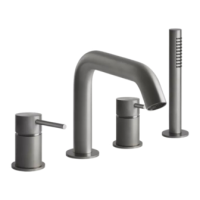




 To Next Page