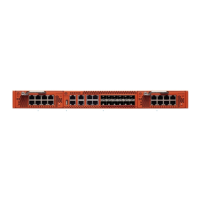
The Gigamon G-TAP M Series modules are Tapping Access Points (TAPs) designed to provide visibility into network traffic for analytic and security tools. These modules are completely passive, meaning they do not require power, software, or configuration, and thus do not introduce a single point of failure into the network. They are manufactured by Gigamon Inc. and are integrated with all GigaVUE nodes, leveraging the Gigamon Visibility Platform.
Function Description:
The primary function of the G-TAP M Series modules is to duplicate production network traffic from optical links for monitoring and analysis. They provide visibility to 1Gb, 10Gb, 25Gb, 40Gb, and 100Gb traffic. The modules are built to access both multimode short-range links and single-mode long-range links. This passive mirroring capability ensures that 100% of network traffic, including errors, non-standard network traffic, and network packets that do not conform to established protocol standards, is captured for detailed analysis, security, and monitoring.
Important Technical Specifications:
Module Types:
The G-TAP M Series offers three main types of modules:
- Multimode (MM): Designed for Short Reach (SR) at 10Gbps, 40Gbps, and 100Gbps, and Short Wavelength (SX) for 1.25Gbps.
- Single-mode (SM): Designed for Long Reach (LR) at 10Gbps, 40Gbps, 100Gbps, and 400Gbps, and Long Wavelength (LX) for 1.25Gbps.
- Bi-directional (BiDi): Specifically for Cisco BiDi at 40Gbps and 100Gbps.
TAP Module Specifications (Examples):
- TAP-M251: 1G/10G speed, 50/50 split ratio, 3.9dB max network loss, 3.9dB max TAP loss, LC (UPC) connector, MM (50/125 micron) for 850nm wavelength.
- TAP-M251T: 1G/10G speed, 50/50 split ratio, 3.9dB max network loss, 3.9dB max TAP loss, LC (UPC) connector, MM (50/125 micron) for 850nm wavelength.
- TAP-M251LT: 1G/10G/25G speed, 50/50 split ratio, 3.9dB max network loss, 3.9dB max TAP loss, LC (UPC) connector, MM (50/125 micron) for 850nm wavelength.
- TAP-M251ULT: 1G/10G/25G speed, 50/50 split ratio, 3.9dB max network loss, 5.1dB max TAP loss, LC (UPC) connector, MM (50/125 micron) for 850nm wavelength.
- TAP-M261LT: 1G/10G/25G speed, 60/40 split ratio, 3.15dB max network loss, 5.15dB max TAP loss, LC (UPC) connector, MM (50/125 micron) for 850nm wavelength.
- TAP-M271: 1G/10G speed, 70/30 split ratio, 2.2dB max network loss, 6.2dB max TAP loss, LC (UPC) connector, MM (50/125 micron) for 850nm wavelength.
- TAP-M451: 40G/100G speed, 50/50 split ratio, 4.3dB max network loss, 4.3dB max TAP loss, MPO/MTP (UPC) connector, MM (50/125 micron) for 850nm wavelength.
- TAP-M471: 40G/100G speed, 70/30 split ratio, 2.8dB max network loss, 6.4dB max TAP loss, MPO/MTP (UPC) connector, MM (50/125 micron) for 850nm wavelength.
- TAP-M471-SR10: 100G speed, 70/30 split ratio, 2.8dB max network loss, 6.6dB max TAP loss, MPO/MTP (UPC) connector, MM (50/125 micron) for 850nm wavelength.
- TAP-M253 (SM): 1G/10G/400G Base speed, 50/50 split ratio, 3.7dB max network loss, 3.7dB max TAP loss, LC (UPC) connector, SM (9/125 micron) for 1310nm or 1550nm wavelength.
- TAP-M506A (BiDi): 40Gb/100Gb speed, 50/50 split ratio, 3.9dB max network loss, 3.9dB max TAP loss, LC (UPC) connector, MM (50.5/125 micron) for 850nm/900nm wavelength.
Breakout Panel Specifications (Examples):
- PNL-M341 (MM): Supports 40Gb SR4 and 100Gb SR4 with ≤0.70dB network loss (MPO-12 UPC), and 10Gb SR and 25Gb SR with ≤0.30dB network loss (LC UPC). Fiber type is MM (50 micron) for 850nm wavelength.
- PNL-M343 (SM): Supports 40Gb PLR4 and 100Gb PLR4 with ≤0.75dB network loss (MPO-12 APC), and 10Gb LR and 25Gb LR with ≤0.30dB network loss (LC UPC). Fiber type is SMF-28e for 1270~1630nm wavelength or SMF 1310nm/1550nm wavelength.
Physical Characteristics:
- Chassis (1RU): 1.72in (4.38cm) height, 17.3in (44.0cm) width, 6.10in (15.5cm) depth. Weight: 3.84lbs (1.7kg) empty, 12.2lbs (5.5kg) full.
- TAP Module: 0.84in (2.14cm) height, 5.38in (13.7cm) width, 8.94in (22.7cm) depth. Weight: 1.4lbs (0.64kg).
- Breakout Panel: 0.84in (2.14cm) height, 5.38in (13.7cm) width, 8.94in (22.7cm) depth. Weight: 1.4lbs (0.64kg).
Electrical Characteristics:
- Power Requirements: Not applicable, as G-TAP M Series modules are passive.
- Link TAP Capacity: Each module taps up to six duplex links (three for MPO cabling). Each link produces two outputs: one from each direction in the link. Up to six modules can be housed in the 1 RU G-TAP M Series chassis.
- Operating Temperature: 32°F to 140°F (0°C to 60°C).
- Storage Temperature: -4°F to 158°F (-20°C to 70°C).
- Storage Humidity: 10% to 90%, relative, non-condensing.
- Altitude: Up to 15,000ft (4.6km).
Usage Features:
Installation:
- G-TAP M Series modules are designed for easy installation into either a 1 RU chassis (TAP-M200 or TAP-M202ULT) or a 1/2 RU chassis (TAP-M100T).
- Modules slide into slots and are held in place by magnets, eliminating the need for complex fastening mechanisms.
- Chassis can be flush-mounted or installed with a 3-inch setback.
- TAPs using MPO/MTP connectors have up to three TAPs per module, while TAPs using LC connectors have up to six TAPs per module.
Connectivity:
- Uses LC Duplex or MPO/MTP connectors for network links.
- Fiber disconnection is simplified; modules can be pulled out by 3-4 inches from the chassis to access connectors without special tools.
- Each TAP has an X port, a Y port, and two TAP ports, clearly indicated by orange labels and routing diagrams on the top panel.
- Breakout panels (PNL-M341 and PNL-M343) are available for breaking out single ports to multiple ports or aggregating multiple ports to a single port.
- PNL-M341 (Multimode): Provides three MPO ports for 40Gb/100Gb SR4 optics and 12 LC ports for 10Gb/25Gb SR optics. MPO ports are MTP (UPC with pin-male), aqua color. LC ports are LC (UPC), aqua color.
- PNL-M343 (Singlemode): Provides three MPO ports for 40Gb PLR4 optics and 12 LC ports for 10Gb LR optics. MPO ports are MTP (APC with pin-male), green color. LC ports are LC (UPC), blue color.
- When using breakout panels for breakout, the GigaVUE node port mode must be set to 4x for 40Gb ports.
- When using breakout panels for aggregation, the destination 40Gb network port on a GigaVUE HC Series or GigaVUE TA Series visibility node must be in 4x mode.
Maintenance Features:
Troubleshooting:
The guide provides comprehensive troubleshooting steps for common issues:
- Misconnected cabling or wrong cable types: Ensure appropriate transceivers and cables are used on both ends, referring to the "Cable Matrix for Copper TAPs and Fiber TAPs" in the GigaVUE-OS Compatibility and Interoperability Matrix.
- Failure to breakout monitored links: Ensure both monitor links are broken out into simplex fiber cables and individually attached to Rx connections on the receiving end.
- Flipped connections: Disconnect the plastic housing and flip the LC connections on one end.
- Mismatched transceivers: Ensure identical transceiver types on both ends (e.g., 10G LR4 with 10G LR4).
- Dirty connections: Use new cables with dust caps and clean all connections before use.
- Bad transceivers/TAPs: Keep spares and replace as required.
- Crimped cabling: Ensure bends in cabling are not too tight to allow proper signal transmission.
- Bad connections (light degradation): Do not exceed specified maximum distances and minimize patch panels to reduce light degradation.
- A flow chart is provided for generic troubleshooting steps to isolate and correct TAP failures.
Best Practices:
- Cleaning: Prior to connecting any cable, both the port and cable adapter must be cleaned using optical fiber cleaner pens and cassettes. Visually inspect cable adapters for dust.
- Cable Replacement: If a cable is clogged with dust and cannot be cleaned, use a new cable.
- Port Caps: Install port caps when TAP ports are not in use.
- Dust Susceptibility: Models M471 and M471-SR10 are highly susceptible to dust, emphasizing the importance of proper cleaning.

 Need help?
 General

 To Next Page