Glider characteristics, illustrations and
technical data
Glider categories and guidelines
Flight behaviour and response to disturbances are loosely correlated with the results of the EN/LTF
tests. The complexity of the paraglider system means that it is not possible to give any more than a
partial description of the glider’s flight behaviour and reactions to disturbances. Even a small
alteration in individual parameters can result in flight behaviour which is markedly modified and
di
ff
erent from the description given.
WARNING: The descriptions of flight characteristics contained in this Manual are all based
on experiences from the test flights, which were carried out under standardised conditions.
The classification is merely a description of the reactions to these standard tests.
Glider category
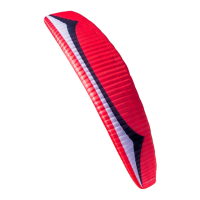
The Evora was developed and tested for use solely as a paraglider for foot launch and for winch
launch. Any use other than as intended is prohibited.
EN/LTF certification
The Evora received EN-B classification in the final classification by the licensing body.
Description of flight characteristics
A paraglider with good passive safety and forgiving flying characteristics, with some resistance to
departures from normal flight.
Suitability for training
The Evora is generally suitable for use as a training glider (as long as an EN-B glider is permitted for
training in your country).
Paramotoring
The Evora is not intended for paramotoring. Details of GIN wings suitable for motorized
flight can be found in the paramotoring section of our website (www.gingliders.com).
Tandem paragliding
The Evora is not intended for tandem paragliding.
Aerobatics
Your Evora
w
as not developed or tested to be used for aerobatics (acro).
Legal regulations di
ff
er greatly between countries. The respective national laws or guidelines must
be followed under all circumstances.
When performing acrobatics, there is a risk of unpredictable flight attitudes, which could lead to
damage to material and structural failure.


 To Next Page
 Loading...