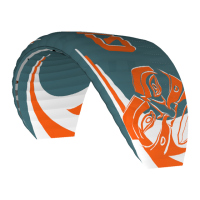
The GIN ZULU II is a high-performance kiteboarding kite designed for a range of riding styles, including freestyle, freeride, and wave riding. Developed by GIN Kiteboarding, a rider-focused company, the ZULU II is crafted with an emphasis on quality, performance, and rider satisfaction.
Function Description
The ZULU II serves as the primary power source for kiteboarding, harnessing wind energy to propel the rider across water or snow. Its design allows for precise control, enabling riders to perform various maneuvers, jumps, and tricks. The kite is part of a complete system that includes a control bar, flying lines, and a harness, all working together to provide a dynamic and engaging riding experience.
Important Technical Specifications
The ZULU II is available in several sizes, each optimized for different wind ranges:
- ZULU II 5: 19-40 KN
- ZULU II 7: 16-36 KN
- ZULU II 9: 14-32 KN
- ZULU II 11: 12-27 KN
- ZULU II 13: 10-23 KN
The kite features a "GIN LOW FRICTION RING" bridle system, which eliminates traditional pulleys, reducing wear and tear from sand and preventing breakage. This system contributes to the kite's durability and consistent performance.
The control bar is available in different sizes to match the kite:
- ZULU II 5 and 7: 44 cm bar
- ZULU II 9: 48 cm bar
- ZULU II 11: 52 cm bar
- ZULU II 13: 56 cm bar
Usage Features
Inflation System:
The ZULU II incorporates a single-point inflation system with external clip protection, designed for safe and easy setup. It allows for the option to seal off connections between the struts and the leading edge (LE), which can be beneficial in case of a puncture or for storing the kite with inflated struts. For optimal pressure balance, all connections should be open before inflating the LE. When replacing a bladder, it's crucial to use three new plastic zip ties to ensure an airtight connection between the valve and the tube, covering the valves with neoprene covers afterward.
Leading Edge Handle:
A double-use handle on the main leading edge tube serves two purposes:
- Pump Attachment: It allows for securely attaching the pump strap, enabling safe inflation without needing to hold the kite.
- Carrying Aid: Provides an easy and safe handhold for carrying the kite upwind, with the inner surface facing up and the top surface down.
Safety Handles:
Two safety handles sewn to the wing tip struts are provided for self-rescue situations, offering better control of the kite when returning to the beach.
Bridle Setting:
The kite offers adaptable bridle settings on the wingtips to fine-tune its performance:
- Front Lines: Riders can choose between "freestyle" and "freeride" settings to match their preferred riding style.
- Back Lines: Adjustments for bar pressure can be made between "light" and "very light" settings. These settings allow riders to easily adapt the ZULU II to their specific needs and conditions, fostering a seamless connection with the kite.
Control Bar Features:
- Trim System: A power adjustment strap allows riders to increase or decrease the kite's power. When the strap is released, the kite has maximum power; when pulled, power is reduced. The trim can be adjusted in increments (e.g., 50% or 100% less power) and released for more power.
- Swivel System: The chicken-loop's swivel system helps to cancel twists in the front flying lines and the leash, especially after jumps with rotations. Pulling down the bar relieves pressure on the swivel, allowing it to rotate automatically and untwist the lines.
- Stopper Ball: A black stopper ball on the depower line allows riders to define the maximum depower available when releasing the bar. Moving the ball closer to the power adjustment strap increases depower and safety margin.
- Kite Leash Connection: A metallic D-ring on the chicken-loop is provided for connecting a kite leash, preventing kite loss if the chicken-loop detaches from the harness hook. The D-ring's side placement ensures easy access and movement after unhooked maneuvers.
Safety System:
It is critical to understand and regularly check the safety system's operation and assembly.
- Main Quickrelease: This system allows for rapid depowering of the kite. The depower line is fixed with an elastic cord, which must be parallel to the depower line and not twisted. To release, push the quickrelease sleeve away from the rider in the direction of the red arrow. The rider remains connected to the kite via a secondary quickrelease.
- Leash Quickrelease: This quickrelease is integrated into the leash line. To close, pass the black end of the leash through the metallic D-ring of the swivel, then through a small grey loop, and finally pass a pin through a grey loop at the end of the kite leash, sliding it into a black tube. To release, pull the red ball down in the direction of the red arrow.
- Auxiliary Safety (Rear Pre-lines): This safety feature is used when there is minimal tension on the kite, typically when it's landed on the leading edge. Pulling one of the red handles will completely depower the kite, causing it to flag out in the wind.
Maintenance Features
General Kite Care:
- Inflation Check: Always ensure the Velcro at the end of the struts is correctly positioned and all bladders are properly placed without twists before inflation.
- Sun and Wind Exposure: Avoid leaving the kite in direct sun or flapping in the wind when not in use, as this can prematurely age the fabric.
- Drying and Storage: Never store a wet kite for extended periods. Ensure it is completely dry before storage. Store the kite in a dark, dry place with the bag open.
- Cleaning: Use only clean fresh water for cleaning; avoid chemical cleaners.
- Handling: Do not walk on the lines or the kite itself.
- Control Bar Cleaning: If the control bar has been in contact with sand, immerse it in water before riding to clean the depower rope and prevent premature wear.
Control Bar and Safety System Maintenance:
- Pre-Use Check: Before each use, verify the control bar setup and safety system are functioning correctly.
- Wear and Tear: Regularly inspect all parts, knots, and lines for wear and tear. Ensure neoprene protectors are in their correct positions.
- Cleaning: Keep the control bar, safety system, bridles, pulleys, and lines free of sand, mud, dust, snow, and ice.
Warranty Information:
GIN Kiteboarding offers a 90-day warranty to the original purchaser for major defects in material or workmanship. To validate the warranty, the kite must be registered on www.ginkites.com within seven days of purchase, and the original receipt must be kept. The warranty applies only to normal recreational activities and does not cover rental or teaching operations. It excludes damages from misuse, abuse, neglect, normal wear and tear, punctures, rigging with non-GIN components, excessive sun exposure, over-inflation, improper handling/storage, or use in waves/shore break. Unauthorized repairs or modifications also void the warranty.
Bags:
The ZULU II comes with two specially designed bags:
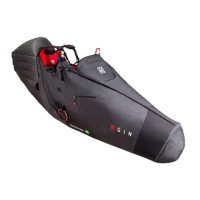
- Main Backpack: Features kite board straps, compression straps, an external pump pocket, a waist belt strap, and a ventilation system with a zip to allow the wing to dry and release water and sand.
- Second Bag: Designed to carry the kite with inflated struts. It can be carried across the shoulder or placed inside the main backpack. The kite size is printed on the bag.
- Bar Bag: Protects the control bar and flying lines, and when packed inside the main backpack, prevents abrasion to the kite fabric from the bar.

 Need help?

 To Next Page
 General