Driving and Operating 9-49
Driving with a Trailer
Towing a trailer requires experience.
Get familiar with handling and
braking with the added trailer
weight. The vehicle is now
longer and not as responsive
as the vehicle is by itself.
Check all trailer hitch parts
and attachments, safety chains,
electrical connectors, lamps, tires
and mirror adjustments. If the trailer
has electric brakes, start the vehicle
and trailer moving and then apply
the trailer brake controller by hand
to be sure the brakes are working.
During the trip, check regularly to be
sure that the load is secure, and the
lamps and trailer brakes are working
properly.
Towing with a Stability Control
System
When towing, the sound of the
stability control system might be
heard. The system is reacting to
the vehicle movement caused by
the trailer, which mainly occurs
during cornering. This is normal
when towing heavier trailers.
Tow/Haul Mode
Tow/Haul assists when pulling a
heavy trailer or a large or heavy
load. The purpose of the Tow/Haul
mode is to:
.
Reduce the frequency and
improve the predictability of
transmission shifts.
.
Provide the same solid shift feel
as when the vehicle is unloaded.
.
Improve control of vehicle speed
while requiring less throttle pedal
activity.
.
Increase the charging system
voltage to assist in recharging a
battery installed in a trailer.
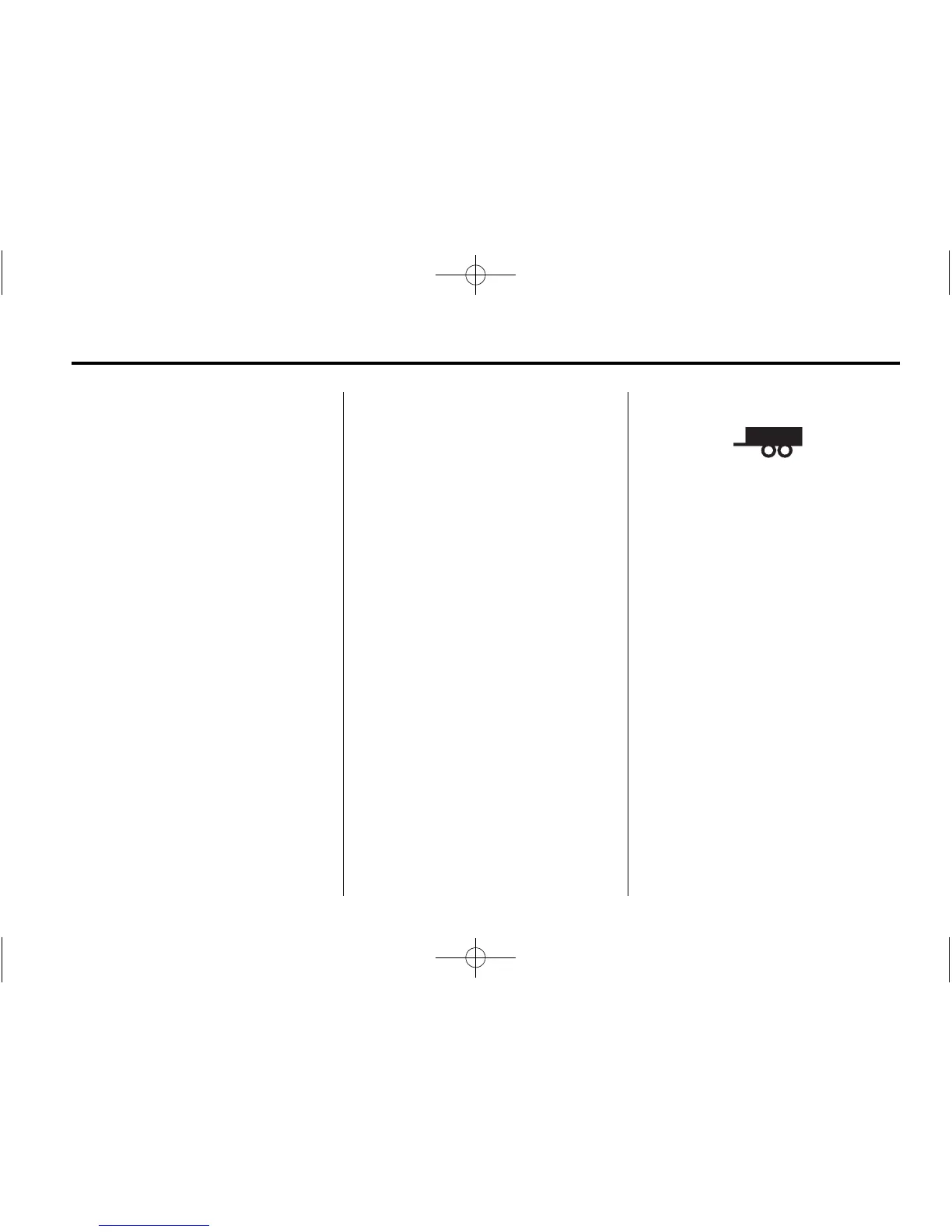
Press this button located on the
console to turn on and turn off the
Tow/Haul mode. See Tow/Haul
Mode on page 9‑28.
The Tow/Haul light on the
instrument panel comes on to
indicate that Tow/Haul mode
has been selected.
Tow/Haul may be turned off by
pressing the button again, at
which time the indicator light on
the instrument panel will turn off.
The vehicle will automatically turn
off Tow/Haul every time it is started.






 To Next Page