10-68 Vehicle Care
13. Turn the sealant/air hose (F)
counterclockwise to remove it
from the tire valve stem.
14. Replace the tire valve
stem cap.
15. Replace the sealant/air
hose (F), and the power
plug (H) back in their original
location.
16. If the flat tire was able to
inflate to the recommended
inflation pressure, remove the
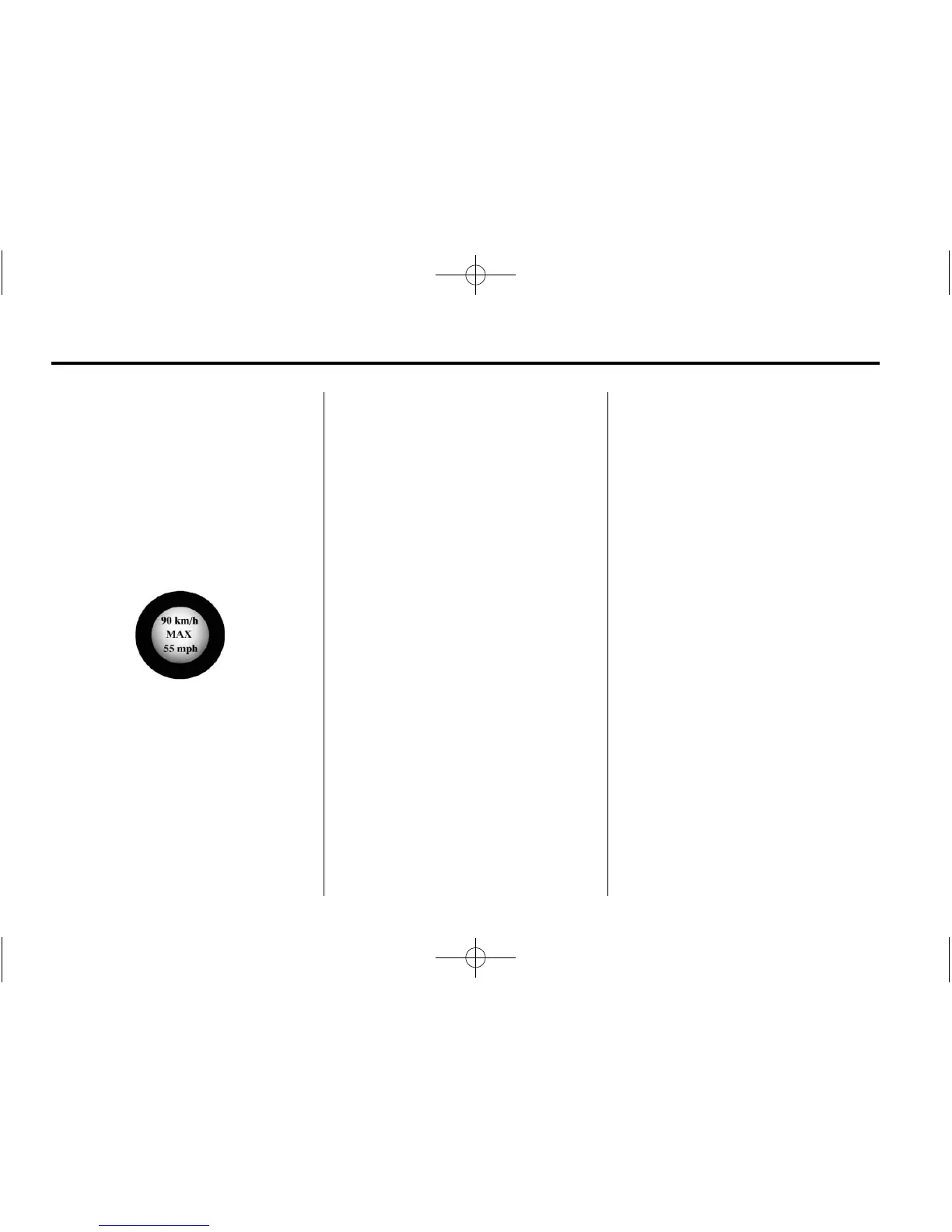
maximum speed label from the
sealant canister (E) and place
it in a highly visible location.
The label is a reminder not to
exceed 90 km/h (55 mph) until
the damaged tire is repaired or
replaced.
17. Return the equipment to its
original storage location in the
vehicle.
18. Immediately drive the vehicle
8 km (5 miles) to distribute the
sealant in the tire.
19. Stop at a safe location and
check the tire pressure.
Refer to Steps 1 through 11
under “Using the Tire Sealant
and Compressor Kit without
Sealant to Inflate a Tire (Not
Punctured).”
If the tire pressure has fallen
more than 68 kPa (10 psi)
below the recommended
inflation pressure, stop driving
the vehicle. The tire is too
severely damaged and the tire
sealant cannot seal the tire.
See Roadside Assistance
Program (United States and
Canada) on page 13‑8 or
Roadside Assistance Program
(Mexico) on page 13‑10.
If the tire pressure has not
dropped more than 68 kPa
(10 psi) from the recommended
inflation pressure, inflate the
tire to the recommended
inflation pressure.
20. Wipe off any sealant from the
wheel, tire, and vehicle.
21. Dispose of the used sealant
canister (E) and sealant/air
hose (F) assembly at a local
dealer or in accordance with
local state codes and practices.














 To Next Page