Need help?
Do you have a question about the Goddess WFD 815 M8S and is the answer not in the manual?
General safety guidelines for operating the washing machine to prevent hazards and ensure safe usage.
Advice on optimal usage, detergent, and handling of laundry for best results.
Instructions on how to remove and store transport screws before operating the machine.
Guidance on leveling the washing machine for stable and quiet operation.
Details on connecting the washing machine to a grounded power source for safety.
Steps for connecting the water inlet hose to the machine and water tap.
Instructions for correctly installing the water drain hose for proper water discharge.
Identification and function of buttons, lights, and knobs on the washing machine's control panel.
Explanation of special function buttons like Rinse Hold, Extra Rinse, and Easy Ironing.
How to select and adjust washing programs using the main program knob.
Steps and considerations for sorting laundry, preparing clothes, and loading the machine.
Guidance on using the correct detergent, softener, and amounts for different wash cycles.
Instructions on selecting programs, starting, pausing, and changing a wash cycle.
Procedures for ending a wash cycle early and what happens when a program finishes.
How to activate and deactivate the child lock feature to prevent unintended operation.
Instructions for cleaning the filters in the water inlet hoses to ensure proper water flow.
Procedure for cleaning the pump filter to maintain drainage efficiency and pump life.
How to remove and clean the detergent drawer to prevent sediment buildup.
Steps to clean the siphon plug in the detergent drawer for proper softener dispensing.
Guidelines for cleaning the exterior cabinet of the washing machine.
Tips for preventing rust stains in the drum and cleaning methods.
Advice on preventing and removing lime scale buildup from the machine.
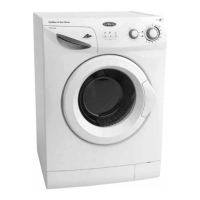
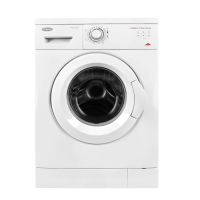
The provided document is an instruction manual for an electronic washing machine, model GODDESS WFD 815 M8S.
The GODDESS WFD 815 M8S is an electronic washing machine designed for household use. Its primary function is to wash laundry using various programs and settings to accommodate different fabric types and levels of dirtiness. The machine operates on a 220-240V, 50Hz electrical supply and requires a grounded socket. Water is supplied via a cold water inlet, and dirty water is drained through a dedicated hose.
The control panel features a program knob for selecting wash cycles, a start/pause button to initiate or temporarily halt a program, and function buttons for additional wash options. Indicator lights provide visual feedback on the machine's status, including program readiness, active functions, and program completion. The machine is equipped with an automatic failure detection system that uses these indicator lights to signal specific errors, aiding in troubleshooting.
Before using the washing machine, it's crucial to follow safety warnings, such as not using multiple sockets or damaged cords, avoiding contact with wet hands, and ensuring children and pets are kept away. For optimal performance and to prevent detergent residue, it's recommended to add detergent and softener just before washing. Pre-washing programs are suggested for very dirty clothes, and the maximum loading capacity should not be exceeded.
Laundry should be sorted by fabric type (cotton, synthetic, delicate, wool), washing temperature, and dirtiness level. White and colored clothes should be washed separately, and new colored items should be washed alone initially to prevent dye transfer. Metal objects should be removed from pockets, and zippers/buttons should be fastened. Curtains with plastic or metal hooks should be placed in a washing bag. Textiles like trousers, knitted fabric, t-shirts, and sweatshirts should be turned inside out. Small items like socks and handkerchiefs should also be washed in a bag.
To load the machine, open the door and spread clothes evenly inside the drum, placing each item separately. Ensure no clothes are jammed in the door or gasket before closing it tightly. The amount of detergent depends on the clothes' dirtiness, water hardness, and load size. For slightly dirty clothes, use a small amount of detergent in compartment 2. For excessively dirty clothes, use detergent in both compartments 1 (for pre-wash) and 2. Only detergents designed for automatic washing machines should be used. Softener should be added to its designated compartment, ensuring not to exceed the MAX level. High-density softeners should be diluted with water to prevent siphon obstruction. Fluid detergents can be used in all non-pre-wash programs by adjusting the fluid detergent level plate in compartment 2.
To start a wash cycle, first plug in the machine and open the water tap. For the first wash, it's recommended to run a 90°C cotton program without laundry, using half a measuring cup of normal all-purpose detergent in compartment 2, to clear any factory test water. To select a program, turn the program knob to the desired setting, ensuring the adjustment sign aligns correctly. The program ready light will illuminate. Additional functions can be selected if desired. Press the start/pause button to begin. To change a program during operation, first press the start/pause button, then turn the program knob to the "O" (off) position. Select the new program and press start/pause again. To cancel a program early, press start/pause, turn the program knob to "O" (off), then select "Draining" or "Spinning" and press start/pause. The machine automatically stops at the end of a program, indicated by the program end light. The door unlocks approximately two minutes after the program ends. After unloading, leave the door open to dry the drum and prevent odors. Unplug the machine and close the water tap. The machine features a child lock, activated by pressing the first and third function buttons simultaneously for more than 3 seconds. Active child lock is indicated by blinking LEDs on the function buttons. Deactivation is done by repeating the same button press.
The machine has filters on the water inlet hose at the tap end and on the water inlet valves to prevent dirt from entering. If water supply is insufficient, these filters should be cleaned. To do this, remove the water inlet hose, use pliers to remove and thoroughly wash the filters on the water inlet valves with a brush, and manually remove and clean the filters on the tap side of the hose. Reinstall them in the same way.
The pump filter system extends the life of the pump by preventing lint from entering. It's recommended to clean the pump filter every 2-3 months. To clean, open the kickplate cover by pulling the handle. Place a cup in front of the filter cover to collect any remaining water. Loosen the filter cover by rotating it counter-clockwise to drain the water. Remove foreign materials from the filter and check the pump's rotation. After cleaning, fit the filter cover by rotating it clockwise and replace the kickplate cover. Ensure the filter cover is properly fitted to prevent leaks. Be cautious as the water inside the pump may be hot.
Detergent and softener can form sediment in the drawer over time. To clean, pull the drawer to its end, lift the front, and continue pulling until it's fully removed. Wash it with an old toothbrush and water. Remove any leftover detergent and avoid dropping it into the machine. After drying, reinsert the drawer.
Remove the siphon plug from the detergent drawer and clean any softener residues thoroughly. Reinsert the cleaned siphon plug, ensuring it's properly placed.
Clean the exterior cabinet surface with lukewarm water and a non-irritating cleaning substance, then rinse with clean water and wipe with a soft, dry cloth. Do not leave metal objects like needles or coins in the drum, as they can cause rust stains. To remove rust stains, use a chlorine-free cleaning substance according to the manufacturer's instructions, avoiding dish-washing wires or rough objects.
Proper detergent use should prevent lime buildup. If lime removal is desired, use commercially available lime protectors and follow their warnings. Be aware that lime-eliminating substances contain acids that may affect clothing colors and damage the machine.
If the machine is installed in an area where temperatures may drop below 0°C and will not be in use, unplug it, close the water tap, and pull out the water inlet hose(s). Place the ends of the water drain and inlet hoses in a cup on the ground. Set the program knob to "Draining," ensure the program ready light is on, and run the program by pressing start/pause. Unplug the machine once the program ends. This drains residual water, preventing ice formation. Ensure the ambient temperature is above 0°C before operating the machine again.
 General
| Capacity | 8 kg |
|---|---|
| Maximum spin speed | 1400 RPM |
| Energy efficiency class | A+++ |
| Noise level washing | 58 dB |
| Noise level spinning | 78 dB |
| Loading type | Front loading |

 To Next Page