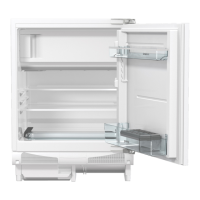
This document provides detailed instructions for the use, installation, and maintenance of an upright refrigerator and freezer appliance. It is designed to simplify the user's life by offering clear guidance on its operation and care.
The appliance is intended solely for household use. The refrigerator compartment is designed for storing fresh food at temperatures above 0°C, while the freezer compartment is for freezing fresh food and for long-term storage of frozen food, with storage times varying up to one year depending on the food type.
Function Description
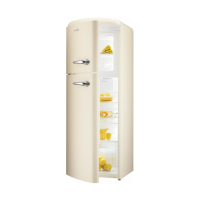
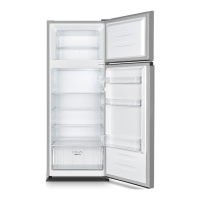
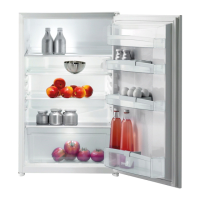
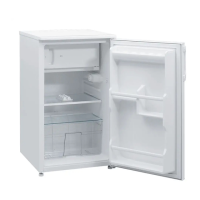
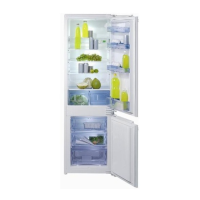
The appliance features a refrigerator compartment and a freezer compartment. The refrigerator is equipped with movable glass shelves, a fruit and vegetable drawer, and door balconies for organized storage. The freezer compartment includes a shelf for frozen items. Temperature control is managed via a knob, allowing users to adjust the internal temperature of the appliance.
Usage Features
Before First Use:
Before connecting the appliance to the power mains, it is crucial to read the instructions carefully to ensure correct and safe use. Any damage or irregularities should be reported to the retailer. It is recommended to let the appliance rest in a vertical position for at least 2 hours before connecting it to the power mains to prevent operation faults due to transport effects on the cooling system.
Installation and Connection:
The appliance should be installed in a dry and well-ventilated room, away from heat-radiating appliances like cookers, stoves, or radiators, and not exposed to direct sunlight. A minimum distance of 3 cm from electric/gas cookers and 30 cm from oil/solid fuel stoves is recommended; otherwise, an insulating panel should be used. The appliance operates correctly within specific ambient temperature ranges depending on its climate class (SN, N, ST, T), as indicated on the rating plate. It should not be placed in rooms where temperatures can drop below 5 °C, as this may cause abnormal operation. Adequate air circulation is essential, with at least 200 cm² free space at the base of integrated units. The appliance must be connected to a grounded power mains outlet, and the supply cord should not be trapped or damaged.
Operating the Appliance:
The appliance is switched on by rotating the temperature setting knob clockwise. To switch it off, the knob is rotated back to the position where the arrow aligns with the "●" symbol (note: the appliance remains powered even when switched off). Temperature adjustment is done by rotating the knob; positions towards the thicker part of the sign indicate lower (cooler) temperatures, while positions towards the thinner part indicate higher (warmer) temperatures. If the room temperature is below 16°C, setting the dial to the thickest part of the sign is recommended.
Appliance Interior Equipment:
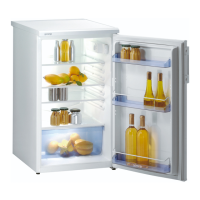
The refrigerator walls have runners for flexible positioning of glass shelves. The door balconies are designed for storing smaller items like cheese, butter, eggs, and beverages, with a maximum load of 5 kg per shelf.
Recommended Food Distribution:
- Refrigerator Compartment:
- Upper part: Canned food, bread, wine, pastry.
- Middle part: Dairy products, ready-made meals, desserts, soft drinks, beer, cooked food.
- Crisper: Fresh fruit, vegetables, salads, root vegetables, potatoes, onions, garlic, tomatoes, sauerkraut, turnips.
- Door bins: Eggs, butter, cheese (upper/middle), beverages, cans, bottles (lower).
- Important Note: Do not store fruit (bananas, pineapples, papaya, citruses) and vegetables (zucchini, eggplant, cucumbers, bell peppers, tomatoes, potatoes) sensitive to low temperatures in the refrigerator.
- Freezer Compartment: For freezing and storing frozen food.
- Important Note: Do not store lettuce, eggs, apples, pears, grapes, peaches, yoghurt, soured milk, sour cream, and mayonnaise in the freezer.
Storing Food in the Refrigerator:
Correct use, appropriate packaging, maintaining the right temperature, and observing food hygiene standards are crucial for food quality. Always check expiry dates. Food should be kept in closed containers to prevent odor transfer and humidity changes. Inflammable, volatile, and explosive substances should not be stored. Bottles with high alcohol content must be tightly sealed and stored upright. Organic solutions, essential oils, and butter acid can damage plastic surfaces over time. Unpleasant odors indicate a need for cleaning or perished contents. Perishables should be removed if leaving home for an extended period.
Freezing and Storing Frozen Food:
Only quality, fresh food suitable for freezing should be used. Packaging must be air and water-tight to prevent food from drying out and losing vitamins. Label packages with food type, amount, and freezing date. Smaller packages are recommended for quick freezing. Food should be refrigerated before freezing.
For industrially frozen food, follow manufacturer's instructions and expiry dates. Choose undamaged packaging and avoid food covered in frost, as this indicates prior thawing. Protect food from thawing during transport.
Defrosting Frozen Food:
Freezing does not kill microorganisms; defrosted food spoils quickly. Use partially or completely defrosted food as soon as possible. Partial thawing reduces the nutritive value of food.
Advice for Saving Power:
- Install the appliance as per the manual.
- Avoid opening the door unnecessarily.
- Ensure unobstructed air circulation underneath the appliance.
- Keep the condenser unit on the rear wall clean.
- Replace damaged door gaskets promptly.
- Store food in tightly sealed containers.
- Allow food to cool to room temperature before placing it in the refrigerator.
- Defrost frozen food in the refrigerator compartment.
- Remove freezer drawers to maximize interior volume if needed.
- Defrost conventional freezers when frost/ice reaches 3-5 mm.
- Ensure uniform shelf layout and free air circulation.
- Do not block fan slots or vents in appliances with a fan.
Maintenance Features
Defrosting the Appliance:
- Automatic Refrigerator Defrosting: The refrigerator defrosts automatically. Accumulated ice melts and drains through an opening in the rear wall into a tray above the compressor, where it evaporates. Ensure the drain opening is not blocked. If an excessive ice layer (3-5 mm) forms, manually defrost the appliance.
- Defrosting a Conventional Freezer: Defrost when frost/ice reaches 3-5 mm. 24 hours before defrosting, rotate the temperature dial to the thickest part of the marking. Remove frozen food and protect it from thawing. Switch off and unplug the appliance. Do not use sharp objects to remove frost to avoid damaging the cooling system. To speed up defrosting, place a pot of hot water on a glass shelf. After defrosting, clean and dry the interior.
Cleaning the Appliance:
Before cleaning, unplug the appliance. Use a soft cloth with water or a mild soap solution. Avoid abrasive cleaners, acids, or solvents, as they can damage surfaces. Lacquer-coated and aluminum surfaces can be cleaned with lukewarm water and mild detergent. Low-alcohol cleaners (e.g., window cleaners) are acceptable, but avoid alcohol-containing cleaners for plastic materials. The interior can be cleaned with lukewarm water and vinegar. Do not wash interior parts in a dishwasher. Periodically clean the drain hole at the back of the fridge compartment to prevent defrost water overflow. After cleaning, switch the appliance back on and reinsert food.
Troubleshooting:
The manual provides a troubleshooting guide for common issues such as the appliance not working, food being too warm, appliance cooling too much, unusual noises, and water on the floor, offering possible causes and solutions. For example, if the appliance doesn't work, check the mains plug, fuse, and socket. If the food is too warm, check temperature settings, door closure, and if large quantities of warm food were recently added, or if the appliance is near a heat source. If the appliance cools too much, adjust the temperature setting. Unusual noises might be due to the appliance touching a wall or other objects, or a component on the rear touching another part. A blocked water drain hole can cause water on the floor.
Replacing the Bulb:
Before replacing the bulb, disconnect the appliance from the power mains. Insert a screwdriver into the slot in the cover, lift and remove it. Replace the bulb with a new E14 bulb of the same power rating (AC200-240V, 50/60Hz, 1W, 0.06A) and replace the cover. Blown bulbs should not be disposed of with organic waste. The bulb is considered a consumable and is excluded from warranty. The lamps used are special purpose lamps for household appliances only and not suitable for room illumination. This product contains a replaceable (LED only) light source by a professional, of energy efficiency class G. If malfunctions persist, contact the Service Center.
Cooling systems, including compressors and fans, generate some noise, which varies based on installation, use, and age. Initial operation may be louder, but this is normal and will quiet down. Unusual or loud noises often result from improper installation, such as an unstable base, contact with walls or furniture, or rattling interior items. Increased workload (frequent door opening, large amounts of fresh food, intensive freezing/cooling) can temporarily increase noise.


 To Next Page
 General