This document describes the GB405 Tumble Dryer, a household appliance designed for drying clothes.
Function Description
The tumble dryer offers five distinct drying programs: Cool, Anti-wrinkle, Standard, Extra, and Air Dry, allowing users to select the most appropriate setting for various types of garments and loads. The "OFF" setting disconnects power, while selecting a program initiates the drying process.
- Cool: This program utilizes cool air during the last 20 minutes of the drying cycle, making clothes easier to handle upon removal.
- Anti-wrinkle: Designed for garments that are difficult to iron, such as fabric shirts and linens. The drying time, typically 30 to 60 minutes, leaves clothes slightly damp to facilitate ironing.
- Standard: Suitable for general drying and cooling of clothes that do not wrinkle easily, with a typical drying time of 60 to 120 minutes.
- Extra: Recommended for larger-sized clothes or heavy loads (exceeding half of the dryer's rated capacity), with drying times usually exceeding 120 minutes.
- Air Dry: Freshens clothes using cool air.
The dryer is designed to be used with clothes placed loosely inside the drum to ensure adequate room and prevent tangling.
Important Technical Specifications
- Model: GB405
- Mode Energy Efficiency Class: C
- Rated Capacity (max.): 3.0 kg
- Operating Noise Level: 58dB~62dB
- Product Dimensions: 495mm (width) x 415mm (depth) x 595mm (height) (19.5"x16.3"x23.4")
- Power Supply: AC 220~230V/50Hz
- Rated Power: 830W
- Drum Size: Ø460mm x 265mm
- Electrical Requirements: 220-230V AC, 10A uniphase, three-stage socket.
Usage Features
Loading Capacity Guidelines:
The manual provides a detailed table of approximate weights for various clothing items to help users avoid overloading and ensure optimal drying performance. Overloading is explicitly discouraged as it can degrade drying performance and potentially damage the machine or clothes.
- Cotton quilt covers (single/double): 900g/1500g
- Bed sheets (single/double): 600g/900g
- Work clothes: 1120g
- Large tablecloths: 700g
- Small tablecloths: 350g
- Tea napkins: 100g
- Bath towels: 700g
- Hand towels: 300g
- Blouses: 150g
- Cotton shirts: 300g
- Shirts: 180g
- Cotton dressed: 500g
- Jeans: 800g
- Jacket: 800g
- Handkerchiefs: 100g
- T-shirts: 150g
- Shorts: 70g
- Socks: 50g
Installation Options:
The dryer can be installed in several ways:
- Horizontal Installation: Placed on a horizontal and solid ground, table, or specialized bracket. It should be positioned 10-15cm away from the back wall. In narrow spaces, air fans or an exhaust pipe (not included) should be used to vent hot and humid air, with the exhaust pipe length not exceeding 2 meters.
- Bracket Installation: When installed on a bracket or stand, the installation must be firm and solid, allowing at least 13cm (5 inches) between the rear of the dryer and the wall for proper airflow.
- Wall Mounting: The dryer can be mounted on a solid wall using expansion screws (M6) and a hook, ensuring ample distance (~50mm/2 inches) above the dryer, especially if mounted above a washing machine, to allow its cover to open. Wall spacers are provided for this installation method.
Pre-Drying Preparations:
- Always spin-dry clothes in a washing machine before placing them in the dryer.
- Remove all objects, sharp metals, and flammable substances from pockets.
- Zip or button all clothing and turn clothes inside out for best results.
- Do not dry items labeled "DO NOT WASH" or "DRY CLEAN ONLY."
- Dry similar fabrics and materials together for best results.
- Avoid tumble drying clothes that cannot be tumble dried; drip-drying, hang drying, flat drying, or shade drying is recommended for such items.
Maintenance Features
Regular maintenance is crucial for the dryer's normal operation. Always disconnect the power plug before cleaning.
Air Outlet Filter Cleaning (After Each Use):
- Removal: Insert hand into the inner drum, into the four holes near the center of the outlet air hood, and pull the filter outward.
- Cleaning: Remove the air outlet cover, filter cotton, and filter screen. Use a soft brush or vacuum cleaner to remove lint and threads.
- Installation: Reassemble the filter in the order of filter screen, filter screen cotton, and air outlet cover, then reinsert it into the inner drum, ensuring proper installation.
Air Inlet Filter Cleaning:
- Removal: Hold the middle part of the air inlet filter cover and push it out slightly, then remove it.
- Cleaning: Use a soft brush or vacuum cleaner to clean the dust.
- Installation: Put the filter back into the machine after cleaning.
Overall Cleaning:
- Use a wet soft cloth to clean the inner drum or the dryer's exterior.
- For difficult stains, use a small amount of kitchen detergent, then wipe with a clean cloth.
- Caution: Never use gasoline or other non-cleaning agents on dryer surfaces.
Safety Precautions:
- Children aged 8 and above, and persons with reduced physical, sensory, or mental capabilities, or lack of experience and knowledge, can use the appliance under supervision and with proper instruction.
- Children should not play with the appliance or perform cleaning/maintenance without supervision.
- Keep children under 3 years old away unless continuously supervised.
- If the supply cord is damaged, it must be replaced by the manufacturer, service agent, or similarly qualified persons.
- Do not use the tumble dryer if industrial chemicals have been used for cleaning.
- Clean the lint trap frequently; do not allow lint to accumulate.
- Do not dry unwashed items.
- Items soiled with substances like cooking oil, acetone, alcohol, petrol, kerosene, spot removers, turpentine, waxes, and wax removers must be washed in hot water with extra detergent before drying.
- Do not dry foam rubber (latex foam), shower caps, rubber-backed articles, or pillows with foam rubber pads.
- Use fabric softeners as per their instructions.
- Never stop the dryer before the end of the drying cycle unless all items are quickly removed and spread out to dissipate heat.
- The appliance must not be supplied through an external switching device (e.g., timer) or connected to a circuit that is regularly switched on and off by a utility.
- Do not install the appliance behind a lockable door, a sliding door, or a door with a hinge on the opposite side that restricts full opening of the dryer door.
- The dryer requires a 220-230V AC, 10A uniphase, three-stage socket.
- Keep combustible materials or chemicals (gasoline, kerosene, alcohol) away from the dryer.
- Do not install the dryer in humid or moist rooms/areas where it will be exposed to rain or excessive humidity.
- Remove the power plug when moving, not using, or cleaning the dryer. Do not use wet hands to connect or disconnect power.
- Do not use the dryer on or near foam packaging due to fire hazard.
- Clean the inner drum or dryer surface with a soft wet cloth; do not wash directly with water or use volatile liquids.
- Clean around the dryer to remove accumulated fiber or dust.
- Ensure the dryer operates in a well-ventilated area with unimpeded airflow to prevent fire.
- Do not cover the dryer surface during operation. It is normal for the surface temperature to feel warm.
Troubleshooting Guide:
The manual includes a troubleshooting section to help users identify and resolve common issues before contacting a service center. It covers problems like the dryer not starting, excessive heat or electrical odor, clothes not drying, excessive wrinkles, clothes shrinking, clothes having fluffs, and the dryer not restarting after prolonged use. For each problem, potential causes and recommended solutions are provided.

 Need help?
 General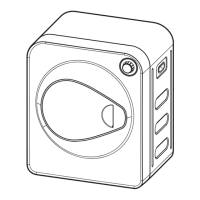

 To Next Page