Page 4
SECURING THE HOSE AND REGULATOR ASSEMBLY
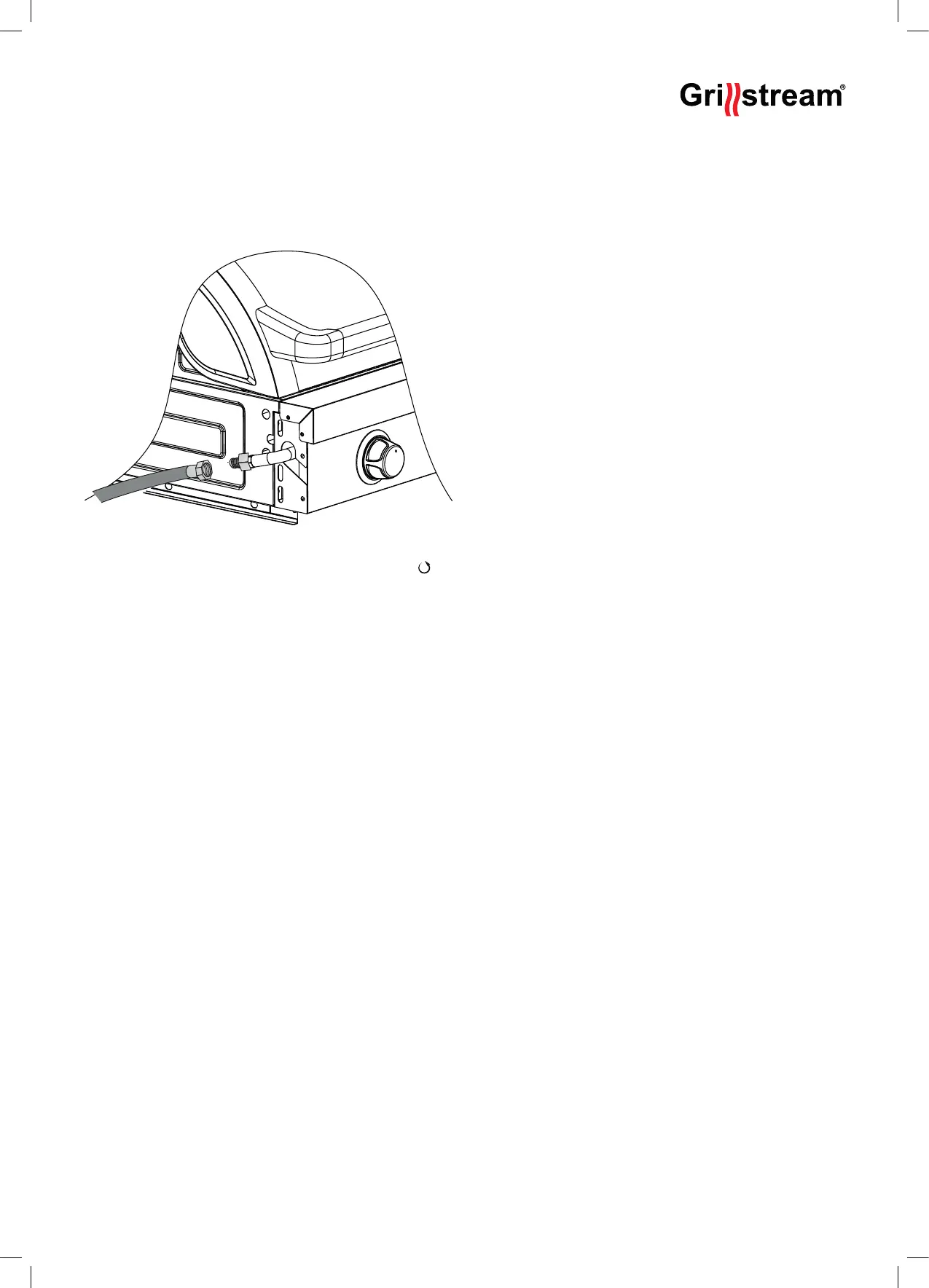
Type A) Screw on hose connection (Fig. 4)
- The BBQ’s manifold connection is 1/4” Male Thread BSP
- The connection between the hose and regulator and the BBQ should
be tightened with a spanner. Take care not to over tighten the joints
N.B. LEFT HAND THREAD CONNECTION OF HOSE TO ADAPTOR
(Fig. 4)
TESTING FOR LEAKS - DO THIS BEFORE USING
YOUR BBQ
NOTE - DO NOT test for gas leaks with an open ame. If
you smell gas, turn o at the source.
- Before rst use and periodically during the season, or whenever
a gas cylinder is changed, you must check for gas leaks.
Do so by:
- Turn on the gas cylinder
- Turn all gas valves on the BBQ to the • off position
- Brush a soap solution of one part liquid detergent and one part
water to all gas connections
- The presence of bubbles indicates a leak. Tighten or repair
as necessary
- Under no circumstances should a naked ame be used to check
for leaks
- If a gas odour is present and no leaks can be found, do not use the
BBQ. Turn the gas o at the source, disconnect the hose and
immediately contact your BBQ dealer or place of purchase for
assistance
GAS CYLINDER SAFETY
- Always change over a gas cylinder away from any possible source
of ignition in a well ventilated area
- Do not smoke whilst handling gas cylinders
- Never store gas cylinder indoors
- Store away from direct heat in a well ventilated area
- The gas cylinder is position on a at surface
- Always keep the gas cylinder in an upright position
- Close cylinder valve when BBQ is not in use and, if available, use a
sealing plug to prevent possible leaks
- Do not subject gas cylinder to excessive heat
- Do not tamper with any tting attached to any gas cylinder. Have it
taken to the manufacturer or an authorized testing station
- When the cylinder runs out of gas, have it relled or swapped at an
authorized testing station. They will ll the cylinder to no more than
80% of its capacity. This allows the gas to expand with temperatures
- Have the cylinder inspected EVERY 10 YEARS at an authorized
testing station.
WHAT IS PROPANE
It is a fuel gas compressed until it turns to liquid, then stored in a bottle
or cylinder under pressure for easy transport.
ARE ALL GAS BOTTLE GASES THE SAME?
No. The LPG that cars use is known as auto LPG. It is dierent to
propane/butane, which is used in household gas appliances. This
guide only deals with propane/butane.
HOW IS IT DIFFERENT FROM NATURAL GAS?
Propane and butane are similar to natural gas. They are colorless,
non-poisonous and do not pollute when burnt. There is one important
dierence, propane and butane are heavier than air, if they escape they
don’t oat away. The gas collects and forms gas pools at ground level
or at the bottom of your appliance.


 To Next Page