Need help?
Do you have a question about the Grundig MDI231 and is the answer not in the manual?
Key warnings and important notices regarding product usage, handling, and potential hazards.
Details the product's reliability test results and expected lifespan.
Specifies the operational measurement range of the thermometer in Celsius and Fahrenheit.
Describes the accuracy standards and clinical repeatability of the thermometer.
Explains how the device indicates temperature readings, errors, and low battery.
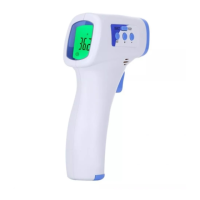
Identifies and labels the primary physical parts of the infrared thermometer.
Explains the icons and information displayed on the thermometer's screen.
Steps to check battery, sensor, and thermometer before taking a measurement.
Detailed instructions on how to install and replace batteries in the thermometer.
How to switch temperature units (°C/°F) and select measurement modes.
How to view stored temperature measurement history.
Important notes on positioning the probe and maintaining probe cleanliness for accurate ear readings.
Tips for ensuring accurate forehead readings, including hair management and probe placement.
Instructions for gently cleaning the delicate probe tip and lens.
How to clean the main body and display of the thermometer.
Details on authorized maintenance, user repair limitations, and warranty voiding.
Explains the initial factory calibration and when re-adjustment may be needed.
Recommendations for storing the thermometer to prevent damage and ensure longevity.
Lists the items included in the product package, such as the device and user manual.
Provides solutions for common problems like 'Hi', 'Lo' symbols, and no response.
Lists key specifications including model, power, range, accuracy, and operating conditions.
Details measurement accuracy, repeatability, resolution, and operating environment.
Enlists the various EN, ISO, and ASTM standards the device adheres to.
Guidance on not throwing the product in household garbage and using collection points for recycling.
Instructions for handling and disposing of batteries according to national laws.
Defines the meaning of manufacturer, CE, caution, applied parts, batch code, and other symbols.
Details special precautions related to EMC, including proximity to wireless devices.
 General
| Display | LCD |
|---|---|
| Fever Alarm | Yes |
| Auto Power Off | Yes |
| Type | Digital |
| Measurement Range | 32.0°C - 42.9°C |

 To Next Page