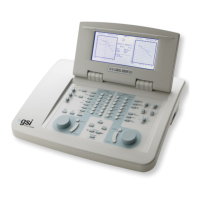
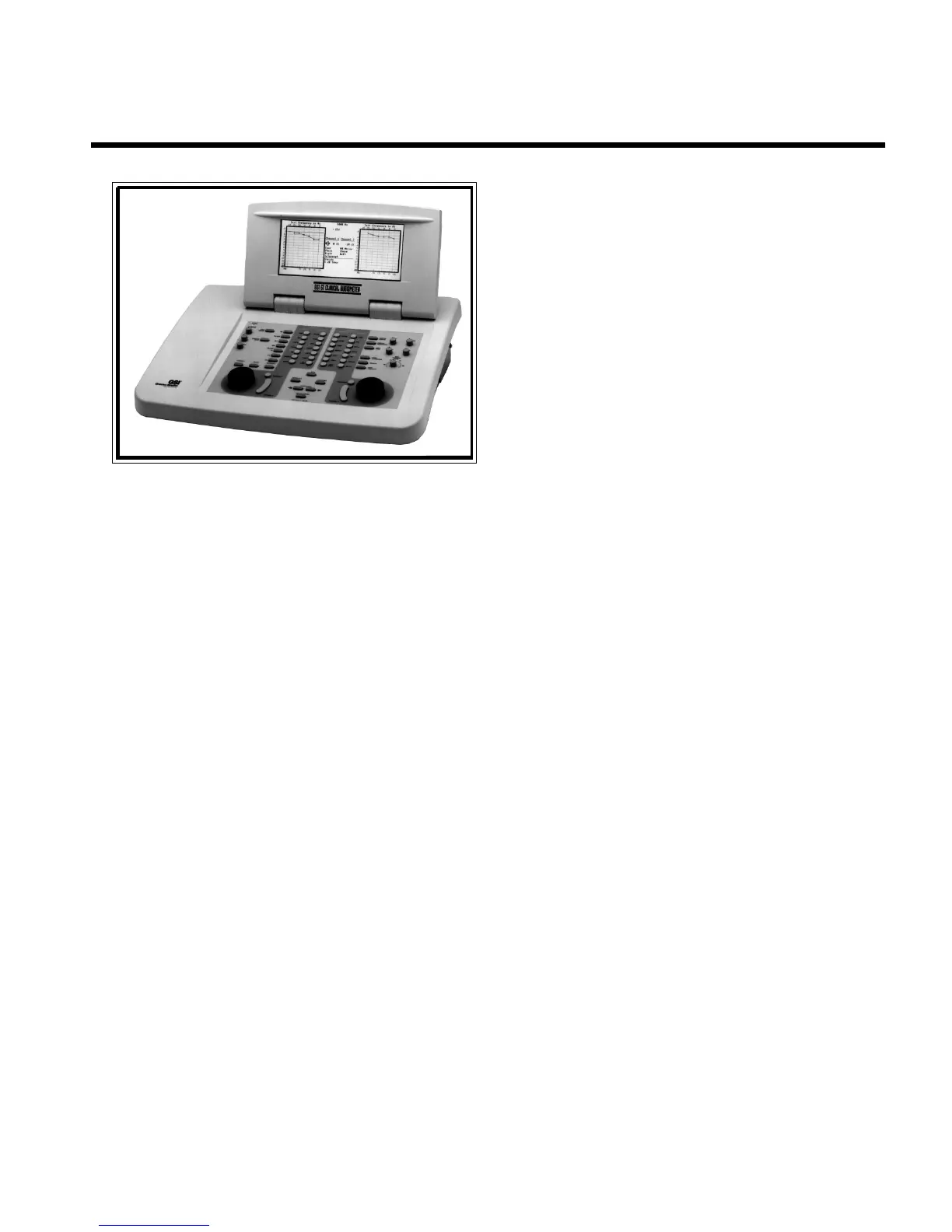
The GSI 61 Clinical Audiometer is a microprocessor controlled,
two channel audiometer for use in the clinical/diagnostic
environment. It has two separate sets of controls, one for each
of the channels. Each channel can be operated independently
by its tone bar, or the two channels can be activated
simultaneously through use of the interlock button.
The GSI 61 permits the output routing of the test signal through
earphones (matched TDH-50P), a bone vibrator (B71), optional
loudspeakers, optional paired Insert Phones (EAR) or single
Insert Phone, and optional High Frequency (Sennheiser HDA
200) Earphones.
The diagnostic tests are easily selected through use of the
ergonomically designed front key panel. Flexible routing
selections permit the user to select that which is appropriate
for the test sequence. The Tracking pushbutton allows the operator to synchronize intensity
changes on Channel 2 with those made on Channel 1.
All data, including the instrument selected parameters, are displayed on an articulating Liquid
Crystal Display (LCD). Pure tone test results are presented in either a “status” or an audiogram
format. The status format clearly shows all test conditions and permits the calibration check
of input from the microphone or from recorded test materials. The audiogram format for pure
tone testing displays the stored threshold values for the patient under test. The display can
be tilted to improve the viewing angle for an individual user and to allow easy access to the
rear jack panel.
The GSI 61 provides testing capabilities for a standard battery of diagnostic audiometric tests
including ABLB, SISI, Tone Decay, Stenger, Doerfler-Stewart, Lombard, and Staggered
Spondaic Word test (using a three head tape recorder). The High Frequency option extends
the frequency range (from 8 kHz to 20 kHz) for ototoxic drug monitoring.
The GSI 61 has the optional capability of printing the stored audiogram data or of sending the
data to a remote computer through an RS 232 or USB interface. The RS 232 and USB interface
are bidirectional to allow the operator to transmit test results to a computer and to control the
audiometer from a remote computer system. The transmittable data record can be configured to
be either a single value (threshold and frequency) or battery transfer (all stored parameters for
a patient).
1-1
n
Introduction
Chapter 1
Introduction
1761-0100 Rev. B


 To Next Page
 Loading...